Understanding Vehicle Control for New Drivers
Learn how new drivers can improve vehicle control, steering, braking, acceleration, speed management, and observation skills for safer, more confident driving.
 ecbm
ecbm
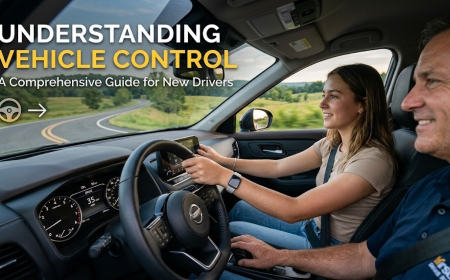
Learning to drive is about much more than knowing where the pedals, steering wheel, and controls are located. New drivers need to develop a strong sense of vehicle control so they can operate the car smoothly, respond to changing road conditions, and make safe decisions without becoming overwhelmed. Vehicle control refers to the ability to manage steering, acceleration, braking, speed, positioning, and other basic driving inputs accurately and consistently.
For learners working with a professional driving school Vancouver, understanding vehicle control is one of the foundations of becoming a safe and confident driver. Good control does not mean driving aggressively or making every movement quickly. Instead, it means making deliberate, smooth, and appropriate inputs while maintaining awareness of the road, surrounding traffic, pedestrians, and potential hazards.
What Is Vehicle Control?
Vehicle control is the driver's ability to operate a vehicle accurately and safely in different driving situations. It includes controlling the steering wheel, accelerator, brake, clutch when applicable, gears, indicators, and other vehicle systems while maintaining appropriate speed and road position.
For a new driver, these actions can initially feel like separate tasks. With practice, they gradually become more coordinated. The goal is not simply to memorize what each control does but to understand how small changes in steering, speed, and braking affect the vehicle.
For example, pressing the accelerator too firmly can cause unnecessary acceleration, while braking too late may result in harsh stopping. Turning the steering wheel too much can make the vehicle move outside the intended path. Effective vehicle control involves anticipating these effects and making adjustments early.
Why Vehicle Control Matters for New Drivers
Strong vehicle control gives drivers greater ability to respond to ordinary traffic situations. A driver who can smoothly slow down, maintain lane position, and steer accurately has more capacity to concentrate on other important aspects of driving, such as signs, pedestrians, cyclists, and surrounding vehicles.
Poor control can create unnecessary risks. Sudden braking, excessive acceleration, inconsistent steering, or inappropriate speed may make it harder to react when something unexpected happens.
Vehicle control is also closely connected with driver confidence. Confidence should come from skill and preparation rather than overestimating one's abilities. As learners gain experience controlling the vehicle in different situations, driving generally becomes less mentally demanding.
The Main Elements of Vehicle Control
Steering Control
Steering is one of the first skills new drivers learn, but accurate steering requires continued practice. The driver should maintain a stable grip and make controlled steering movements rather than constantly making large corrections.
Looking well ahead is particularly important. Drivers who stare immediately in front of the vehicle may tend to make unnecessary steering adjustments. Looking toward the intended path helps the vehicle follow a smoother line.
When turning, the amount of steering required depends on the road, the speed of the vehicle, and the sharpness of the corner. New drivers should avoid turning too quickly or entering a corner at an inappropriate speed.
Acceleration Control
Acceleration should be progressive rather than abrupt. A gentle application of the accelerator allows the driver to increase speed smoothly and gives more time to monitor traffic conditions.
New drivers should also understand that acceleration is not always necessary simply because there is open road ahead. The appropriate speed depends on traffic, road layout, visibility, weather, posted limits, and other conditions.
Smooth acceleration is particularly useful when moving away from a stop, joining traffic, or adjusting speed after a turn.
Braking Control
Effective braking requires anticipation. Good drivers do not wait until the last moment whenever a situation is predictable. Instead, they observe what is happening ahead and begin reducing speed when appropriate.
For example, if traffic ahead is slowing, a driver should recognize the developing situation and prepare to slow down rather than continuing at the same speed until an emergency stop becomes necessary.
Braking should generally be firm enough to stop or slow the vehicle safely but controlled enough to avoid unnecessary harshness. Learners should also become familiar with the feel of their vehicle's brake pedal because braking response can vary between vehicles.
Speed Management
Speed management is a central part of vehicle control. Driving at an appropriate speed allows the driver more time to identify hazards, make decisions, and adjust the vehicle's position.
The posted speed limit provides an important legal reference, but it is not necessarily the appropriate speed for every situation. Rain, poor visibility, congestion, sharp curves, road construction, pedestrians, and other factors may require a driver to reduce speed.
New drivers should develop the habit of asking themselves whether their current speed is suitable for the conditions rather than focusing only on the maximum permitted speed.
Lane Position
Maintaining an appropriate road position helps create predictable movement for everyone using the road. A new driver should learn to judge the vehicle's position within the lane without repeatedly looking down at the road immediately around the car.
Mirrors are essential for monitoring surrounding traffic, but they should be used alongside direct observation when required. Before changing lanes or moving laterally, drivers need to check the relevant areas around the vehicle and ensure that the maneuver can be completed safely.
How Vehicle Control Works With Observation
Vehicle control should never be treated as a completely separate skill from observation. A driver may have excellent steering and braking technique but still be unsafe if they fail to notice developing hazards.
Effective driving combines observation with action. A driver sees a pedestrian approaching a crossing, assesses the situation, adjusts speed if necessary, and remains prepared to stop. Similarly, noticing brake lights several vehicles ahead may encourage a driver to ease off the accelerator before the traffic becomes an immediate problem.
This is why experienced instructors often emphasize looking ahead and continuously scanning the driving environment. The earlier a driver identifies a developing situation, the more options they generally have for responding appropriately.
Developing Smooth Vehicle Control
Smooth control does not happen automatically after a few lessons. It develops through repeated practice and feedback.
One useful approach is to practice individual skills in suitable, low-risk environments before combining them in more complex traffic. For example, a learner can focus on smooth stopping and starting, then work on steering through turns, and eventually combine these skills during normal road driving.
Instructors can also help learners identify specific habits that affect control. A learner might brake too late, accelerate too aggressively, hold the steering wheel too tightly, or make frequent unnecessary corrections. Recognizing the specific issue makes improvement easier.
Avoid Overcorrecting
One common problem among beginners is overcorrection. A learner may notice the vehicle moving slightly toward one side of the lane and make a large steering adjustment. The vehicle then moves too far in the opposite direction, leading to another correction.
Small, controlled adjustments are usually easier to manage. Looking farther ahead and maintaining an appropriate road position can also reduce the tendency to react to every minor movement.
Learn the Vehicle You Are Driving
Different vehicles can feel different even when their basic controls are similar. Steering response, braking sensitivity, clutch engagement, acceleration, vehicle dimensions, and visibility can vary.
Before driving an unfamiliar vehicle, a driver should become familiar with its essential controls and adjust their approach accordingly. This is especially important when moving between a learner vehicle and another car.
Vehicle Control in Different Driving Conditions
Vehicle control becomes particularly important when conditions change.
On wet roads, drivers may need to reduce speed and increase following distance because road conditions can affect stopping and handling. In low visibility, careful speed management and increased attention become more important.
On steep roads, drivers need to understand how their vehicle behaves when accelerating, slowing, stopping, and moving away again. On narrow roads, accurate positioning becomes more important because there may be less space for correction.
Night driving also requires careful control because reduced visibility can make it more difficult to identify hazards early. New drivers should avoid treating familiar roads as automatically safe simply because they know the route.
Common Vehicle Control Mistakes New Drivers Make
Beginners often make similar mistakes while developing control skills. These can include braking suddenly because they have not anticipated traffic changes, accelerating too quickly from intersections, turning the steering wheel too sharply, or focusing too closely on the vehicle instead of the road ahead.
Another common issue is allowing nervousness to affect physical control. A learner who feels anxious may grip the steering wheel tightly, make abrupt movements, or react too quickly to ordinary traffic events.
The solution is not to eliminate every mistake immediately. Learning to drive is a progressive process. The important step is to identify errors, understand why they occurred, and practice the correct technique under appropriate supervision.
How to Improve Vehicle Control Through Practice
Regular, purposeful practice is more useful than simply accumulating driving time without a clear objective. During each practice session, learners can focus on a particular skill while continuing to maintain overall road awareness.
For example, one session might emphasize smooth braking and acceleration. Another could focus on lane positioning and controlled turns. Later sessions can combine these skills in busier traffic.
Learners should also practice anticipating situations instead of reacting at the last second. Before approaching an intersection, consider what traffic might do, where pedestrians could appear, and whether the vehicle may need to slow down. This approach connects vehicle control with hazard awareness.
Professional instruction can be particularly valuable because an experienced instructor can identify habits that a learner may not notice independently. Correcting an inefficient technique early can prevent it from becoming an established driving habit.
Vehicle Control and Safe Driving Decisions
Vehicle control is ultimately a tool for making safer driving decisions. The objective is not to make the vehicle move smoothly for its own sake. Good control gives the driver the ability to respond appropriately to changing circumstances.
For instance, maintaining a reasonable speed provides more time to recognize a hazard. Smooth braking makes it easier to adjust speed progressively. Accurate steering helps maintain a safe road position. These skills work together rather than operating independently.
A technically skilled driver should therefore continue developing judgment, observation, anticipation, and awareness alongside physical vehicle control.
Conclusion
Understanding vehicle control is one of the most important steps in becoming a capable new driver. Steering accurately, accelerating smoothly, braking progressively, managing speed, maintaining road position, and observing the environment all contribute to safer driving. These skills become stronger through consistent practice, patient instruction, and experience in different road conditions. Learners working with Benche Driving school can use these principles as a foundation for developing controlled, thoughtful driving habits. With the right practice and mindset, new drivers can steadily build the control and awareness needed to approach everyday driving with greater skill and responsibility.
Frequently Asked Questions
What is the most important vehicle control skill for a new driver?
There is no single skill that makes someone a safe driver. Steering, braking, acceleration, speed management, and road positioning all need to work together. However, smooth and controlled braking and steering are particularly important because they directly affect the vehicle's movement.
How long does it take to develop good vehicle control?
The timeframe varies between learners. It depends on previous experience, frequency of practice, the type of vehicle, learning environment, and individual progress. Consistent practice with constructive feedback generally helps learners develop control more effectively.
Why does my steering feel difficult when I am learning?
New drivers often make steering harder by looking too close to the vehicle, gripping the wheel too tightly, or making larger corrections than necessary. Looking farther along the intended path and practicing smooth, gradual adjustments can help.
Does driving faster improve vehicle control?
No. Driving faster does not automatically improve control. In fact, excessive speed can reduce the time available to identify and respond to hazards. Vehicle control should always be appropriate for the road, traffic, visibility, weather, and legal speed limit.