RS‑485 Modbus Gateways for Water Treatment and Utility Applications
RS485 Gateway solutions for water treatment and utility applications, enabling reliable Modbus data integration, monitoring, and control.
 JamesHunt
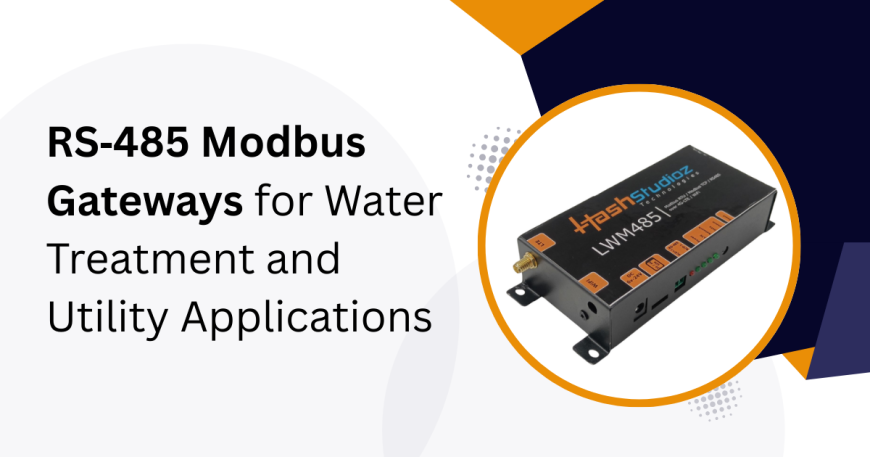
Water treatment and utility systems require reliable data communication between field sensors, controllers, and central monitoring systems. These systems often include pumps, valves, flow meters, and chemical dosing units that must operate continuously and accurately. A key enabler of robust communication in such environments is the RS485 Modbus Gateway. This device connects industrial devices using RS‑485 Modbus protocol to broader communication networks like Ethernet or cellular.
What Is an RS‑485 Modbus Gateway?
An RS485 Modbus Gateway is a communication interface that bridges Modbus RTU/ASCII devices on an RS‑485 network to other protocols like Modbus TCP, Ethernet/IP, or MQTT. It enables industrial field devices using Modbus RTU to communicate with SCADA (Supervisory Control And Data Acquisition) systems, PLCs (Programmable Logic Controllers), and cloud platforms.
RS‑485 is a balanced differential communication standard that supports multi‑drop connections and long transmission distances. When multiple smart sensors and controllers exist in a water plant, gateways make data accessible at central control rooms or remote management servers.
Why Gateways Are Vital in Water and Utility Systems
1. Distributed Sensor Networks
Water treatment plants often encompass large areas with distributed sensors. Flow meters, pH measurement units, and turbidity sensors sit at various points in the treatment chain. An RS‑485 Modbus Gateway allows these distributed devices to report data reliably over a common backbone.
2. Connectivity Standardization
Many legacy devices still use Modbus RTU over RS‑485. Central systems often use Ethernet or IP‑based networks. A Modbus Gateway converts between protocols so older equipment remains usable. This saves replacement costs and extends asset life.
3. Real‑Time Monitoring and Control
Operators require real‑time visibility of process data. Delayed or lost data can cause quality issues or regulatory non‑compliance. Statistics show downtime costs in utility networks can exceed $1 million per hour in urban infrastructure sectors if critical controls fail. Gateways help ensure continuous visibility and faster reaction times.
4. Improved Security
Water infrastructure is considered critical national infrastructure in many countries. In the United States, the Environmental Protection Agency (EPA) estimates that over 150,000 public water systems exist nationwide. Secure communication between field devices and control centers is essential. Using a gateway with built‑in security functions improves overall system cybersecurity.
How RS‑485 Modbus Gateways Work
At its core, a Modbus Gateway performs protocol translation and network bridging. Below is a breakdown of key functions.
1. Protocol Translation
Modbus Gateways translate Modbus RTU or ASCII frames from devices on an RS‑485 bus into Modbus TCP frames compatible with Ethernet. This allows TCP/IP‑based SCADA systems to read registers from remote sensors.
2. Address Mapping
Devices on an RS‑485 network use Modbus addresses. Gateways map these addresses to TCP/IP endpoints or register offsets that the SCADA system can access. This mapping ensures correct data retrieval without conflicts.
3. Data Buffering and Caching
Gateways often buffer collected data to manage network congestion. If the central system polls data slower than sensors update, the gateway temporarily stores values. This retains data consistency.
4. Redundancy and Failover
Advanced gateways support dual Ethernet ports or redundant paths. If a primary network path fails, the device switches to a backup link. In utility applications, redundancy often increases system uptime above 99.99%.
Key Technical Features
Selecting the right RS‑485 Modbus Gateway for water treatment and utility applications requires understanding its technical specifications.
1. Communication Interfaces
• RS‑485 Ports: Support multiple devices in a multi‑drop network.
• Ethernet Ports: Usually 10/100 Mbps or Gigabit for TCP/IP connectivity.
• Serial Protocols: Modbus RTU/ASCII support for legacy devices.
• Optional Cellular Connectivity: LTE/5G for remote or dispersed sites.
2. Baud Rate and Performance
Typical RS‑485 networks run between 1,200 to 115,200 bps. Gateways must support this range and handle polling cycles without delay. Faster baud rates improve cycle time but may require higher signal integrity.
3. Protocol Support
Gateways may support multiple industrial protocols in addition to Modbus. These can include DNP3, BACnet, and MQTT for cloud integration. Multi‑protocol support increases flexibility for future upgrades.
4. Environmental Ratings
Utility installations expose equipment to temperature swings, moisture, and vibration. Look for industrial ratings such as IP30 or higher and operating temperature ranges from ‑20°C to +70°C.
5. Security Features
Security is critical. Gateways should support role‑based authentication, encrypted communication (TLS 1.2+), and access control lists. These features protect against unauthorized access and common network attacks.
Deployment in Water Treatment Systems
Water treatment facilities include raw water intake, coagulation, sedimentation, filtration, disinfection, and distribution. Each stage has devices that generate important process data.
1. Raw Water Intake
Sensors measure turbidity and flow rates. RS‑485 Modbus Gateways connect these sensors to local PLCs. Gateways feed data back to the central SCADA system for trend analysis and early warning of poor water quality.
2. Chemical Dosing Stations
Chemical dosing pumps rely on accurate pH and chlorine measurement. Rapid polling via gateways ensures dosing units operate within setpoints. A delay of even a few seconds can throw the balance off and affect treatment efficiency.
3. Distribution Pump Stations
Typical pump stations include multiple variable frequency drives (VFDs) and pressure sensors. A gateway aggregates this site data and sends it to the control room. Real‑time analytics help optimize pump performance, reducing energy use.
Utilities Beyond Water – Broader Applications
While water treatment is a key use case, RS‑485 Modbus Gateways also serve other utility applications.
1. Wastewater Treatment
Wastewater plants treat sewage and industrial effluent. Aeration systems use dissolved oxygen sensors, while clarifiers monitor sludge levels. Reliable data flow through gateways allows operators to maintain environmental compliance.
2. Electric Utilities
In electric substations, protective relays and meters still often communicate via RS‑485. A gateway bridges these devices to modern energy management systems.
3. Gas and Oil Distribution
Flow and pressure transmitters in gas systems employ Modbus RTU. Gateways provide visibility into distribution networks for leak detection and usage optimization.
Examples and Benefits
1. Remote Pump House Monitoring
A city water utility installed RS‑485 Modbus Gateways at remote pump houses. Each site included:
• Flow meters
• Pressure sensors
• VFD controllers
Before the gateway installation, data retrieval occurred through manual collection or local storage. After installation, central SCADA read data every 10 seconds. Pump failures dropped by 57% due to earlier detection of abnormal conditions.
2. Energy Efficiency at Treatment Plants
A treatment plant used gateways to integrate power meters from multiple substations. Real‑time energy data allowed operators to shift loads during peak demand times. Annual energy costs dropped by 12%.
3. Cloud Analytics Integration
A utility deployed gateways with MQTT support. This allowed direct data transmission into a cloud analytics platform. Predictive models identified equipment wear before failures occurred. Maintenance costs fell by 19%.
Security Considerations
Cybersecurity remains a top concern for critical infrastructure. The water sector saw over 250 reported incidents in the past five years involving operational technology networks. Gateways can help secure communication if configured correctly.
1. Network Segmentation
Place gateways in segmented networks. Allow only specific communication paths between the control network and business networks. This limits attack surfaces and exposure.
2. Encryption
Enable encryption on all IP‑based communication. This protects data in transit between gateways and central servers or cloud platforms.
3. Access Control
Use authentication for device configuration and management. Change default passwords and use two‑factor authentication for administrative access.
4. Firmware Updates
Regularly update gateway firmware. Patches often address newly discovered vulnerabilities. Automate updates if the gateway supports secure update mechanisms.
Best Practices for Implementation
Successful implementation of RS‑485 Modbus Gateways in water and utility systems requires careful planning.
1. Conduct a Site Survey
Identify all field devices, wiring conditions, grounding quality, and environmental conditions. A site survey prevents unexpected issues during installation.
2. Standardize Devices
Use consistent gateway models and firmware versions across sites. Standardization simplifies maintenance and reduces training needs.
3. Test End‑to‑End Communication
Before commissioning, verify data accuracy from sensors through the gateway to the control system. Confirm register mapping and polling performance.
4. Monitor Performance
Set up alerts for gateway errors, timeouts, or communication losses. Early identification of issues reduces downtime.
5. Document Configurations
Document register mappings, IP addresses, and network architecture. This ensures maintenance teams can troubleshoot problems quickly.
Challenges and Solutions
Even with proper planning, some challenges arise in industrial settings.
1. Noise and Signal Integrity
Long RS‑485 cables can pick up electrical noise. Use shielded twisted pair cables and proper termination resistors. This improves signal quality.
2. Distance Limitations
RS‑485 supports up to 1,200 meters without repeaters. For longer distances, install repeaters or use fiber optics with media converters.
3. Legacy Devices
Older field devices may lack modern features. In those cases, gateways provide a way to connect legacy equipment to modern systems without hardware replacement.
4. Scalability
Large systems may connect hundreds of devices. Use gateway models with multiple serial ports or implement several gateways with coordinated polling.
Future Trends
Communication technologies continue to evolve. Newer trends will influence RS‑485 Modbus Gateway applications in utilities.
1. Integration With IoT
IoT protocols like MQTT and CoAP gain traction. Gateways that support these standards simplify integration with cloud platforms and analytics engines.
2. Edge Analytics
Some gateways now perform edge computing tasks. They process data locally, reducing the amount of data sent to central systems and enabling faster local decisions.
3. 5G Connectivity
Gateways with 5G support provide high bandwidth and low latency, especially for remote sites using cellular backhaul.
4. Standardization Efforts
Utility industries are supporting standardized data models such as IEC 61850. Gateways that support these standards ease cross‑vendor interoperability.
Conclusion
An RS485 Modbus Gateway plays a pivotal role in water treatment and utility communication networks. It connects field devices using RS‑485 Modbus RTU/ASCII to central systems using modern protocols. Gateways deliver real‑time data, enhance monitoring and control, and extend the life of legacy assets.
In water treatment plants, pump stations, and distribution networks, gateways help operators manage quality, compliance, and performance. They support redundancy, security, and future‑proofing. When implemented with good design practices and proper security measures, Modbus Gateways significantly improve operational reliability and reduce maintenance costs.