How ERP and Analytics Work Together
 pamelaburgess
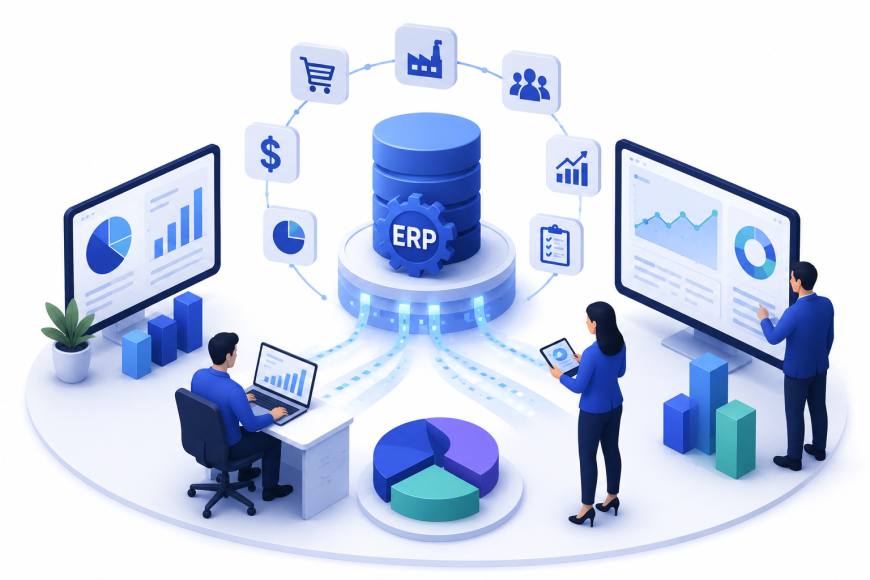
Modern businesses generate enormous amounts of data every day through finance, sales, procurement, inventory, manufacturing, customer service, and human resources. Collecting data alone is not enough. Organizations need meaningful insights that help leaders make faster and more informed decisions. This is where Enterprise Resource Planning (ERP) systems and analytics complement each other.
By combining business intelligence and erp, organizations gain complete visibility into operations, improve decision-making, identify trends, and optimize business performance. When operational data is transformed into actionable insights, businesses become more agile, efficient, and prepared for future growth.
Understanding ERP Systems
An ERP system serves as the central platform for managing business operations. It connects multiple departments into a single environment where information flows seamlessly across the organization.
Typical ERP functions include:
- Financial management
- Procurement
- Inventory control
- Sales management
- Manufacturing
- Human resources
- Supply chain management
Having centralized business data creates consistency across departments.
What Is Business Analytics?
Business analytics focuses on examining data to identify patterns, measure performance, and support decision-making.
Analytics helps organizations:
- Monitor key performance indicators
- Analyze operational trends
- Forecast future performance
- Identify opportunities
- Detect business risks
- Improve planning
Instead of relying on assumptions, organizations use data to guide business strategies.
Why Integration Matters
ERP systems collect valuable operational information every minute.
Without analytics, businesses often struggle to fully utilize that information.
Combining ERP with analytics enables organizations to:
- Access real-time insights
- Improve reporting
- Reduce manual analysis
- Increase operational visibility
- Support strategic planning
The result is better control over business operations.
Centralized Data for Better Decisions
One of the biggest advantages of ERP is maintaining all business information in one system.
Departments such as:
- Finance
- Sales
- Procurement
- Inventory
- Manufacturing
- Human Resources
all contribute valuable operational data.
Analytics transforms this centralized information into meaningful reports that support better decision-making throughout the organization.
Real-Time Business Visibility
Business leaders often need immediate access to operational information.
Real-time analytics provides visibility into:
- Revenue performance
- Inventory levels
- Customer demand
- Production status
- Procurement activities
- Financial performance
Instant access to current information allows organizations to respond quickly to changing business conditions.
Improved Financial Management
Financial departments benefit significantly from integrated analytics.
Organizations can monitor:
- Budget performance
- Revenue growth
- Operational expenses
- Profit margins
- Cash flow
- Financial forecasts
Visual dashboards simplify financial reporting while improving planning and budgeting activities.
Finance teams gain greater confidence in business decisions.
Smarter Inventory Management
Inventory directly affects customer satisfaction and operational costs.
Analytics helps businesses understand:
- Stock availability
- Inventory turnover
- Product demand
- Slow-moving inventory
- Purchasing requirements
Better inventory visibility reduces excess stock while preventing shortages.
Organizations optimize warehouse operations and improve customer service.
Better Sales Performance
Sales teams benefit from analyzing customer and market information.
Analytics provides insights into:
- Sales trends
- Product performance
- Customer purchasing behavior
- Revenue growth
- Regional performance
These insights help organizations develop more effective sales strategies.
Managers can identify opportunities for increased revenue.
Improved Procurement Planning
Procurement departments manage supplier relationships and purchasing activities.
Analytics supports procurement by monitoring:
- Supplier performance
- Purchasing costs
- Delivery timelines
- Contract utilization
- Procurement efficiency
Better purchasing decisions reduce operational costs while strengthening supplier relationships.
Organizations improve supply chain performance.
Manufacturing Optimization
Manufacturing operations generate significant amounts of operational data.
Analytics helps production teams monitor:
- Equipment utilization
- Production efficiency
- Quality performance
- Manufacturing costs
- Output levels
Real-time monitoring improves operational efficiency while reducing production delays.
Manufacturers become more competitive through better process visibility.
Human Resource Insights
Human resource departments also benefit from integrated analytics.
Organizations can analyze:
- Employee performance
- Workforce productivity
- Recruitment trends
- Training completion
- Employee retention
HR leaders make better workforce planning decisions using accurate organizational data.
Employee development initiatives become more effective.
Faster Reporting
Traditional reporting often requires collecting information from multiple departments manually.
Integrated analytics automates report generation for:
- Financial reports
- Sales summaries
- Inventory analysis
- Procurement performance
- Operational dashboards
Automation reduces reporting time while improving data accuracy.
Executives receive timely information for strategic planning.
Predictive Decision-Making
Analytics goes beyond reporting historical information.
Organizations can forecast:
- Future sales
- Inventory demand
- Budget requirements
- Production capacity
- Workforce needs
Predictive insights allow businesses to prepare for future opportunities and challenges.
Planning becomes more proactive instead of reactive.
Improved Customer Satisfaction
Better operational visibility ultimately improves customer experiences.
Organizations respond faster by:
- Managing inventory efficiently
- Processing orders quickly
- Reducing delivery delays
- Improving service quality
- Resolving issues promptly
Satisfied customers contribute to long-term business success.
Increased Operational Efficiency
Automation and analytics reduce repetitive manual work.
Organizations improve efficiency by:
- Eliminating duplicate data entry
- Simplifying reporting
- Accelerating approvals
- Monitoring performance continuously
- Identifying operational bottlenecks
Employees spend more time on strategic activities rather than administrative tasks.
Supporting Business Growth
Growing organizations require technology that scales alongside expanding operations.
Integrated ERP and analytics support:
- Multiple business units
- International expansion
- Higher transaction volumes
- Additional users
- Complex reporting requirements
Businesses remain prepared for future growth without sacrificing operational visibility.
Data-Driven Culture
Successful organizations encourage decision-making based on facts rather than assumptions.
Analytics promotes a culture where employees rely on:
- Accurate reports
- Performance metrics
- Operational dashboards
- Business trends
- Forecasting models
Data-driven organizations respond more effectively to changing market conditions.
Long-Term Business Benefits
Organizations integrating ERP with analytics often experience:
- Better decision-making
- Higher productivity
- Improved operational efficiency
- Reduced business risks
- Stronger financial performance
- Greater business agility
Technology becomes a strategic asset that supports continuous improvement.
Enterprise Innovation
Solutions developed by SAP help organizations connect operational processes with advanced analytics, enabling real-time reporting, intelligent automation, improved forecasting, and better business visibility.
By combining enterprise management with powerful analytical capabilities, businesses gain valuable insights that improve planning, strengthen collaboration, optimize resources, and support long-term digital transformation initiatives.
Conclusion
ERP systems manage business operations, while analytics transforms operational data into meaningful business intelligence. Together, they create a powerful foundation for smarter decision-making, improved efficiency, and sustainable growth.
Organizations that integrate ERP with analytics gain real-time visibility, optimize business processes, improve collaboration, and make strategic decisions with greater confidence. As businesses continue to generate more data, combining operational management with intelligent analytics will remain essential for achieving long-term success in a competitive marketplace.