How Can RF Attenuators Enhance Performance in High Frequency Systems?
Learn how RF Attenuators reduce signal power, improve system balance, protect equipment, and support reliable performance in modern high frequency applications.
 joddie25
Introduction
RF Attenuators are vital components in high-frequency systems because they help regulate signal power with accuracy and consistency. In radio frequency environments, signal strength must remain within a controlled range to ensure safe operation and dependable performance. When signals become too strong, they can overload receivers, distort test results, affect transmission quality, and reduce the lifespan of sensitive devices. This is where RF Attenuators become especially important.
These components are designed to lower signal power by a known amount without interrupting the signal path. Their function may sound simple, but their value in real applications is significant. RF Attenuators support communication systems, test equipment, aerospace electronics, wireless networks, radar assemblies, and research laboratories where precise signal handling is essential.
As RF technology continues to advance across telecommunications, industrial automation, connected devices, and measurement systems, the demand for accurate signal control is rising. RF Attenuators help engineers maintain balance within complex circuits and improve confidence in both development and operation. For readers seeking clear, useful, and search-friendly content, this article explains the role of RF Attenuators, their working principles, major types, practical advantages, and common applications in a modern engineering context.
What Are RF Attenuators?
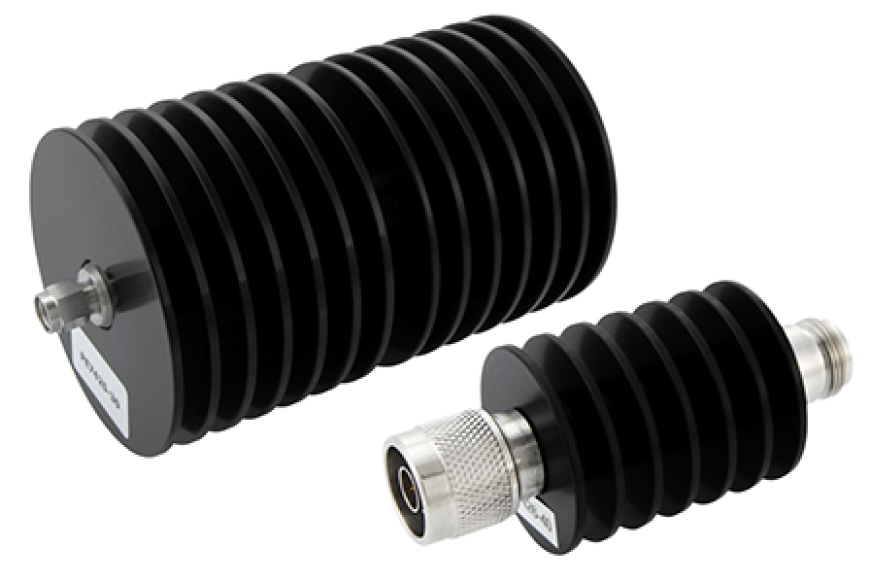
RF Attenuators are passive electronic devices that reduce the strength of a radio frequency signal. They are used when a signal needs to be lowered to a suitable level before it enters another device or stage in the system. Rather than amplifying or reshaping the signal, RF Attenuators simply decrease its power in a controlled and predictable way.
This signal reduction is usually measured in decibels. A certain attenuation value indicates how much the signal is decreased between the input and the output. Because RF systems often operate with highly sensitive equipment, even a small change in signal level can have a major effect on performance. RF Attenuators help ensure that connected components receive signals within their safe and effective operating range.
In many setups, these devices are installed between transmitters, amplifiers, receivers, antennas, analysers, or signal generators. Their role is to support stability and maintain proper conditions for the full RF path.
Why RF Attenuators Matter in Signal Management
Signal management is one of the most critical parts of RF engineering. A strong signal may seem beneficial at first, but excessive power can create a series of technical issues. It may saturate a receiver, produce false readings in measurement equipment, or lead to unwanted distortion in communication links. RF Attenuators solve this challenge by providing controlled signal reduction.
Their importance in signal management includes:
- Reducing the risk of overloading sensitive RF instruments
- Supporting cleaner and more reliable measurements
- Helping maintain consistent operating conditions
- Improving balance between interconnected RF components
- Allowing engineers to optimise signal flow in testing and deployment
By adding RF Attenuators to an RF chain, engineers can create a more predictable environment where devices operate closer to their intended specifications.
How RF Attenuators Work in Practical Systems
RF Attenuators typically use internal resistive networks to absorb a portion of the incoming signal energy. The unused energy is converted into heat, while the remainder of the signal continues through the output at a lower level. This process enables a precise reduction in signal strength without completely disrupting the transmission path.
An important feature of RF Attenuators is their ability to preserve impedance characteristics. In most radio frequency systems, impedance matching is essential for efficient power transfer. If impedance is not matched properly, part of the signal can reflect back toward the source. These reflections may reduce accuracy, create instability, and lower overall system efficiency.
Because of this, RF Attenuators are designed not only to reduce power but also to maintain proper impedance, thereby improving signal integrity across the circuit.
Core Types of RF Attenuators
Fixed RF Attenuators
Fixed RF Attenuators provide a single, defined attenuation value. They are used when the required signal reduction is known in advance and remains constant. These attenuators are common in production systems, calibration environments, and standard measurement setups.
They are often chosen for:
- Permanent signal reduction requirements
- Equipment protection in stable installations
- Reliable use in routine RF testing
Continuous Variable RF Attenuators
Continuously variable RF Attenuators allow signal levels to be adjusted over a range rather than at a single fixed value. They are useful in laboratory and development environments where conditions change frequently, and flexibility is required.
They help with:
- Fine-tuning signal strength during experiments
- Adapting to different testing scenarios
- Supporting temporary setup adjustments
Switched RF Attenuators
Switched RF Attenuators provide selectable attenuation values through defined steps. These are useful in applications where engineers need repeatable settings and fast changes between known levels.
Their benefits include:
- Quick selection of preset attenuation values
- Better repeatability for structured testing
- Efficient integration into automated workflows
Important Performance Factors to Consider
When choosing RF Attenuators, several technical characteristics should be considered to ensure the component meets the application's requirements.
Frequency Range
RF Attenuators are built for specific frequency bands. The chosen device should perform consistently across the full frequency range of the intended system.
Power Handling Capability
Power handling is a key factor because the attenuator must safely manage the input signal. If the power rating is too low, the component may overheat or experience performance degradation.
Accuracy of Attenuation
Precise attenuation is essential in laboratory and communication systems. A quality attenuator should provide dependable signal reduction with minimal variation.
Impedance Matching
Most RF systems use standard impedance values such as 50 ohms. Choosing RF Attenuators with matching impedance helps reduce signal reflections and improve transmission efficiency.
Physical Connector Compatibility
Connector type affects how easily the attenuator can be integrated into an existing setup. Proper matching improves both convenience and electrical performance.
Applications of RF Attenuators Across Industries
RF Attenuators are used in many sectors because radio frequency technology is now central to communication, testing, monitoring, and control systems. Their ability to manage signal power makes them suitable for both commercial and specialist uses.
Common applications include:
- Wireless communication infrastructure
- Satellite and aerospace electronics
- Radar and defence systems
- Broadcast and transmission equipment
- RF measurement and calibration laboratories
- Antenna testing environments
- Signal generators and spectrum analysis systems
- Research and development projects involving microwave circuits
In each of these applications, RF Attenuators contribute to safer operation, more accurate testing, and improved signal reliability.
Benefits of RF Attenuators in Modern Engineering
RF Attenuators continue to be widely used because they deliver practical and measurable benefits in both design and operation.
Major advantages include:
- Better control of excessive signal power
- Increased protection for delicate RF components
- Improved measurement consistency
- Lower chance of distortion and overload
- Enhanced system stability
- Greater flexibility in testing and calibration tasks
Their role in modern engineering is especially valuable because they support performance without adding unnecessary complexity. They are compact, effective, and easy to integrate into a broad range of systems.
Conclusion
RF Attenuators are essential for maintaining safe and efficient signal levels in high-frequency systems. They reduce power in a controlled way, support impedance balance, protect valuable equipment, and improve the quality of RF testing and operation. Whether used in communication networks, aerospace platforms, laboratory instruments, or development environments, RF Attenuators provide a reliable means of signal control. As radio-frequency applications continue to grow in sophistication and importance, RF Attenuators will remain a key component of building stable, accurate, and high-performing systems.