Commodity Broker Services: What Should Traders Look For?
Choosing the right commodity broker is an important decision. A broker is not simply a platform for placing buy and sell orders.
 investedge360
Commodity trading has become an area of interest for investors who want to explore opportunities beyond traditional stocks and mutual funds. From gold and silver to energy and agricultural commodities, these markets offer different ways to participate in price movements.
However, choosing the right commodity broker is an important decision. A broker is not simply a platform for placing buy and sell orders. The right service can give traders access to useful trading tools, market information, research, customer support, and a smoother overall experience.
For anyone considering commodity investment, understanding what to look for in a broker can help avoid common mistakes and support more informed decisions.
What Is a Commodity Broker?
A commodity broker provides services that allow traders to access commodity markets and trade eligible commodity contracts. Depending on the available market, traders may gain exposure to commodities such as precious metals, energy products, and agricultural commodities.
Commodity prices can change because of several factors, including supply and demand, economic conditions, global events, currency movements, interest rates, production levels, and market sentiment.
Because these factors can create significant price movements, traders need a reliable trading environment and a clear understanding of the risks involved.
A good commodity broker should therefore offer more than basic trade execution. Traders should consider the complete service before opening an account.
Why Does Choosing the Right Commodity Broker Matter?
The broker you choose can influence your overall trading experience.
For example, imagine two traders who have similar knowledge and capital. One uses a platform with easy-to-understand charts, reliable order execution, useful research, transparent charges, and responsive support. The other uses a platform that is difficult to navigate and provides limited information.
Although both traders participate in the same market, their experiences can be completely different.
The right broker can make it easier to monitor commodity prices, understand available contracts, manage positions, and access relevant market information.
However, a broker cannot eliminate market risk or guarantee profits. The purpose of choosing a suitable broker is to create a better environment for informed trading.
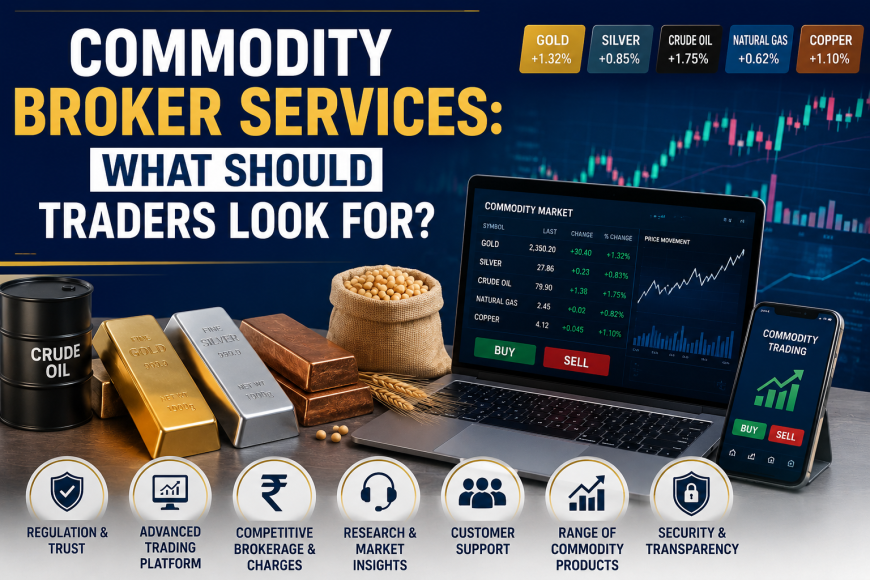
8 Things Traders Should Look For in Commodity Broker Services
1. Regulatory Transparency
One of the first things traders should check is the broker's regulatory and registration information.
Financial markets require transparency, and investors should understand which entity provides the services and what applicable regulatory requirements govern the relationship.
Avoid choosing a broker simply because it advertises attractive returns, extremely low charges, or quick profits.
Before opening an account, carefully review the broker's information, terms, conditions, and applicable disclosures.
A transparent broker gives traders greater clarity about how the service operates.
2. Clear and Competitive Charges
Trading costs are another important consideration.
When comparing commodity broker services, do not look only at the advertised brokerage rate. Consider the overall cost structure and understand which charges may apply to your transactions.
Depending on the service and transaction, costs can include brokerage, exchange-related charges, taxes, and other applicable fees.
The cheapest broker is not automatically the best choice. A slightly different fee structure may be worthwhile if the broker provides better technology, research, support, and overall service.
The objective should be to find a reasonable balance between cost and value.
3. User-Friendly Trading Platform
A trading platform is one of the most important tools available to a trader.
A good platform should make it easy to monitor prices, study charts, place orders, track positions, and review account information.
Before selecting a broker, consider whether the platform is:
-
Easy to navigate
-
Stable during normal trading activity
-
Suitable for your experience level
-
Available on the devices you use
-
Equipped with useful charts and market tools
-
Convenient for monitoring open positions
A complicated platform can make trading unnecessarily difficult, particularly for beginners.
4. Research and Market Insights
Commodity prices can be influenced by numerous market factors. This makes research an important part of the trading process.
A useful broker may provide market updates, research reports, price analysis, charts, commodity-specific information, and other educational resources.
For example, gold prices may be influenced by economic expectations, interest-rate developments, currency movements, and global uncertainty. Energy commodities can be affected by production, inventories, demand, and geopolitical developments.
Understanding these factors can help traders look beyond short-term price movements.
Research should be treated as information for decision-making, not as a promise of future returns.
5. Strong Risk-Management Information
Risk management is particularly important in commodity trading.
Commodity contracts can experience significant price fluctuations, and certain products may involve leverage or margin requirements. These features can increase market exposure and can also increase potential losses.
Before trading, investors should understand:
-
Contract specifications
-
Lot size
-
Expiry dates
-
Margin requirements
-
Price volatility
-
Position size
-
Potential losses
-
Leverage-related risks
A responsible commodity broker should make relevant information available so traders can understand the nature of the products they are considering.
Remember, risk management is ultimately the trader's responsibility. No broker can remove market risk.
6. Responsive Customer Support
Even experienced traders may occasionally need assistance.
Questions can arise about account procedures, orders, trading platforms, contracts, margins, or other service-related matters.
This is why customer support should be part of your broker-selection checklist.
Look for a service provider that offers clear communication channels and makes it reasonably easy to get assistance when needed.
Good customer service is particularly valuable for new traders who are still becoming familiar with commodity trading.
7. Range of Commodity Products
Different traders may have different interests.
One person may be interested in precious metals, while another may prefer energy or agricultural commodities. Having access to a suitable range of products can provide greater flexibility.
However, more choices do not automatically mean better investment decisions.
You should select commodities based on your knowledge, objectives, risk tolerance, and trading approach rather than simply choosing a product because it is popular.
8. Reliable Technology and Security
Technology plays an increasingly important role in modern trading.
A broker should provide a secure environment for account access and trading activities. Investors should also consider features such as login security, account notifications, transaction records, and platform reliability.
Never ignore security simply because a platform looks modern.
Protect your login information, avoid sharing account credentials, and use appropriate security features whenever available.
Commodity Investment: What Should Beginners Know?
Commodity investment requires a different mindset from simply investing in a traditional long-term portfolio.
Commodity prices can move quickly, and short-term market conditions can have a significant influence on prices.
Before entering the market, beginners should understand why they are considering commodities.
Are they looking for diversification? Are they interested in a particular commodity? Are they trying to understand short-term trading opportunities?
The answer can influence the approach they take.
For example, someone interested in gold should understand that the price of gold can be affected by several economic and market factors. Similarly, someone considering energy commodities should understand the importance of supply, demand, inventories, and global developments.
Knowledge should come before trading activity.
Commodity Broker vs Financial Advisor
A commodity broker and a financial advisor can have different roles.
A commodity broker generally focuses on providing access to commodity trading services and related facilities. A financial advisor may take a broader view of an individual's financial objectives, investment strategy, risk profile, and long-term planning needs.
This distinction is important.
Suppose an investor wants to add commodity exposure to an existing portfolio. The decision should not necessarily be based only on whether a particular commodity appears attractive at that moment.
The investor may also need to consider overall asset allocation, financial objectives, investment horizon, and risk tolerance.
For broader financial planning, professional financial advisor guidance may therefore be useful.
How to Compare Different Commodity Brokers
Instead of choosing the first broker you find, create a simple comparison checklist.
Consider the following:
-
Regulatory transparency: Is the broker's information easy to verify?
-
Trading platform: Does the platform provide the tools you need?
-
Brokerage and charges: Are the costs clearly explained?
-
Research: Can you access useful market information?
-
Risk information: Are margins, contracts, expiry, and risks explained clearly?
-
Customer support: Can you obtain assistance when required?
-
Product availability: Does the broker provide access to commodities that match your interests?
-
Security: Does the platform provide appropriate account-security features?
This approach can help you make a decision based on overall service quality rather than one attractive feature.
Common Mistakes Traders Should Avoid
Choosing a Broker Only Because of Low Fees
Low brokerage can look attractive, but cost should not be the only consideration. Platform quality, research, support, security, and transparency also matter.
Trading Without Understanding the Contract
Before entering a commodity position, understand its specifications, expiry, margin requirements, and potential risks.
Following Market Tips Blindly
A market prediction is not a guarantee. Traders should evaluate information carefully instead of making decisions solely because someone expects a particular price movement.
Ignoring Risk Management
Commodity markets can be volatile. Taking positions that are too large for your financial capacity can create unnecessary pressure.
Chasing Fast Returns
Trying to make quick profits can encourage emotional decisions and excessive trading. A disciplined approach is generally more sustainable.
Is Commodity Investment Suitable for Everyone?
No investment approach is suitable for every investor.
Commodity markets can provide diversification opportunities, but they also involve risks. Your financial objectives, experience, risk tolerance, investment horizon, and available capital should be considered before participating.
If you are unsure whether commodities fit into your broader financial strategy, consulting an appropriate financial advisor can help you evaluate the decision from a wider perspective.
Why Research Matters Before Commodity Trading
Good research can help traders understand what is happening in the market rather than simply reacting to price changes.
Research may cover commodity trends, economic developments, supply and demand, market sentiment, and other factors that can influence prices.
However, research should never be treated as a guarantee of performance.
Markets can behave differently from expectations, and unexpected events can change conditions quickly. Traders should combine research with appropriate risk management and their own understanding of the market.
How InvestEdge360 Can Support Commodity Trading
InvestEdge360 provides access to commodity-related investment and trading services designed to help investors explore commodity markets through a structured approach.
For individuals researching commodity broker services, the focus should extend beyond trade execution. Access to trading facilities, market information, research, and appropriate support can make the overall experience more organized.
InvestEdge360 can be considered by investors who want to explore commodity investment while understanding the importance of market knowledge and risk management.
For individuals with broader financial planning requirements, combining commodity-related decisions with suitable financial advisor guidance can also help create a more complete investment strategy.
Conclusion
Selecting a commodity broker should involve more than comparing brokerage charges. Traders should evaluate regulatory transparency, trading technology, research, customer support, security, product availability, and risk-management information before making a decision.
At the same time, commodity investment should be approached with proper knowledge and realistic expectations. Understanding market conditions, contract specifications, volatility, margins, and personal risk tolerance can help investors make more informed choices.
InvestEdge360 offers commodity-related investment and trading services for investors looking to explore this market with a structured approach. InvestEdge360 can help you understand the available opportunities and important considerations before entering commodity markets. For investors who want to connect commodity decisions with broader financial goals, InvestEdge360 can also be a starting point for exploring suitable financial planning and financial advisor services.
FAQs About Commodity Broker Services
What does a commodity broker do?
A commodity broker provides access to commodity trading services and related facilities, allowing eligible traders to participate in commodity markets.
How should I choose a commodity broker?
Compare regulatory transparency, brokerage charges, trading technology, research, customer support, security, and available commodity products before making your decision.
Is commodity investment risky?
Yes. Commodity markets can be volatile, and some commodity products may involve leverage and margin requirements. Investors should understand these risks before trading.
Can beginners start commodity trading?
Beginners can learn about commodity markets, but they should understand contracts, margins, expiry, volatility, and risk management before placing trades.
What should I check before opening a commodity trading account?
Check the broker's applicable regulatory information, charges, platform features, customer support, available products, security measures, and educational or research resources.
Do I need a financial advisor for commodity investment?
Not necessarily. However, a financial advisor may be helpful if you want to understand how commodity exposure fits into your broader financial goals and investment strategy.