Accounts Receivable Outsourcing Firm: A Smarter Way to Improve Business Cash Flow
Discover how an Accounts Receivable Outsourcing Firm can improve cash flow, streamline collections, reduce workload, and strengthen financial management for U.S. businesses.
 riyasingh2
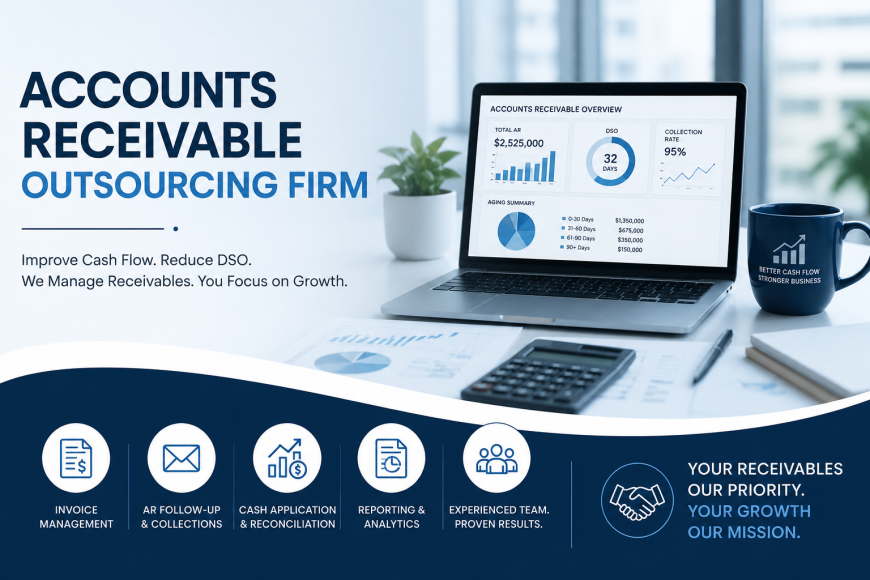
Managing unpaid invoices can become a serious challenge as a business grows. An Accounts Receivable Outsourcing Firm can help companies take control of invoicing, payment tracking, collections, and customer account management without placing additional pressure on their internal team. For many U.S. businesses, outsourcing accounts receivable is becoming a practical way to improve cash flow, reduce administrative work, and keep financial records organized while allowing employees to focus on more important business priorities.
What Is Accounts Receivable Outsourcing?
Accounts receivable refers to the money a business is owed by customers for products or services that have already been provided. While generating sales is important, collecting those sales on time is equally important for maintaining healthy cash flow.
Accounts receivable outsourcing involves hiring an external accounting or finance service provider to manage some or all of these responsibilities.
Depending on the business, outsourced services may include:
- Creating and sending customer invoices
- Recording customer payments
- Monitoring outstanding balances
- Following up on overdue invoices
- Reconciling customer accounts
- Preparing aging reports
- Managing payment discrepancies
- Maintaining accurate customer records
- Providing accounts receivable reports
- Supporting cash flow forecasting
Instead of handling every task internally, companies can rely on an experienced team with established processes and accounting technology.
Why Accounts Receivable Matters to U.S. Businesses
A company can have strong sales and still experience financial pressure if customers do not pay on time.
For example, imagine a business that invoices $100,000 to customers during a month but collects only $70,000. The remaining $30,000 is tied up in outstanding receivables. Meanwhile, the company still has payroll, rent, supplier invoices, taxes, and other operating expenses to cover.
This is why accounts receivable management deserves consistent attention.
A well-organized receivables process helps businesses understand what customers owe, when payments are expected, and which accounts may require follow-up.
Benefits of Working With an Accounts Receivable Outsourcing Firm
Better Cash Flow Management
One of the biggest advantages of outsourcing accounts receivable is improved visibility into incoming cash.
A professional team can monitor outstanding invoices and identify overdue accounts before they become long-term collection problems. Regular reporting gives management a clearer picture of expected payments and available working capital.
Better visibility can make budgeting and short-term financial planning much easier.
Less Administrative Work
Accounts receivable can involve dozens or even hundreds of small tasks every week.
Sending invoices, checking payment records, responding to customer questions, and following up on overdue balances can consume valuable employee time.
Outsourcing these responsibilities allows internal employees to spend more time on activities that directly contribute to business growth.
More Consistent Invoice Follow-Up
Late payments often happen because invoices are overlooked rather than intentionally ignored.
A consistent follow-up process can make a significant difference. An outsourced receivables team can monitor payment due dates and contact customers according to an agreed schedule.
This creates a structured process instead of relying on employees to remember which invoices need attention.
Improved Record Accuracy
Accounts receivable records need to match customer payments and the company's accounting system.
Errors can occur when invoices are entered incorrectly, payments are applied to the wrong accounts, or credit notes are not recorded properly.
Professional accounts receivable teams use established procedures for reconciliation and account monitoring, helping businesses maintain cleaner financial records.
Scalable Support
A company's receivables workload can change significantly over time.
A growing business may suddenly have more customers, invoices, and payment transactions than its existing finance team can comfortably manage.
Outsourcing offers flexibility. Businesses can increase support as transaction volumes grow without immediately recruiting additional full-time employees.
What Services Can Be Outsourced?
Every business has different requirements, so accounts receivable outsourcing does not have to mean handing over the entire function.
Some companies outsource invoice processing while keeping collections internally. Others choose a complete accounts receivable management solution.
Common services include:
Invoice Processing
Accurate and timely invoicing is the starting point for effective collections. An outsourced team can prepare invoices, verify information, and distribute them to customers according to company procedures.
Payment Posting
When payments arrive, they need to be recorded against the correct customer accounts. Proper payment posting helps keep outstanding balances accurate.
Accounts Receivable Aging
An aging report categorizes outstanding invoices based on how long they have remained unpaid.
This allows management to quickly identify current receivables as well as accounts that may require immediate attention.
Customer Account Reconciliation
Reconciliation helps identify differences between customer records and the company's accounting system.
Resolving discrepancies early can prevent confusion and reduce unnecessary disputes.
Collections Support
Professional follow-up can encourage customers to settle overdue invoices while maintaining a respectful business relationship.
The communication approach can be customized based on the company's policies and customer relationships.
How Outsourcing Can Reduce Operating Pressure
Hiring additional employees is not always the best answer when a finance department becomes overloaded.
Recruiting involves salaries, benefits, training, software, equipment, and management time. There may also be periods when the additional employee is not fully utilized.
Working with an external provider gives businesses access to specialized support without necessarily expanding their permanent headcount.
This can be particularly useful for small and midsize U.S. businesses that need professional accounting support but want to maintain control over operating costs.
The Role of Accounting Technology
Modern accounts receivable management relies heavily on technology.
Cloud accounting platforms and financial management systems can simplify invoice processing, payment tracking, reconciliation, and reporting.
Automation can help with repetitive tasks such as:
- Sending invoice reminders
- Matching payments
- Updating account balances
- Generating aging reports
- Tracking payment status
- Producing receivables summaries
Technology does not eliminate the need for human oversight. Instead, it allows accounting professionals to spend less time on repetitive data entry and more time reviewing exceptions, resolving discrepancies, and supporting financial decisions.
Protecting Customer Relationships
Collections need to be handled carefully.
A business wants customers to pay on time, but it also wants to maintain strong relationships with valuable clients.
An experienced accounts receivable team understands the importance of professional communication. Payment reminders should be clear, respectful, and consistent with the company's customer service standards.
This balance is particularly important for businesses that depend on recurring customers or long-term contracts.
When Should a Business Consider Outsourcing?
There is no single point at which every company should outsource accounts receivable. However, several warning signs indicate that outside support could be useful.
Consider outsourcing if:
- Invoices are frequently sent late.
- Customers regularly have overdue balances.
- Employees spend too much time following up on payments.
- Receivables reports are not updated consistently.
- Cash flow is difficult to predict.
- Accounting staff are overwhelmed.
- The business is growing quickly.
- Management lacks visibility into outstanding invoices.
- Internal collections procedures are inconsistent.
These problems can gradually affect profitability if they are not addressed.
Choosing the Right Outsourcing Partner
Not every outsourcing provider offers the same level of service.
Before choosing an accounts receivable partner, businesses should evaluate several factors.
Industry Experience
A provider familiar with your industry may understand common billing practices, payment cycles, and customer requirements.
Technology
Ask which accounting platforms and financial systems the provider supports. Compatibility with your existing technology can make the transition much easier.
Reporting
Regular reporting is essential. Businesses should know how much is outstanding, which invoices are overdue, and how collections are progressing.
Data Security
Accounts receivable teams handle sensitive financial and customer information. Strong security practices and controlled access should be priorities.
Communication
A reliable outsourcing partner should have clear communication procedures and defined points of contact.
Flexible Services
Your requirements may change as your company grows. A provider that can adjust its services accordingly can become a long-term financial partner rather than simply a temporary solution.
Questions to Ask Before Outsourcing Accounts Receivable
Before signing an agreement, business owners and finance managers should ask practical questions.
What specific accounts receivable tasks will be handled?
How frequently will reports be provided?
Which accounting software does the provider use?
How are overdue accounts followed up?
Who will communicate with customers?
How is customer information protected?
What happens when payment discrepancies occur?
Having clear answers to these questions helps establish expectations from the beginning.
Accounts Receivable Outsourcing and Business Growth
Growth usually means more customers, more invoices, and more financial transactions.
Without efficient processes, the finance department can quickly become overwhelmed.
Outsourcing provides businesses with additional capacity while allowing internal teams to remain focused on strategic responsibilities. Instead of constantly reacting to overdue invoices, management can use accurate receivables information to make better decisions about spending, hiring, inventory, and expansion.
Strong receivables management can therefore become part of a broader financial strategy rather than simply an administrative function.
Final Thoughts
Cash flow is one of the foundations of a healthy business, and effective accounts receivable management plays a major role in maintaining it. Working with an Accounts Receivable Outsourcing Firm can give U.S. businesses access to experienced support for invoicing, payment tracking, reconciliation, reporting, and collections while reducing the administrative burden on internal teams.
The right outsourcing arrangement should be more than a way to complete routine accounting tasks. It should create a consistent process, improve financial visibility, and help the business collect the money it has already earned.
For growing companies that want to strengthen their finance operations without unnecessarily increasing internal workload, accounts receivable outsourcing can be a practical step toward more organized and sustainable financial management.