BIM Services in Texas: What Owners, Architects, and Contractors Need to Know
Learn how BIM services in Texas help owners, architects, and contractors improve collaboration, reduce project risks, optimize costs, and achieve better construction outcomes.
 archdraw
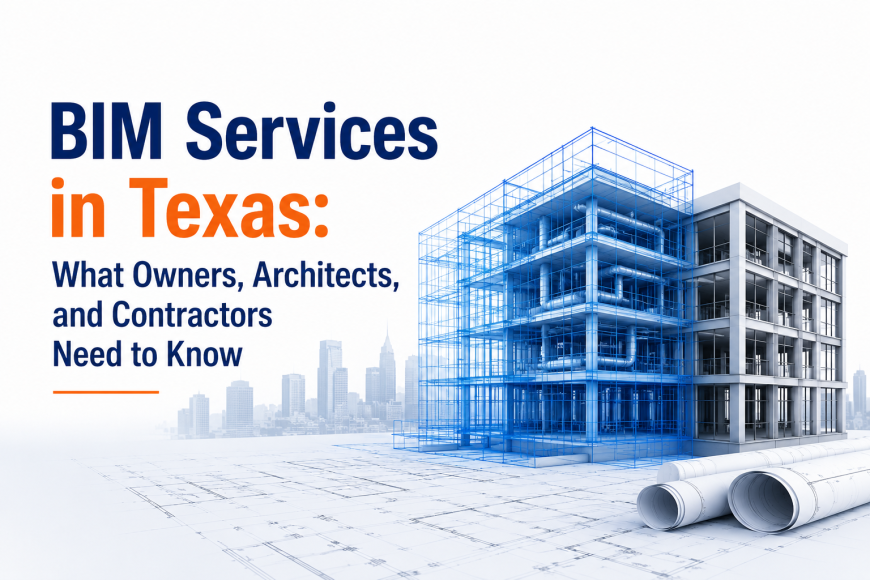
Building Information Modeling (BIM) is transforming the Texas architecture, engineering, and construction (AEC) industry by improving collaboration, reducing project costs, and streamlining delivery. From design visualization for architects to risk mitigation for contractors, leveraging BIM services in Texas is essential for maximizing efficiency and achieving modern construction success.
The Texas construction market is experiencing historic growth. With expanding metropolitan hubs like Austin, Dallas, and Houston, the demand for commercial, residential, and infrastructure development is skyrocketing. To keep pace with this rapid expansion, architecture, engineering, and construction (AEC) professionals are turning to advanced technological solutions to ensure projects are delivered on time and within budget.
At the center of this technological shift is Building Information Modeling (BIM). BIM goes far beyond standard 3D modeling. It provides a comprehensive digital representation of a facility's physical and functional characteristics. This data-rich environment serves as a shared knowledge resource for information about a building, forming a reliable basis for decisions during its entire lifecycle.
For AEC professionals operating in the Lone Star State, understanding how to leverage these digital tools is no longer optional. The adoption of advanced modeling processes creates a distinct competitive advantage. This comprehensive guide explores exactly what project owners, architects, and contractors need to know about implementing these solutions effectively.
What are the benefits of BIM for project owners?
Project owners carry the financial and operational risk of large-scale developments. Utilizing specific data models provides significant advantages throughout the lifecycle of a building.
How does BIM generate cost savings and improve project visualization?
One of the primary advantages for owners is the ability to visualize the entire project before a single shovel hits the dirt. High-fidelity 3D models allow stakeholders to understand spatial relationships and design intent clearly. This early visualization helps identify potential design conflicts, known as clashes, during the pre-construction phase. Resolving these issues digitally prevents expensive rework and change orders on the actual job site, leading to substantial cost savings.
Why is BIM essential for long-term facility management?
The value of digital modeling extends long after the ribbon-cutting ceremony. The "as-built" BIM model handed over at project completion contains detailed information about every component of the building, from HVAC systems to lighting fixtures. Facility managers use this data to schedule preventive maintenance, track asset lifecycles, and optimize energy performance, ultimately reducing long-term operational costs.
How do architects benefit from using BIM software?
Architects require precision and flexibility to bring their visions to life. Digital modeling platforms offer distinct advantages that traditional 2D drafting cannot match.
How does BIM enhance design collaboration and accuracy?
Modern architecture requires seamless coordination between structural, electrical, and plumbing engineers. BIM platforms act as a central hub where all disciplines can work concurrently within the same digital environment. When an architect adjusts a floor plan, the software automatically updates the associated elevations, schedules, and structural requirements. This level of automation ensures accuracy across all documentation and significantly reduces the time spent on manual revisions.
Can BIM improve overall architectural efficiency?
By automating tedious tasks like schedule generation and material quantification, architectural firms can dedicate more time to actual design work. Furthermore, partnering with specialized firms like Archdraw Outsourcing allows architectural practices to scale their drafting and modeling capabilities quickly without the overhead of hiring full-time, in-house technical staff.
What advantages does BIM provide for construction contractors?
For contractors, the construction site is a complex puzzle with tight deadlines and razor-thin margins. Digital modeling provides the clarity needed to execute projects safely and efficiently.
How does BIM improve project coordination and mitigate risk?
Contractors use clash detection features to identify physical overlaps between different building systems before installation begins. For example, discovering that a plumbing line intersects with a structural beam in the digital model prevents costly delays during physical construction. This proactive approach to conflict resolution mitigates financial risk and keeps the project timeline on track.
How does modeling optimize on-site execution and logistics?
Digital models assist contractors in planning site logistics, such as crane placement, material staging, and safety protocol routing. By simulating the construction process over time (often referred to as 4D BIM), contractors can optimize the sequencing of trades, ensuring that materials and personnel arrive on-site precisely when needed.
What should you consider when choosing a BIM service provider in Texas?
Selecting the right technical partner is critical for successful implementation. When evaluating providers for BIM services in Texas, consider their specific experience with local building codes and regional construction practices. Evaluate their portfolio to ensure they have successfully delivered projects similar in scale and scope to your own. Additionally, inquire about their communication protocols and preferred software platforms to ensure compatibility with your internal teams.
What are some examples of successful BIM implementation in Texas projects?
Texas is home to numerous landmark projects that showcase the power of digital modeling. Large-scale healthcare facilities in the Texas Medical Center have heavily relied on BIM to coordinate highly complex mechanical and electrical systems. Similarly, major corporate campus developments in Austin have utilized these models to accelerate construction schedules and meet stringent sustainability goals. These projects demonstrate that early adoption of digital collaboration tools directly correlates with reduced project durations and improved quality control.
What is the future of BIM in Texas?
The future of digital construction modeling in Texas points toward deeper integration with emerging technologies. We are seeing increased use of artificial intelligence to automate routine modeling tasks and optimize building performance. Additionally, the integration of BIM with augmented reality (AR) and virtual reality (VR) allows stakeholders to walk through digital models at a 1:1 scale, providing unprecedented insight into the final product. As the Texas construction market continues to grow, the standard for digital project delivery will only become more rigorous.
Maximizing project success in the Lone Star State
The integration of comprehensive digital models is fundamentally changing how buildings are designed, constructed, and managed. For owners, it means better financial predictability and streamlined facility management. For architects, it ensures design fidelity and enhanced collaboration. For contractors, it delivers the coordination necessary to build safely and profitably. By embracing these technologies and partnering with experienced professionals, AEC firms can ensure they remain at the forefront of the booming Texas construction industry.
Frequently Asked Questions (FAQ)
How much do BIM services typically cost for a commercial project?
The cost of digital modeling services varies widely based on project size, complexity, and the required Level of Development (LOD). Generally, BIM services account for 0.5% to 1% of the total construction cost, but this upfront investment often yields much higher returns by eliminating rework and minimizing change orders.
How long does it take to create a complete architectural BIM model?
A standard commercial building model can take anywhere from a few weeks to several months to complete. The timeline depends heavily on the availability of accurate design documents, the complexity of the building systems, and the specific deliverables required by the project stakeholders.
Are there alternatives to hiring an in-house BIM team?
Yes. Many AEC firms choose to partner with specialized external providers to handle their modeling needs. Utilizing services like Archdraw Outsourcing allows companies to access expert-level technical skills on a project-by-project basis, reducing overhead costs while maintaining high-quality output.
Who actually owns the final BIM model after construction is completed?
Ownership of the digital model is typically defined in the initial project contracts. In most modern delivery methods, the project owner retains the rights to the final "as-built" model, as they require the data for ongoing facility management and future renovations.