7 MTBF Tools That Help You Improve Reliability and Reduce Downtime
mtbf-tools-improve-reliability
 Relteck1
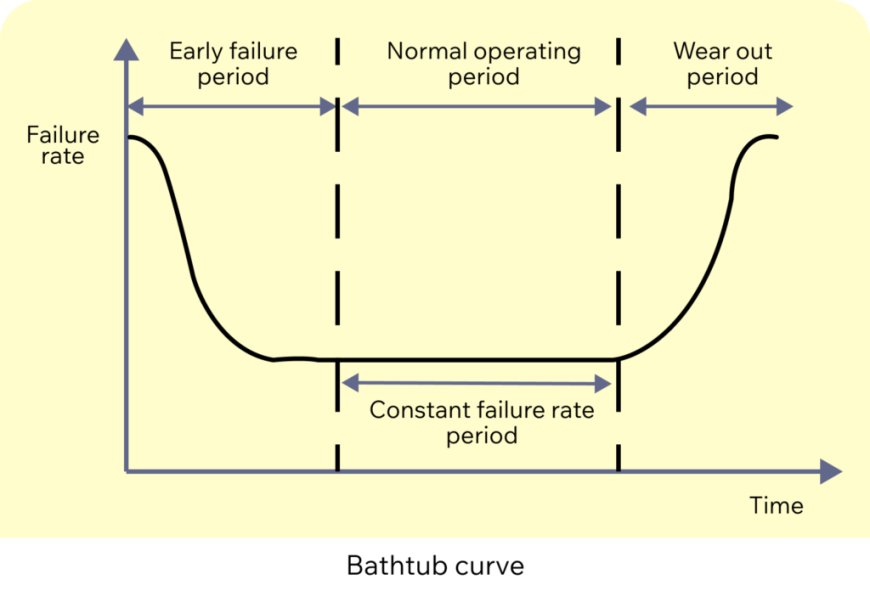
When products fail, customers lose trust and companies lose money. That is why Mean Time Between Failures (MTBF) is such a widely used reliability metric. It tells you how long a system or component can operate before failing on average. However, MTBF is only useful when you have the right tools to calculate, analyze, and improve it.
Today, there are several MTBF tools—both software and process-based—that help teams predict performance, plan maintenance, and build more reliable products. In this blog, we’ll walk through the most useful types of MTBF tools, how they work, and how they support better decision-making. Whether you manage manufacturing, engineering, maintenance, or product development, understanding these tools can help you reduce downtime and keep systems running smoothly.
Let’s break them down one by one.
1. MTBF Calculation Software
The most basic but essential tool is MTBF calculation software. These tools take raw failure data from production, testing, or field performance and automatically calculate MTBF values. Instead of running manual formulas in spreadsheets, you can load data and get instant results.
Key features of calculation tools:
-
Import failure logs and operating hours
-
Filter by product type or model
-
Automatically apply MTBF formulas
-
Export data for reporting
Some tools also calculate related metrics such as Mean Time To Repair (MTTR), availability, and reliability percentages. This gives you a clearer picture of how failures affect uptime. For small teams, spreadsheets may still work, but automated MTBF calculators save time and reduce human error, especially as data grows.
2. Reliability Prediction Tools (Based on Standards)
When you don’t have field data yet—such as during design or early development—you need prediction tools. These tools estimate MTBF using reliability prediction standards like Telcordia SR-332, MIL-HDBK-217F, or Siemens SN29500. They use component-level failure rate libraries and environmental factors to calculate system reliability.
Why prediction tools matter:
-
Useful during product design
-
Helps compare design options
-
Reduces risk before production
-
Supports compliance with industry standards
Reliability engineers often rely on these tools to make design decisions before the product is built. They can run “what-if” simulations, test different component selections, and optimize for longevity. This early insight helps avoid expensive redesigns later.
3. Failure Data Collection and CMMS Systems
MTBF is only as accurate as the data behind it. That’s why failure data collection tools and CMMS (Computerized Maintenance Management Systems) are crucial. These platforms track equipment performance, repair history, and downtime events. They capture real-world data that feeds directly into MTBF calculations.
What CMMS systems offer:
-
Logs of every maintenance task
-
Failure codes and root cause tracking
-
Asset operating hours or cycles
-
Automated MTBF and MTTR reports
If you run a maintenance or operations team, CMMS software becomes your central source of truth. It helps you identify patterns, schedule preventive maintenance, and improve reliability over time. Without proper data collection, MTBF numbers can be misleading or incomplete.
4. Reliability Modeling and Block Diagram Tools
For complex systems with many components, MTBF cannot be evaluated in isolation. Reliability block diagram (RBD) tools help you model how components work together and how a single failure might affect the entire system. These tools consider redundancy, parallel systems, and failover logic.
Common capabilities include:
-
Visual reliability block diagrams
-
Series and parallel modeling
-
Monte Carlo simulations
-
System-level MTBF and availability predictions
These tools are powerful for engineering teams designing products like industrial equipment, aerospace systems, automotive electronics, or power systems. Rather than guessing how reliable a full system might be, you can model it accurately and see which components are the weak link.
5. FMEA and Root Cause Analysis Tools
Knowing your MTBF is helpful, but improving it requires understanding why failures happen. This is where tools like Failure Modes and Effects Analysis (FMEA) and Root Cause Analysis (RCA) come in. These tools help teams record potential or actual failure modes and assign severity, frequency, and detection scores.
FMEA tools help you:
-
Identify high-risk failure points
-
Prioritize fixes based on risk level
-
Track corrective actions
-
Improve designs or processes
RCA tools help you:
-
Investigate recurring failures
-
Find the true cause, not just symptoms
-
Implement long-term solutions
Combining MTBF data with FMEA and RCA makes your reliability efforts more proactive. Instead of reacting to failures, you uncover underlying issues and design them out.
6. Condition Monitoring and Predictive Maintenance Tools
Some of the most modern MTBF tools don’t just calculate past performance—they help predict future behavior. Condition monitoring systems track equipment health in real time using sensors and performance data. When a failure seems likely, the system alerts maintenance teams before the problem becomes critical.
Examples of condition monitoring data:
-
Vibration patterns
-
Temperature changes
-
Pressure fluctuations
-
Energy usage
Predictive maintenance platforms take this data and use AI or analytics to forecast failures. Instead of waiting for MTBF to drop, you intervene early and extend the life of components. This not only reduces downtime but also improves safety and cost efficiency.
7. Reporting and Dashboard Tools
Even the best MTBF data is useless if it isn’t communicated clearly. Reporting and dashboard tools make reliability metrics easy to understand for different stakeholders—engineers, managers, or executives.
Typical reporting features:
-
Customizable dashboards
-
Trend charts over time
-
MTBF comparisons across products or assets
-
Automated reports sent via email or PDF
Dashboards turn raw numbers into visual insights. You can quickly see which machines are most reliable, where downtime is increasing, and whether your improvements are working. For leadership teams, these visuals help justify investments in maintenance, training, or redesign.
How MTBF Tools Work Together
No single tool covers everything. The most effective reliability strategies use a combination of MTBF tools across the product lifecycle.
A typical workflow might look like this:
-
Use prediction tools during design to estimate reliability.
-
Build reliability block diagrams to model system behavior.
-
Track real-world data using CMMS or monitoring tools.
-
Calculate actual MTBF from performance data.
-
Investigate root causes when failures occur.
-
Improve design or maintenance plans based on insights.
-
Use dashboards to track progress and share results.
Each tool supports a different stage of improvement. When they work together, reliability becomes a continuous process, not a one-time calculation.
What to Look for When Choosing MTBF Tools
Selecting the right tools depends on your products, industry, and goals. Here are a few things to consider:
Ease of use:
Complicated software slows down adoption. A user-friendly interface saves time and reduces training needs.
Data accuracy:
Clean, organized data is critical. Look for tools that integrate with your existing systems to avoid manual entry.
Scalability:
As your product line or equipment grows, your tool should grow with you.
Standard support:
If you work with military, telecom, or automotive standards, choose tools that support the required methodologies.
Reporting capabilities:
Leadership will want clear, concise metrics. Choose tools that provide easy reporting and visualization.
Cost and ROI:
The right tool should reduce downtime, improve reliability, and pay for itself over time.
The Impact of Using the Right MTBF Tools
When companies rely on manual calculations and scattered data, MTBF becomes a number on paper. But with the right tools in place, MTBF becomes a powerful decision-making metric. It can help you:
-
Reduce unplanned downtime
-
Improve product quality
-
Plan maintenance more effectively
-
Extend asset life
-
Build customer trust
-
Lower warranty and repair costs
More importantly, MTBF tools give you visibility. You can spot patterns, make data-driven decisions, and continuously improve performance.
Final Thoughts
Reliability isn’t just about fixing broken things. It’s about preventing failures before they happen and building systems that behave predictably over time. MTBF tools play a major role in this process. From calculation software and prediction models to condition monitoring and reporting dashboards, each tool supports a different part of the reliability journey.
If you are serious about improving uptime and customer satisfaction, start by evaluating where you are today. Do you have accurate data? Are your teams aligned? Are your tools giving you the insights you need? The right mix of MTBF tools can transform how you manage performance, reduce risk, and deliver long-lasting results.
By treating MTBF as more than just a number—and using the right tools to support it—you set the foundation for smarter operations and stronger products.