AI Plus Size Fashion Is Not a Trend, It’s a Correction
Explore why AI plus size fashion is a necessary correction in inclusive fashion, reshaping fit, confidence, and personalization beyond outdated trends.
 lisamarcus
For decades, plus size fashion has lived on the margins of the industry. It existed, but rarely with the same care, creativity, or intelligence applied to straight size clothing. Limited choices, inconsistent sizing, awkward silhouettes, and an unspoken assumption that plus size shoppers should simply “make do” were treated as normal. This was not a gap in demand. It was a gap in understanding.
AI plus size fashion is emerging not as a shiny new trend, but as a long overdue correction. It addresses structural flaws that fashion normalized for years and replaces guesswork with data, empathy, and relevance. What we are witnessing now is not innovation for novelty’s sake. It is fashion finally being forced to confront reality.
The real problem was never size. It was systems.
Plus size consumers were often framed as an edge case, when in reality they represent a significant share of the global fashion market. The issue was not that plus size bodies were difficult to design for. The issue was that fashion systems were built around narrow datasets and rigid assumptions.
Traditional sizing charts flatten bodies into numbers. Styling advice assumes proportionality that does not exist in real life. Ecommerce filters offered limited categories, while product images rarely reflected how garments behaved on diverse bodies. The industry is optimized for speed and scale, not accuracy or inclusivity.
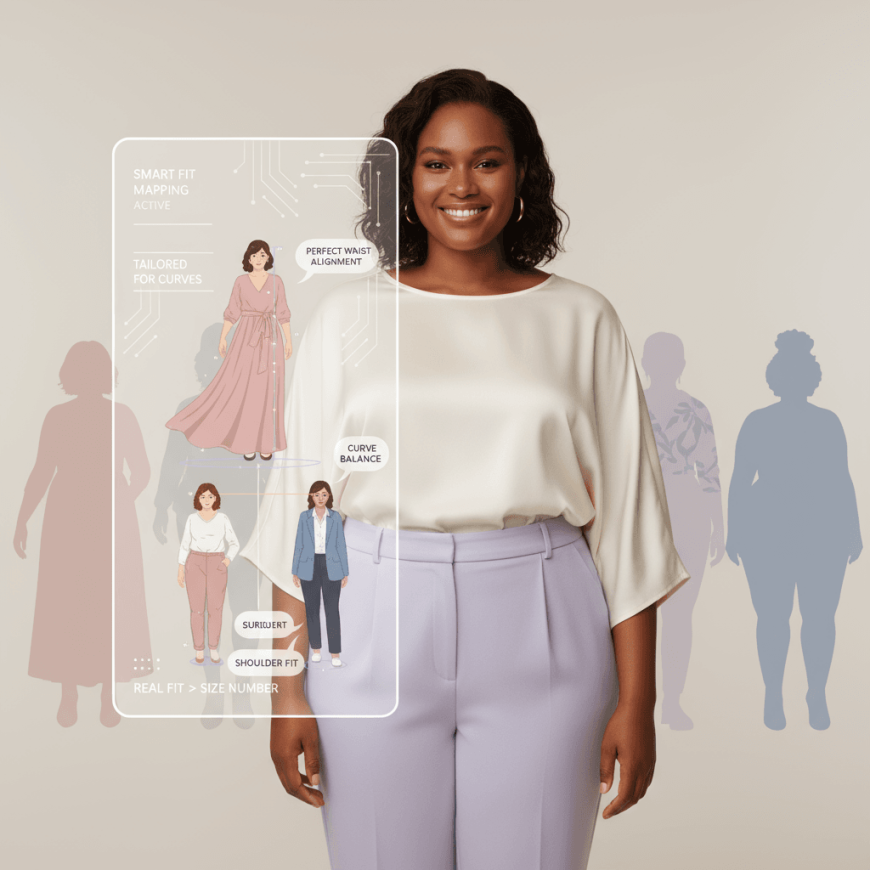
AI challenges this foundation at the system level. It does not rely on a single “ideal” body. It learns from patterns, variation, and context. This is why AI plus size fashion feels different. It is not adding representation as an afterthought. It is rebuilding the logic that drives discovery, fit, and styling.
Why AI changes the plus size fashion equation
AI excels where traditional fashion infrastructure fails. It can process vast amounts of visual and product data, identify what works across different body types, and adapt recommendations based on real behavior rather than assumptions.
In plus size fashion, this matters deeply. Fit is not just about waist or bust measurements. It is about how fabric drapes, where tension appears, how proportions balance, and how comfort interacts with confidence. AI can analyze these signals at scale.
Instead of offering generalized outfit ideas, AI driven systems learn preferences over time. They understand which silhouettes flatter, which fabrics feel comfortable, and which styles feel authentic to the individual. This transforms plus size fashion from a compromise into a choice.
Moving beyond token inclusivity
For years, inclusivity in fashion was treated as a visual exercise. A few plus size models were added to campaigns, but the underlying shopping experience remained unchanged. Product discovery was still frustrating. Styling inspiration was still limited. Fit confidence was still low.
AI plus size fashion moves inclusivity from surface level to structural. It reshapes how products are filtered, compared, and recommended. When AI removes low quality items, highlights better construction, and curates outfits holistically, it directly improves outcomes for plus size shoppers.
This is where intelligent shopping agents like Glance quietly contribute. By scanning across platforms, evaluating quality signals, and presenting refined options, such systems reduce the burden placed on shoppers to decode poorly designed marketplaces. The experience becomes calmer, smarter, and far more respectful.
Confidence is the real currency
One of the most overlooked impacts of AI plus size fashion is emotional. Shopping has historically been an exhausting experience for plus size consumers. Constant uncertainty around fit, fear of disappointment, and limited representation eroded trust.
AI restores that trust by replacing guesswork with insight. When recommendations are grounded in data and preference learning, decisions feel informed rather than hopeful. Digital try ons and visual previews further reduce anxiety by allowing people to see how outfits might work before committing.
Confidence grows not because the options increase, but because the options make sense.
From mass trends to personal relevance
Fashion trends move fast, but relevance lasts longer. AI plus size fashion shifts focus away from chasing trends and toward building wardrobes that reflect real lives.
AI does not ask plus size shoppers to adapt to trends designed for different bodies. It adapts trends to the individual. This distinction is critical. It allows people to participate in fashion without feeling excluded or forced into silhouettes that do not serve them.
Outfit ideas become contextual. Workwear considers comfort and structure. Casual looks respect movement and ease. Occasion wear balances drama with wearability. This level of nuance was impossible to scale manually. AI makes it practical.
Why this is a correction, not a phase
Trends come and go because they sit on top of existing systems. Corrections change the systems themselves. AI plus size fashion is correcting how fashion understands bodies, data, and individuality.
It challenges the idea that inclusivity is expensive or complex. It proves that personalization at scale is possible. It forces brands and platforms to confront the inefficiencies they ignored for years.
As AI becomes embedded in discovery, styling, and shopping workflows, there is no going back to generic recommendations. The expectation has shifted. Shoppers now expect fashion to understand them.
The ripple effect on the industry
The rise of AI plus size fashion has implications beyond individual shoppers. It impacts design, inventory planning, and sustainability. When recommendations improve and returns decrease, waste reduces. When data reveals what actually works, design decisions improve.
Brands that listen to AI driven insights can refine their plus size offerings with precision instead of guesswork. This leads to better products, not just better marketing.
AI also democratizes expertise. Styling intelligence that once lived with a handful of professionals is now accessible to anyone. This levels the playing field in a meaningful way.
A more honest future for fashion
AI plus size fashion represents a shift toward honesty. Honest data. Honest fit. Honest representation. It acknowledges that bodies are diverse and that fashion must adapt accordingly.
Platforms like Glance are not redefining style. They are redefining access. By turning overwhelming marketplaces into curated experiences, they help plus size shoppers engage with fashion on their own terms.
This is not about celebrating technology. It is about correcting neglect.
The correction we needed
Calling AI plus size fashion a trend minimizes its impact. This is a necessary evolution driven by years of exclusion and inefficiency. It fixes what was broken, not what was missing.
Fashion is finally learning to listen. And AI is helping it hear the people it ignored for far too long.
That is not a trend. That is progress.