Why Managed Security Operations Center Is Critical for U.S. ICT SMEs: 10 Powerful Cybersecurity Strategies for 2026
Discover how managed security operations center solutions help U.S. ICT SMEs strengthen cybersecurity with advanced network threat detection and continuous monitoring.
 misanjay
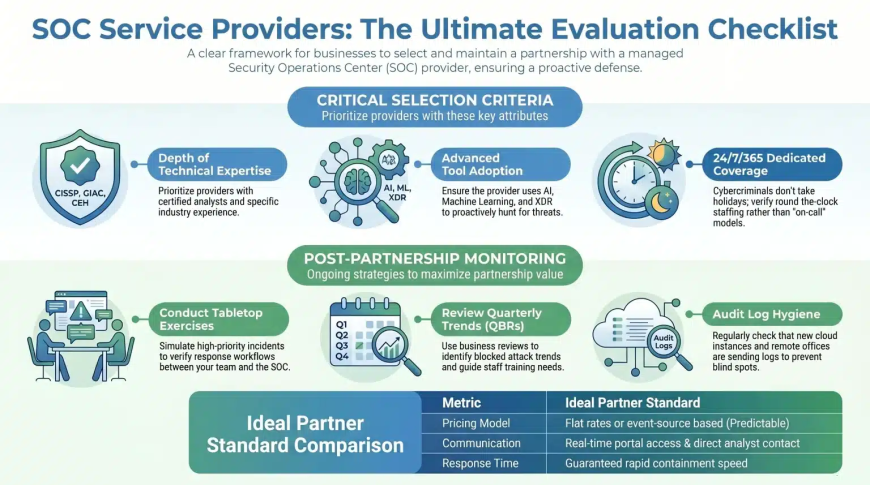
The Information and Communication Technology (ICT) industry operates at the center of today's digital economy. Software companies, cloud providers, managed service providers (MSPs), telecommunications firms, SaaS platforms, data centers, and technology consultancies process enormous volumes of business-critical information every second. As organizations expand their cloud environments, remote workforces, APIs, and interconnected systems, the cyber threat landscape continues to evolve at an unprecedented pace.
Cybercriminals are no longer targeting only large enterprises. Small and medium-sized ICT businesses have become attractive targets because they often manage valuable customer environments while operating with limited internal security resources. Ransomware campaigns, credential theft, phishing attacks, insider threats, supply chain compromises, and sophisticated malware have made continuous security monitoring an operational necessity rather than an optional investment.
Traditional security tools alone are no longer sufficient to defend modern IT environments. Firewalls, antivirus software, and endpoint protection generate enormous volumes of alerts every day, making it difficult for internal IT teams to distinguish genuine security incidents from routine activity. Without continuous monitoring and expert analysis, organizations risk allowing critical threats to remain undetected until significant business disruption occurs.
This growing challenge has made a managed security operations center one of the most valuable cybersecurity investments for U.S. ICT SMEs in 2026. Instead of building an expensive in-house security operations team, organizations can access continuous monitoring, expert threat analysis, and rapid incident response through a managed SOC model.
Supported by advanced network threat detection, managed SOC services provide real-time visibility into security events across cloud environments, endpoints, servers, applications, and enterprise networks. This proactive approach helps organizations identify suspicious activity earlier, reduce cyber risk, and strengthen overall operational resilience.
For ICT businesses committed to protecting customer trust and maintaining uninterrupted digital operations, managed SOC services have become a cornerstone of modern cybersecurity strategy.
What Is a Managed Security Operations Center?
Cybersecurity requires continuous monitoring, skilled analysis, and rapid decision-making to respond effectively to evolving threats.
A managed security operations center is a dedicated cybersecurity service that continuously monitors an organization's IT infrastructure, analyzes security events, investigates suspicious activity, and supports incident response through experienced security professionals and advanced monitoring technologies.
Typical SOC capabilities include:
- Continuous security monitoring
- Security event analysis
- Incident investigation
- Threat intelligence
- Log management
- Security alert validation
- Security reporting
- Incident response support
Rather than relying solely on internal IT staff, organizations gain access to specialized cybersecurity expertise operating around the clock.
This allows businesses to strengthen their security posture while maintaining focus on core business operations.
Why ICT Organizations Need Continuous Security Monitoring
Technology companies manage highly interconnected digital ecosystems that require constant protection.
Typical environments include:
- Cloud infrastructure
- Enterprise applications
- Customer portals
- Development platforms
- APIs
- Business databases
- Remote workforce systems
- Network infrastructure
As these environments become increasingly complex, cyber threats become more difficult to identify manually.
Organizations commonly face:
- Alert fatigue
- Limited security visibility
- Growing attack surfaces
- Resource shortages
- Slow incident identification
- Increasing cybersecurity complexity
A managed security operations center helps organizations address these challenges through continuous monitoring and expert analysis.
How a Managed Security Operations Center Strengthens Cybersecurity
Continuous Security Monitoring
Cyber threats can emerge at any time.
A managed security operations center provides 24/7 monitoring that enables organizations to identify suspicious activities before they escalate into major security incidents.
Continuous visibility improves overall cyber resilience.
Faster Incident Detection
Rapid detection reduces the time attackers have to move through business environments.
SOC analysts investigate security events as they occur, enabling faster identification of genuine threats while reducing unnecessary alert noise.
Improved Security Visibility
Organizations generate thousands of security events every day.
A managed SOC centralizes monitoring across multiple technology environments, giving leadership greater visibility into security activities throughout the organization.
Proactive Threat Management
Modern cybersecurity focuses on identifying risks before they affect business operations.
Managed SOC teams continuously evaluate emerging threats and prioritize incidents based on business impact and organizational risk.
Enhanced Business Continuity
Cyber incidents can interrupt operations, affect customer trust, and reduce productivity.
Continuous security monitoring supports faster response activities that help minimize operational disruption.
Why Network Threat Detection Is Essential
Monitoring security events is only one component of effective cybersecurity.
Network threat detection enables organizations to identify unusual behavior, unauthorized access attempts, malicious communications, and abnormal network activity before attacks spread across business systems.
Advanced threat detection supports:
- Suspicious traffic identification
- Unauthorized access monitoring
- Network anomaly detection
- Threat prioritization
- Early attack identification
- Improved security visibility
By combining continuous monitoring with network threat detection, organizations gain a proactive approach to cybersecurity rather than relying solely on reactive defenses.
Cybersecurity Trends Driving Managed SOC Adoption
Several developments continue increasing demand for managed security operations centers across the ICT industry.
Growth of Ransomware Attacks
Cybercriminals continue targeting organizations that depend on continuous digital operations.
Expansion of Cloud Infrastructure
Cloud adoption requires centralized visibility across increasingly distributed environments.
Hybrid Workforce Growth
Organizations require security monitoring that protects users regardless of location.
Increasing Cybersecurity Skills Shortage
Many SMEs struggle to recruit experienced cybersecurity professionals capable of providing continuous monitoring.
These trends continue positioning managed SOC services as a strategic cybersecurity investment.
How IBN Technologies Supports ICT Organizations
Building an effective cybersecurity program requires continuous monitoring, expert analysis, and structured incident management.
IBN Technologies delivers managed security operations center services that help ICT organizations improve threat visibility, strengthen cyber resilience, and respond more effectively to evolving security risks.
Its SIEM & SOC capabilities include:
- 24/7 security monitoring
- Security event management
- Threat analysis
- Incident investigation
- Security reporting
- Log monitoring
- Threat intelligence support
- Incident response assistance
Organizations also benefit from advanced network threat detection capabilities that improve visibility across enterprise infrastructure while enabling earlier identification of suspicious activity.
This integrated approach helps ICT businesses reduce cyber risk, improve operational resilience, and maintain secure digital environments that support long-term business growth.
Conclusion
The modern cyber threat landscape demands more than traditional security tools. ICT organizations require continuous visibility, expert analysis, and rapid response capabilities to defend increasingly complex digital environments.
A managed security operations center provides organizations with around-the-clock monitoring, faster incident detection, and structured cybersecurity operations that strengthen overall security maturity. Combined with advanced network threat detection, businesses gain proactive protection that improves operational resilience and reduces organizational risk.
As cyber threats continue to evolve in sophistication, ICT organizations that invest in managed SOC capabilities today will be better positioned to protect critical assets, maintain customer trust, and support sustainable digital growth.
Ready to Strengthen Your Cybersecurity Operations?
Partner with IBN Technologies to implement a managed security operations center that delivers continuous monitoring, intelligent threat analysis, and rapid incident response. With advanced network threat detection and expert SIEM & SOC services, your ICT organization can build a resilient, scalable, and future-ready cybersecurity program that protects business-critical operations around the clock.