Why Demand for Hyperscale Data Centers Continues to Rise Across Industries
The demand for hyperscale data centers is increasing across industries as organizations generate larger volumes of data and adopt cloud computing, artificial intelligence, and digital transformation strategies. These large-scale facilities provide the scalability, performance, and reliability needed to support modern applications and growing digital workloads. Rising data consumption, expanding cloud services, AI-driven computing requirements, and investments in sustainable infrastructure are accelerating hyperscale data centre development worldwide. As businesses continue to prioritize digital operations, hyperscale facilities are expected to remain a critical foundation of the global digital economy.
 kylejeminson
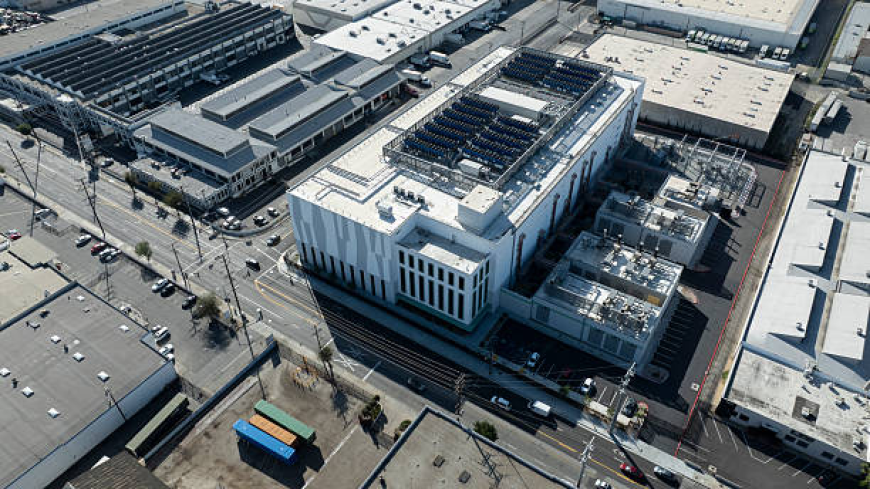
The global economy is becoming increasingly data-driven. From cloud computing and artificial intelligence (AI) to video streaming, e-commerce, and connected devices, organizations across sectors are generating and processing unprecedented volumes of information. As digital workloads continue to expand, businesses require infrastructure capable of supporting massive computing demands. This need has placed hyperscale data centers at the center of modern digital transformation strategies.
According to a MarkNtel Advisors report, the global hyperscale data center industry is expected to experience notable growth during the forecast period, supported by accelerating cloud adoption, rising enterprise digitization, and increasing investments in advanced computing infrastructure. This hyperscale data center industry report highlights how organizations are scaling their technology ecosystems to accommodate rapidly growing data requirements.
What Makes Hyperscale Data Centers Different?
Hyperscale data centers are large-scale facilities specifically designed to support extensive computing, networking, and storage requirements. Unlike traditional data centers, hyperscale facilities can efficiently scale operations by adding servers and resources without compromising performance or reliability.
These facilities often house thousands of servers and sophisticated networking systems capable of handling enormous amounts of digital traffic. Their design emphasizes automation, energy efficiency, redundancy, and high-speed connectivity, making them essential for organizations operating large cloud platforms and data-intensive applications.
According to the National Institute of Standards and Technology (NIST), scalable computing infrastructure is a fundamental characteristic of cloud environments, allowing resources to expand rapidly in response to changing demand. This capability aligns closely with the operational model of hyperscale facilities.
Cloud Computing Remains a Key Growth Driver
One of the most significant factors behind the expansion of hyperscale infrastructure is the continued growth of cloud computing. Organizations are increasingly migrating applications, databases, and business operations to cloud environments to improve flexibility, scalability, and operational efficiency.
The adoption of hybrid and multi-cloud strategies has further increased demand for large-scale facilities capable of supporting diverse workloads. Businesses require infrastructure that can provide uninterrupted service, rapid scalability, and secure access to applications across multiple locations.
The International Telecommunication Union (ITU) reports that expanding digital connectivity and growing internet usage worldwide continue to drive demand for cloud-based services and data processing capabilities. As more organizations embrace digital-first operating models, hyperscale facilities are expected to play an increasingly important role in supporting these ecosystems.
Artificial Intelligence Is Transforming Infrastructure Requirements
The emergence of artificial intelligence has introduced a new wave of demand for advanced computing resources. Training large language models, conducting predictive analytics, and deploying machine learning applications require substantial processing power and storage capacity.
Modern AI systems rely heavily on specialized hardware, including graphics processing units (GPUs) and high-performance computing architectures. As enterprises integrate AI into business processes, infrastructure providers are expanding hyperscale facilities to accommodate these computational requirements.
This analysis of hyperscale infrastructure trends suggests that AI-related workloads are becoming one of the most influential factors shaping future data center investments. Organizations increasingly seek facilities capable of supporting both current AI applications and future innovations.
Rising Data Consumption Across Industries
Virtually every industry now depends on data for operational efficiency and decision-making. Healthcare organizations utilize digital records and advanced analytics. Financial institutions process millions of transactions daily. Manufacturing companies deploy connected sensors and industrial Internet of Things (IoT) technologies. Retailers rely on customer analytics and digital commerce platforms.
As data generation continues to accelerate, organizations require infrastructure capable of storing, managing, and processing information efficiently. Hyperscale data centers offer the scale and performance necessary to support these increasingly complex environments.
According to the World Bank's Digital Development initiatives, digital technologies continue to expand across economies worldwide, increasing demand for reliable infrastructure that can support growing digital ecosystems.
Sustainability Is Becoming a Strategic Priority
While hyperscale facilities provide significant computing capacity, they also consume substantial amounts of electricity. As a result, sustainability has become a major focus area for data center operators.
Organizations are investing in renewable energy procurement, advanced cooling technologies, energy-efficient server systems, and intelligent power management solutions. These initiatives aim to reduce environmental impact while maintaining operational performance and reliability.
The International Energy Agency (IEA) emphasizes that improving energy efficiency and integrating renewable energy sources are critical for managing the environmental footprint of data centers as global digital activity continues to grow.
Regional Expansion and Infrastructure Investments
Investment in hyperscale infrastructure is expanding across multiple regions. North America remains a major hub due to its concentration of cloud providers and technology companies. Meanwhile, Asia-Pacific is experiencing strong growth driven by increasing internet penetration, expanding digital economies, and rising enterprise technology adoption.
European countries are also investing heavily in data center development to support digital sovereignty objectives, regulatory compliance requirements, and regional cloud infrastructure initiatives. Similar trends are emerging in parts of the Middle East and Latin America as governments prioritize digital transformation and smart infrastructure development.
According to this hyperscale data center growth forecast, geographic diversification is becoming increasingly important as organizations seek lower latency, greater resilience, and broader service availability.
Conclusion
The demand for hyperscale data centers continues to rise because they provide the scalability, performance, and reliability required by today's digital economy. Rapid cloud adoption, increasing AI workloads, growing data consumption, and expanding digital transformation initiatives are driving organizations to invest in advanced infrastructure solutions.
As technology continues to evolve, hyperscale facilities will remain essential for supporting next-generation applications and services. Ongoing innovation in automation, sustainability, and high-performance computing is expected to further strengthen their role in enabling global digital growth while helping organizations meet increasingly complex operational demands.