Telepsychiatry in New Jersey: How Online Mental Health Care Actually Works
Learn how telepsychiatry works in New Jersey, including online psychiatric evaluations, medication management, privacy, insurance coverage, and when in-person care may be needed.
 azzmedical
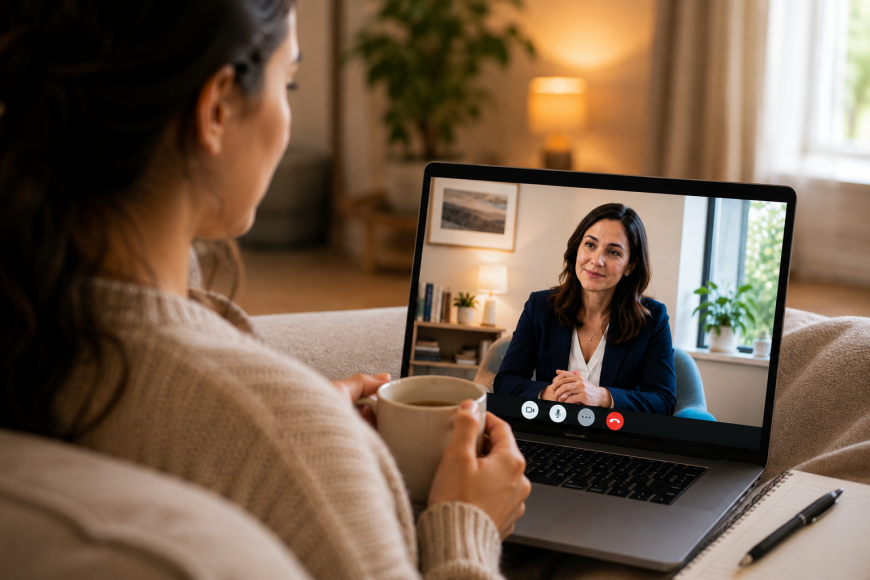
A few years ago, seeing a psychiatrist meant taking time off work, sitting in traffic, and waiting in a lobby before you ever got to talk to anyone. For a lot of New Jersey residents, that friction was enough to put off getting help entirely. Telepsychiatry has quietly changed that. But if you've never done a mental health appointment over video, it's fair to wonder how it actually works, whether it's any good, and whether your private conversation is really private. Here's a plain-English look at how online psychiatric care works in New Jersey.
What telepsychiatry actually is
Telepsychiatry is simply psychiatry delivered remotely, usually through a secure video call and sometimes by phone. The psychiatrist does the same things they would in an office: evaluates your symptoms, makes a diagnosis, prescribes and adjusts medication when appropriate, and provides follow-up care. The main difference is that you're doing it from your living room instead of a waiting room.
It's used for a wide range of conditions, including depression, anxiety, ADHD, bipolar disorder, OCD, and PTSD. For many people it's not a lesser substitute for in-person care but simply a more convenient way to get the same care.
How an online appointment works, step by step
The process is more straightforward than most people expect.
-
Booking. You schedule an appointment online or by phone, much like any other visit. The practice confirms your insurance and sends any intake paperwork electronically.
-
Before the visit. You'll get a secure link to join. All you need is a smartphone, tablet, or computer with a camera and a stable internet connection, plus a quiet, private spot to talk.
-
The appointment. At your scheduled time, you click the link and meet your psychiatrist by video. The conversation unfolds just like an in-person session: they ask about your symptoms, history, and goals, and you talk it through together.
-
After the visit. If medication is prescribed, it's usually sent electronically to your pharmacy. Follow-up appointments are booked the same way, often with shorter wait times than in-office slots.
What can and can't be handled online
Most routine psychiatric care translates well to video. Evaluations, therapy-oriented conversations, diagnosis, and ongoing medication management are all commonly done through telepsychiatry.
There are limits. Psychiatric emergencies, such as active thoughts of self-harm with intent, are not appropriate for a scheduled video visit and need immediate in-person help or a crisis line. In the U.S., you can call or text 988 for the Suicide and Crisis Lifeline at any time. In addition, prescribing certain controlled medications online, like some ADHD stimulants, comes with specific federal and state requirements that can change over time, and in some cases an in-person visit may be required at some point. A good provider will tell you clearly if your situation falls into one of these categories.
Is online psychiatric care actually effective?
This is the most common worry, and the reassuring news is that a large body of research has found telepsychiatry to be comparable to in-person care for diagnosing and treating many common conditions. Patient satisfaction tends to be high, and some people actually open up more easily from the comfort of their own home. For medication management in particular, where much of the work is careful conversation and monitoring, video visits work very well.
That said, fit matters. Some people simply prefer being in the room, and certain complex or severe presentations benefit from in-person evaluation. Telepsychiatry is a strong option for most, not a mandate for anyone.
Privacy and security: is it safe?
A legitimate telepsychiatry service doesn't run on ordinary consumer video apps. Reputable providers use encrypted, HIPAA-compliant telepsychiatry platforms built specifically for healthcare, which protect your information the same way an in-person medical record is protected. Your session isn't recorded without your consent, and the same confidentiality rules that apply in an office apply on the screen.
You can protect your own privacy too: take the call somewhere you won't be overheard, use headphones, and avoid public Wi-Fi for sensitive conversations. Those small steps, combined with a secure platform, keep your care genuinely confidential.
How telepsychiatry works in New Jersey specifically
New Jersey has embraced telehealth, and a few state-specific points are worth knowing.
Coverage. Under New Jersey's telehealth and mental health parity rules, most insurance plans cover telepsychiatry comparably to in-person visits. Always confirm your specific plan's terms before booking.
Licensing. The psychiatrist treating you must be licensed to practice in New Jersey. That's a good thing to verify, and it's a reason to choose an established local practice rather than an anonymous national app.
Prescribing. Standard medications are prescribed electronically to your pharmacy with no trouble. Controlled substances follow stricter, evolving rules, so your provider may occasionally require an in-person step depending on current regulations.
Who telepsychiatry is a great fit for
Online care tends to work especially well for people with busy or unpredictable schedules, those without easy transportation, residents of more rural parts of the state, anyone managing childcare or mobility challenges, and people who feel more at ease talking from home. It's also a low-friction way to get started if nerves have been holding you back, since the first appointment can happen without you ever leaving the house.
How to get started in New Jersey
Getting going is simple. Find a New Jersey practice that offers telepsychiatry, confirm they take your insurance, and book an initial evaluation. Have your medication list and a few notes about your symptoms ready, find a quiet spot, and test your camera and internet a few minutes early. From there, the visit runs like any other appointment, just more comfortably.
Conclusion
Telepsychiatry has taken one of the most common reasons people avoid mental health care, the hassle of getting there, and largely removed it. In New Jersey, it's accessible, covered by most insurance, protected by the same privacy standards as in-person care, and backed by research showing it works. It won't replace in-person treatment for every situation, but for a great many people it's the difference between getting help and continuing to put it off. If distance, time, or nerves have been your obstacle, an online appointment may be the easiest first step you can take.
Frequently asked questions
Is telepsychiatry covered by insurance in New Jersey?
In most cases, yes. New Jersey's parity rules mean most plans cover telepsychiatry comparably to in-person visits, but you should confirm the details with your specific insurer.
Can I get a prescription through telepsychiatry?
Yes for most medications, which are sent electronically to your pharmacy. Certain controlled substances have stricter rules that may occasionally require an in-person visit.
Is online psychiatric care as effective as in-person?
For many common conditions, research shows it's comparable. Some situations still benefit from in-person evaluation, and your provider will advise you if that applies.
What do I need for a telepsychiatry appointment?
A smartphone, tablet, or computer with a camera, a stable internet connection, and a quiet, private place to talk. A secure link from your provider is all you join with.