What Homeowners Regret About Choosing the Wrong Rock and Gravel Size
Learn what homeowners regret about choosing the wrong rock and gravel size, including drainage issues, instability, and costly long-term maintenance problems.
 metaminds
Picking the right gravel sounds easy at first, right? Most of us think all stone looks pretty much the same until it is sitting in the driveway, spreading across the yard, or sinking into muddy spots after the first rain. That is usually when the regret kicks in. We have seen homeowners search for rock and gravel near me in California hoping for a quick fix, only to realize later they picked the wrong size for the job.
And honestly... it happens more than people admit.
One family wants a clean-looking driveway. Another wants a backyard path that feels comfortable to walk on. Someone else just wants to stop puddles from forming near the garage. Different goals... but the same mistake keeps showing up. The gravel size was wrong from the beginning.
Small Gravel Can Become a Big Mess
Tiny gravel may look neat when it is freshly installed. It spreads evenly, looks smooth, and often costs less. But after a few weeks? Completely different story.
Small stones move around constantly. They stick to shoes, get carried into the house, and scatter across lawns and sidewalks. If you have kids or pets, you probably already know how annoying that gets.
Driveways made with very fine gravel can also develop ruts quickly. Tires push the material aside, and suddenly the surface feels uneven. Then comes the endless raking. Nobody signs up for that.
We usually hear homeowners say the same thing later...
“We thought smaller gravel would look cleaner.”
It did. For about two weeks.
Large Stones Are Not Always Better Either
Then there is the opposite problem. Some people choose oversized rocks thinking bigger means stronger. Sounds logical. But walking across large gravel every day can feel rough and uncomfortable.
Ever tried pushing a stroller over chunky stone? Not fun.
Large gravel also leaves gaps between stones. Those gaps can trap leaves, dirt, and weeds. Over time, the area starts looking messy even if it was expensive to install.
For patios or walking paths, oversized rock can make the space feel unfinished instead of relaxing. That cozy backyard vibe disappears pretty fast when every step feels awkward.
Drainage Problems Sneak Up Slowly
This is the part many homeowners do not think about until rain shows up.
Wrong gravel size can completely affect drainage. Gravel that is too compact may stop water from flowing properly. On the other hand, rock that is too large may allow soil underneath to wash away.
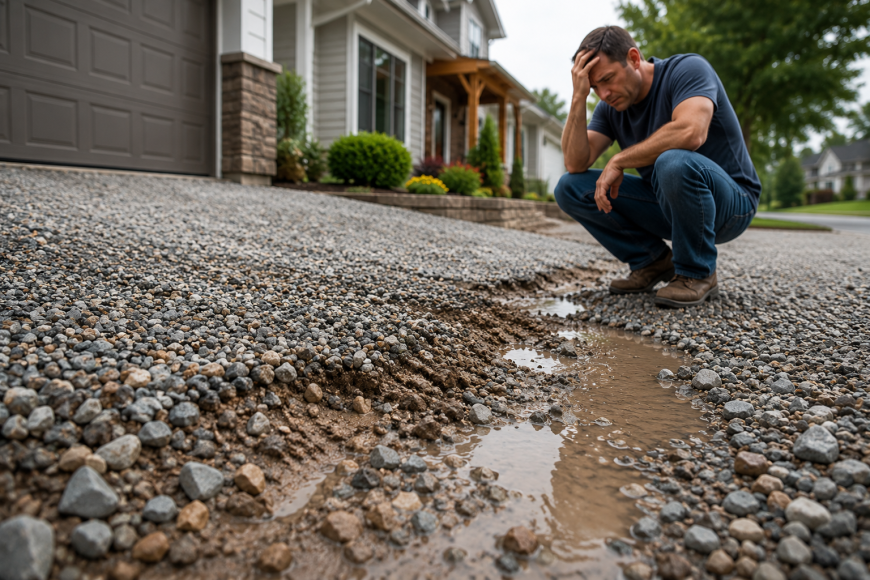
Then suddenly you notice puddles near the driveway. Mud around the edges. Water collecting near the foundation. Ugh... not exactly what anyone wanted.
That is why gravel size should match the purpose of the area. Drainage projects need a different type of stone than decorative landscaping or pathways.
Looks Matter More Than People Expect
Here is something funny. People often focus only on price at first. Then later they realize appearance matters way more than they thought.
The wrong gravel size can throw off the entire look of a property.
Tiny gravel may look too busy in large open spaces. Oversized stone can make smaller yards feel cluttered. Even the color changes depending on the rock size because of how light hits the surface.
A driveway that looked perfect in a photo online might feel completely different in real life. That catches homeowners off guard all the time.
Maintenance Becomes Never-Ending
This might be the biggest regret of all.
Choosing the wrong gravel usually means extra maintenance forever. More leveling. More replacing. More cleanup after rain or wind.
Some homeowners even end up removing everything and starting over. And wow... that gets expensive fast.
We have heard plenty of people say they wished they had spent more time comparing materials before ordering. A quick search for rock and gravel near me in California gives lots of options, but not every gravel type works for every project.
Sometimes spending a little extra upfront saves months of frustration later.
So, What Should Homeowners Actually Do?
Honestly, the best approach is simple. Think about how the space will actually be used every day.
Ask yourself:
- Will people walk on it often?
- Will cars park there daily?
- Does the area collect water?
- Do kids or pets use the space?
- Do you want low maintenance?
Those answers usually point toward the right gravel size pretty quickly.
And if you are unsure... ask questions before ordering. It is much easier than replacing an entire driveway later.
FAQs
1. What gravel size works best for residential driveways?
Medium-sized gravel is usually the best choice for driveways because it balances stability and drainage without shifting too much.
2. Does larger gravel help with drainage?
Yes, larger gravel can improve drainage, but if the stones are too big, they may create uneven surfaces and allow soil erosion underneath.
3. Is small gravel bad for walkways?
Not always. Small gravel can work for walkways, but very fine stones tend to scatter easily and may require frequent maintenance.
4. How do homeowners choose the right rock size?
The best choice depends on the project. Driveways, drainage areas, patios, and decorative spaces all need different gravel sizes.
5. Why do people search for rock and gravel near me in California before starting projects?
Homeowners often want local materials that match regional weather, soil conditions, and landscaping styles while reducing delivery costs.