Should You Outsource or Insource Your IT Services?
Compare outsourcing vs insourcing IT services, including costs, benefits, security, scalability, and how to choose the right IT model for your business.
 marypetterd59
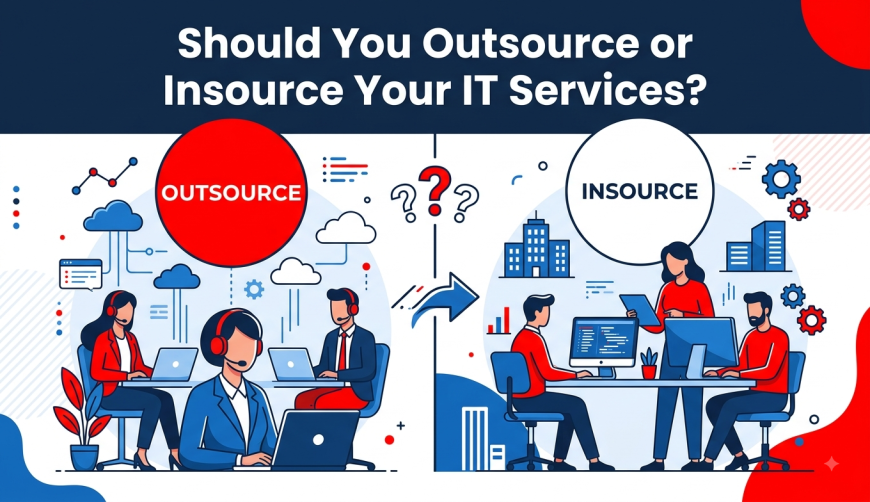
Choosing how to manage IT can have a direct impact on operating costs, security, productivity, and long-term growth. Some businesses prefer to build an internal IT department that works closely with employees and business leaders. Others rely on external specialists who provide technical expertise without the expense of maintaining a large in-house team.
The right answer depends on your business size, technology requirements, budget, security expectations, and growth plans. Understanding Outsourcing vs Insourcing IT Services can help you determine which approach delivers the right balance of control, expertise, flexibility, and cost.
What Is the Difference Between IT Outsourcing and Insourcing?
Before comparing the two models, it is important to understand what each involves.
Insourcing means hiring and managing your own IT professionals. Your employees handle activities such as network administration, software support, cybersecurity, infrastructure management, troubleshooting, and IT planning.
Outsourcing means hiring an external IT provider to handle some or all technology-related responsibilities. Depending on the agreement, an outsourcing company may provide help desk support, cloud management, cybersecurity, software development, infrastructure monitoring, or dedicated IT professionals.
The key difference is where the expertise and responsibility sit. With insourcing, your organization owns the IT function. With outsourcing, an external provider becomes responsible for agreed services and performance requirements.
Outsourcing vs Insourcing IT Services: Which Option Offers Better Value?
Cost is often the first consideration, but comparing salaries alone can produce a misleading conclusion. An internal employee also involves recruitment, benefits, training, equipment, software licenses, office resources, leave coverage, and ongoing professional development.
Outsourcing can convert some of these expenses into a more predictable service cost. However, outsourcing is not automatically cheaper in every situation.
Insourcing may provide stronger financial value when a company has a large, stable IT workload that requires permanent internal expertise. Outsourcing can be more economical when technology needs fluctuate or when specialist skills are required only for particular projects.
A practical cost comparison should consider:
- Employee salaries, benefits, recruitment, and retention
- IT hardware, software, and infrastructure expenses
- Training and professional certification
- Cybersecurity and compliance requirements
- After-hours and emergency support
- Recruitment time for specialist positions
- Scalability during periods of rapid growth
When Should You Insource Your IT Services?
An internal IT team can be a strong choice when technology is closely connected to your core operations. Businesses with complex internal systems, highly specialized workflows, or strict requirements for direct control may benefit from keeping critical functions in-house.
Insourcing can work particularly well when you need employees who understand your systems and business processes at a detailed level.
Key Benefits of Insourcing
An internal team offers several advantages that are difficult to replicate through a purely external arrangement:
- Greater direct control: Managers can establish priorities, procedures, and technology policies directly.
- Business familiarity: Employees develop an in-depth understanding of internal systems and workflows.
- Fast communication: Staff can communicate directly with colleagues and decision-makers.
- Long-term knowledge retention: Technical knowledge remains within the organization.
- Closer strategic alignment: IT professionals can participate directly in business planning.
However, maintaining an internal team also creates management responsibilities. Recruiting skilled professionals can take time, while retaining experienced IT staff can become expensive in competitive hiring markets.
When Should You Outsource Your IT Services?
Outsourcing becomes attractive when a business needs technical expertise without building a large permanent department. It can also help companies access specialized professionals that would otherwise be difficult or expensive to recruit.
Small and medium-sized businesses often use external IT providers to supplement their existing employees rather than replacing the entire IT function.
This hybrid model can be particularly useful when a company has one or two internal IT employees but needs additional expertise in cybersecurity, cloud infrastructure, software development, or technical support.
Key Benefits of IT Outsourcing
A well-managed outsourcing arrangement can provide:
- Access to specialized expertise: External teams can bring experience across multiple technologies and industries.
- Scalability: Businesses can increase or reduce technical resources as requirements change.
- Reduced recruitment pressure: Companies do not have to recruit every specialist internally.
- Broader support coverage: External teams may provide extended or dedicated support depending on the agreement.
- Predictable resource planning: Outsourcing can make staffing requirements easier to manage.
- Focus on core operations: Internal employees can spend more time on strategic business activities.
Outsourcing vs Insourcing IT Services: What About Security?
Security deserves particular attention because both models can be secure or vulnerable depending on how they are managed.
An internal department gives an organization direct control over access policies, systems, employees, and security procedures. However, a small internal team may lack specialized cybersecurity expertise or the capacity to monitor threats continuously.
An experienced outsourcing provider may offer access to security specialists, established procedures, monitoring tools, and broader technical knowledge. At the same time, businesses must carefully evaluate how an external provider handles credentials, data access, backups, compliance, and incident response.
Before outsourcing, ask potential providers about:
- Data protection practices
- Access control and authentication
- Employee background and security procedures
- Backup and disaster recovery
- Incident response processes
- Compliance requirements
- Service-level agreements and reporting
Security should therefore be evaluated based on actual controls and processes rather than simply choosing between internal and external teams.
Outsourcing vs Insourcing IT Services: Which Is More Scalable?
Scalability is another major factor. An internal team usually grows through additional recruitment. If your company suddenly needs cloud engineers, cybersecurity specialists, or developers, hiring suitable professionals can take weeks or months.
Outsourcing can provide a faster way to increase technical capacity because the provider may already have professionals with the required skills.
For example, a business launching a new application might temporarily need developers, quality assurance specialists, cloud engineers, and technical support staff. Building a permanent department for a short-term requirement may not be financially sensible.
For businesses experiencing unpredictable demand, outsourcing can therefore provide useful flexibility.
Should You Choose a Hybrid IT Model?
There is no requirement to choose one model for every IT function. A hybrid strategy can combine internal employees with external specialists.
For example, your internal team could manage business-critical systems, employee relationships, and IT strategy while an external provider handles technical support, infrastructure monitoring, software development, or specialized cybersecurity.
This approach can provide greater control without forcing the company to recruit every technical specialist.
A hybrid model may be suitable when:
- You need internal ownership of critical systems.
- Specialist expertise is required periodically.
- Your existing IT team needs additional capacity.
- You want to scale without rapidly expanding headcount.
- Certain IT functions require 24/7 or specialized support.
How to Decide Between Outsourcing and Insourcing
The best decision starts with an honest assessment of your current IT environment. Instead of asking which model is universally better, consider which one fits your business requirements.
Evaluate your:
- Budget: Compare total ownership costs rather than salaries alone.
- Technical requirements: Identify the skills your business needs now and over the next few years.
- Workload: Determine whether your IT workload is stable, seasonal, or project-based.
- Security needs: Assess whether your current resources can meet security and compliance expectations.
- Growth plans: Consider how quickly your technology requirements could change.
- Internal expertise: Identify which capabilities already exist within your organization.
- Control requirements: Decide which functions must remain directly managed internally.
This structured evaluation makes Outsourcing vs Insourcing IT Services less about choosing a trend and more about selecting an operating model that supports measurable business objectives.
Frequently Asked Questions
1. Is IT outsourcing cheaper than insourcing?
It can be, particularly when a company needs specialist skills without maintaining a large permanent IT department. However, the actual cost depends on services, workload, staffing requirements, and contract terms.
2. Is insourcing better for cybersecurity?
Not necessarily. An internal team can provide direct control, but an external provider may have access to dedicated cybersecurity specialists and security technologies. The quality of security processes matters more than the staffing model alone.
3. Can a business combine outsourcing and insourcing?
Yes. A hybrid approach is common. Companies can retain strategic or sensitive IT functions internally while outsourcing specialized, repetitive, or resource-intensive responsibilities.
4. What IT services can businesses outsource?
Commonly outsourced services include technical support, help desk operations, cloud management, cybersecurity, software development, infrastructure monitoring, network management, and IT administration.
5. How do I choose between outsourcing and insourcing?
Start by comparing your budget, technical requirements, workload, security needs, internal capabilities, and growth plans. Outsourcing vs Insourcing IT Services should ultimately be evaluated according to your organization's specific priorities rather than a one-size-fits-all rule.
Final Thoughts
Outsourcing vs Insourcing IT Services is ultimately a business strategy decision rather than simply an IT staffing decision. Insourcing can provide control, continuity, and strong internal knowledge, while outsourcing can offer flexibility, specialist expertise, and easier access to additional technical resources. For many organizations, a hybrid approach can provide the most practical balance.
If you decide that external expertise fits your requirements, look for an established outsourcing company with transparent processes, qualified professionals, strong security practices, and flexible engagement options. Businesses that need additional capacity can also consider whether it makes sense to hire dedicated IT team members who can work as an extension of their existing operations. Invedus provides outsourced IT and technology support solutions designed to help businesses access skilled professionals without unnecessarily expanding internal infrastructure. To explore suitable IT outsourcing options, visit www.invedus.com, email [email protected], or call 888-346-8646 for more information.