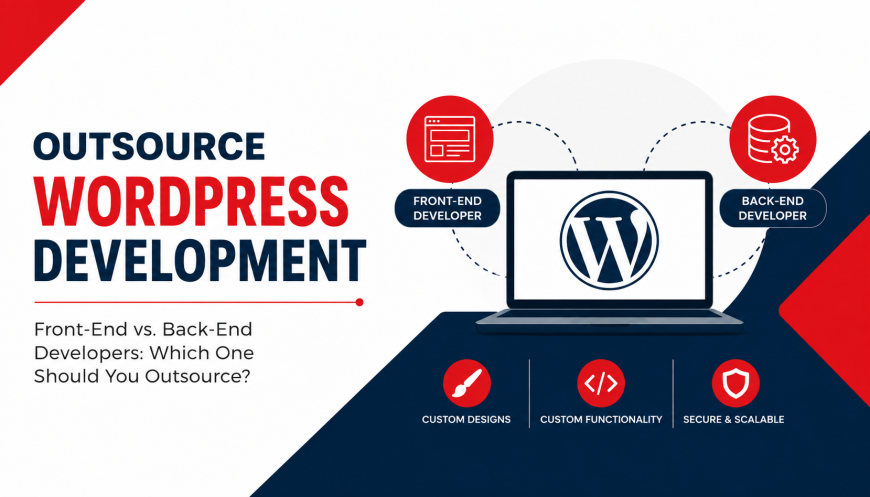
Front-End vs. Back-End WordPress Developers: Which One Should You Outsource?
Learn how front-end and back-end WordPress developers differ and when to outsource WordPress development for better performance, functionality, and growth.
 marypetterd59
WordPress powers websites ranging from small business pages and blogs to large-scale ecommerce stores and corporate platforms. While WordPress makes website management relatively simple, building a fast, secure, customized website often requires professional development expertise.
When businesses need specialized skills without expanding their internal technology teams, they often choose to outsource WordPress development. However, outsourcing becomes more effective when you understand the different types of WordPress developers and the role each one plays.
The two primary categories are front-end WordPress developers and back-end WordPress developers. Although both work on the same platform, their responsibilities, technical skills, and project contributions are different.
What Does a WordPress Developer Do?
A WordPress developer builds, customizes, maintains, and improves websites using the WordPress platform. Depending on the project, a developer may work on the website's visual appearance, functionality, database, security, integrations, or performance.
Common WordPress development responsibilities include:
- Creating and customizing WordPress themes
- Developing and modifying plugins
- Building responsive website interfaces
- Integrating third-party tools and APIs
- Improving website speed and performance
- Managing databases
- Fixing technical issues
- Strengthening website security
- Maintaining and updating WordPress websites
Before you outsource WordPress development, it is important to determine which type of expertise your project actually requires.
What Is a Front-End WordPress Developer?
A front-end WordPress developer focuses on everything visitors see and interact with on a website. Their work connects the website's design with its functionality to create an attractive, responsive, and user-friendly experience.
Front-end developers typically work with technologies such as HTML, CSS, JavaScript, and WordPress themes.
For example, if a business has a website design created by a UI/UX designer, a front-end WordPress developer can turn that design into a working website.
Key Skills of Front-End WordPress Developers
A skilled front-end WordPress developer should understand:
- HTML and CSS
- JavaScript
- Responsive web design
- Cross-browser compatibility
- WordPress theme customization
- UI and UX principles
- Website performance optimization
- Mobile-first development
They should also have strong attention to detail because small interface issues can affect the overall user experience.
Common Front-End WordPress Tasks
A front-end developer may be responsible for:
- Customizing WordPress themes
- Converting design concepts into web pages
- Creating responsive layouts
- Improving navigation and usability
- Adding interactive website elements
- Optimizing images and front-end assets
- Resolving browser compatibility problems
- Improving page-loading performance
When Should You Hire a Front-End Developer?
A front-end WordPress developer may be the right choice when:
- Your website has an outdated design.
- The site does not work properly on mobile devices.
- You need a custom WordPress theme.
- Your website's navigation is difficult to use.
- You want to improve the user experience.
- Your existing design needs to be converted into WordPress.
If your primary concern is the website's appearance and visitor experience, front-end expertise should be a priority.
What Is a Back-End WordPress Developer?
While front-end developers focus on the visible side of a website, back-end WordPress developers work behind the scenes.
They handle the systems, databases, server-side functionality, integrations, and technical infrastructure that allow a WordPress website to operate correctly.
Back-end development becomes particularly important when a business requires custom functionality that cannot be achieved through standard themes and plugins.
Key Skills of Back-End WordPress Developers
A professional back-end WordPress developer generally needs expertise in:
- PHP
- MySQL
- WordPress Core
- WordPress Hooks, Actions, and Filters
- REST APIs
- Custom plugin development
- Database management
- Server configuration
- Website security
- Third-party integrations
Common Back-End WordPress Tasks
Back-end developers may handle:
- Developing custom WordPress plugins
- Modifying existing plugins
- Creating API integrations
- Managing WordPress databases
- Improving website security
- Optimizing server-side performance
- Troubleshooting complex technical issues
- Building custom administrative functionality
- Improving website scalability
When Should You Hire a Back-End Developer?
Consider a back-end WordPress developer when:
- You need custom website functionality.
- Existing plugins cannot meet your requirements.
- Your website requires third-party integrations.
- Database performance is becoming an issue.
- Your website needs advanced security improvements.
- You need a scalable WordPress architecture.
For technically complex projects, back-end development can be just as important as the website's visual appearance.
Front-End vs. Back-End WordPress Developers
Understanding the difference between these professionals makes it easier to select the right development resources.
| Factor | Front-End Developer | Back-End Developer |
|---|---|---|
| Primary focus | Website interface | Website functionality |
| Main users affected | Website visitors | Website administrators and systems |
| Common technologies | HTML, CSS, JavaScript | PHP, MySQL, APIs |
| Typical work | Themes, layouts, UI | Plugins, databases, integrations |
| Main objective | Better user experience | Reliable functionality and infrastructure |
| Common projects | Redesigns and responsive websites | Custom functionality and integrations |
In many cases, businesses do not need to choose one over the other. Larger WordPress projects can benefit from both front-end and back-end expertise.
Should You Outsource WordPress Development?
For businesses with limited internal development resources, choosing to outsource WordPress development can provide access to specialized expertise without the long-term commitment of building a larger in-house team.
Outsourcing can be useful for:
- WordPress website development
- Custom theme development
- Plugin development
- Website redesigns
- Ecommerce development
- WordPress maintenance
- Performance optimization
- Security improvements
- API and third-party integrations
The right outsourcing partner can also help businesses scale their development resources according to project requirements.
Benefits of Outsourcing WordPress Development
1. Access to Specialized Expertise
Outsourcing gives businesses access to developers with experience in specific areas of WordPress development, including front-end design, back-end programming, ecommerce, plugins, and integrations.
2. Reduced Hiring Pressure
Recruiting full-time developers can take considerable time. Outsourcing allows businesses to access development talent without going through the entire traditional hiring process.
3. Flexible Development Resources
A business may need a developer for a website redesign today and custom plugin development several months later. Outsourcing makes it easier to scale resources based on changing requirements.
4. Cost Efficiency
Maintaining an internal development team involves salaries, benefits, infrastructure, software, training, and other expenses. Outsourcing can provide a more flexible cost structure.
5. Focus on Core Business Activities
When technical WordPress tasks are handled by an external development team, internal employees can concentrate on marketing, sales, customer service, and other core business priorities.
How to Choose the Right WordPress Development Partner
Before you outsource WordPress development, evaluate potential providers based on more than just pricing.
Consider the following factors:
Review Technical Expertise
Check whether the development team has experience with the specific WordPress technologies your project requires.
Examine Previous Projects
Review portfolios and previous work to understand the provider's experience with similar websites and functionality.
Check Communication Processes
Clear communication is essential for outsourced development. Ask how the team handles project updates, feedback, revisions, and technical discussions.
Discuss Security and Maintenance
WordPress websites require ongoing updates and security management. Make sure the development provider can support the website after launch.
Evaluate Scalability
Your requirements may change as your business grows. Choose a development partner that can provide additional resources when needed.
Why Consider Invedus for WordPress Development?
Businesses looking to outsource WordPress development can work with Invedus for professional WordPress development and dedicated development support.
Invedus can help businesses access WordPress expertise for projects involving website development, customization, maintenance, theme modifications, plugin-related requirements, and other technical needs.
Whether you need front-end development to improve the website experience or back-end expertise for custom functionality, selecting developers according to your project requirements is essential.
Final Thoughts
Front-end and back-end WordPress developers perform different but complementary roles. Front-end professionals concentrate on the interface, responsiveness, visual elements, and user experience, while back-end developers handle functionality, databases, integrations, security, and server-side operations.
For businesses planning to outsource WordPress development, identifying the right skill set should be the first step. A simple website redesign may require primarily front-end expertise, whereas a complex website with custom plugins, APIs, or database requirements may need a strong back-end developer.
For larger projects, combining both skill sets can create a more complete development team. With the right outsourcing partner, businesses can access specialized WordPress expertise, improve development efficiency, and build websites that are easier to manage and scale.