The Role of Online DISC Assessments in Career Planning
Discover how online DISC assessments help identify personality traits, strengths, and work styles to support informed career planning and professional growth.
 sofyandy
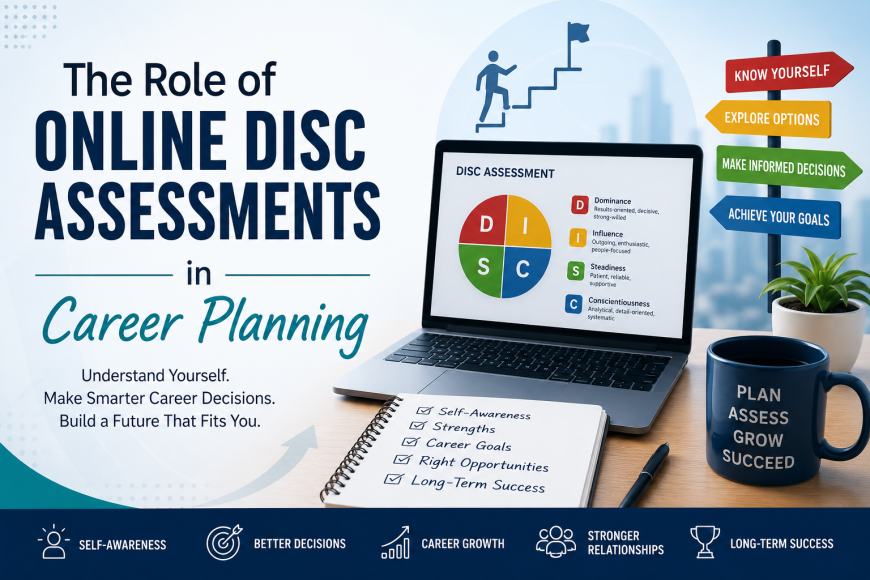
Career planning is no longer limited to choosing a profession based on interests or educational qualifications. In today's dynamic workplace, understanding personal strengths, communication styles, and behavioral tendencies has become equally important. Professionals who possess a clear understanding of how they interact with others and approach challenges are often better equipped to make informed career decisions and achieve long-term success.
One valuable tool that has gained popularity among career coaches, HR professionals, and job seekers is the online DISC assessment. By providing insights into an individual's behavioral style, this assessment helps people identify suitable career paths, improve workplace relationships, and develop skills that align with their professional goals.
Understanding the DISC Assessment
The DISC assessment is a behavioral profiling tool based on four primary personality dimensions:
-
Dominance (D): Focused on results, leadership, and problem-solving.
-
Influence (I): Outgoing, persuasive, and relationship-oriented.
-
Steadiness (S): Patient, dependable, and supportive.
-
Conscientiousness (C): Analytical, detail-oriented, and systematic.
Unlike aptitude or intelligence tests, DISC assessments evaluate how people behave in various situations. The results help individuals understand their natural tendencies, communication preferences, and work styles, making it easier to navigate career decisions with greater confidence.
Why Self-Awareness Matters in Career Planning
Self-awareness is one of the most critical components of successful career planning. Many professionals enter careers based on external expectations or perceived opportunities without fully understanding whether those roles align with their personality and strengths.
An online DISC assessment provides a structured way to gain deeper insights into personal behaviors and motivations. By understanding what drives them, individuals can identify careers that complement their natural abilities rather than forcing themselves into roles that may lead to dissatisfaction or burnout.
For example, a highly influential person may thrive in sales, marketing, public relations, or customer-facing roles. Meanwhile, someone with strong conscientious traits may excel in finance, research, engineering, or quality assurance positions that require attention to detail and analytical thinking.
Identifying Career Paths That Fit Your Personality
One of the most significant benefits of DISC assessments is their ability to connect behavioral styles with suitable career environments.
Dominance-Oriented Professionals
Individuals with dominant personality traits often enjoy challenges, decision-making, and leadership responsibilities. They typically perform well in careers such as:
-
Business management
-
Entrepreneurship
-
Project management
-
Executive leadership
-
Sales leadership
These roles provide opportunities to take initiative and drive results.
Influence-Oriented Professionals
People with high influence scores often excel in positions that involve communication, networking, and relationship-building. Suitable careers may include:
-
Marketing
-
Public relations
-
Recruiting
-
Event management
-
Customer success
Their enthusiasm and interpersonal skills can help them succeed in environments that require collaboration and persuasion.
Steadiness-Oriented Professionals
Steady individuals tend to value stability, teamwork, and helping others. They often thrive in roles such as:
-
Human resources
-
Healthcare
-
Education
-
Counseling
-
Administrative support
These careers allow them to build meaningful relationships while contributing to a positive work environment.
Conscientiousness-Oriented Professionals
Professionals with strong conscientious traits prefer structure, accuracy, and detailed analysis. Common career matches include:
-
Accounting
-
Engineering
-
Data analysis
-
Research
-
Compliance management
Their methodical approach helps them perform effectively in technical and detail-focused roles.
Supporting Better Career Decisions
Career planning often involves evaluating multiple opportunities and determining which path offers the best fit. Without sufficient self-knowledge, individuals may make decisions based solely on salary, job title, or market trends.
DISC assessments offer valuable guidance by highlighting work environments and responsibilities that align with a person's behavioral preferences. This information can be especially helpful when considering:
-
Career changes
-
Promotions
-
Leadership opportunities
-
Industry transitions
-
Professional development plans
Rather than relying on guesswork, professionals can use assessment insights to make more strategic career choices.
Enhancing Workplace Communication
Career success depends not only on technical skills but also on the ability to communicate effectively with colleagues, managers, and clients.
An online DISC assessment helps individuals recognize how their communication style may differ from others. For example, a direct and results-focused employee may learn to adjust their approach when working with team members who prefer a more collaborative and relationship-oriented style.
Improved communication can lead to:
-
Stronger workplace relationships
-
Better teamwork
-
Increased productivity
-
Reduced conflict
-
Greater leadership effectiveness
These benefits often contribute to career growth and advancement over time.
Strengthening Leadership Development
Many organizations use DISC assessments as part of leadership development programs because understanding behavioral tendencies is essential for effective leadership.
Aspiring leaders can use DISC results to identify both strengths and growth areas. For instance:
-
Dominant personalities may focus on improving empathy and active listening.
-
Influential individuals may work on organization and follow-through.
-
Steady professionals may develop greater assertiveness.
-
Conscientious individuals may practice flexibility and delegation.
By addressing these areas, professionals can become more balanced and adaptable leaders capable of managing diverse teams and workplace situations.
Improving Career Satisfaction
Job satisfaction is closely linked to how well a person's role aligns with their natural strengths and preferences. When there is a mismatch between personality and job demands, employees may experience stress, disengagement, and decreased performance.
DISC assessments help individuals understand what work environments support their success and well-being. For example, someone who values consistency and routine may feel uncomfortable in a highly unpredictable role, while a highly dominant individual may become frustrated in a position with limited decision-making authority.
Recognizing these factors can help professionals pursue opportunities that align with their personality, ultimately leading to higher job satisfaction and career fulfillment.
Supporting Continuous Professional Growth
Career planning is not a one-time event. As industries evolve and personal goals change, professionals must continually assess and refine their career strategies.
DISC assessments serve as valuable tools for ongoing development by helping individuals:
-
Identify skill gaps
-
Improve communication abilities
-
Enhance leadership capabilities
-
Strengthen collaboration skills
-
Set realistic professional goals
Regular self-reflection based on behavioral insights can support long-term career success and adaptability in changing work environments.
Conclusion
Successful career planning requires more than identifying interests or pursuing high-demand jobs. It involves understanding how personal behaviors, communication styles, and workplace preferences influence professional performance and satisfaction. An online DISC assessment offers valuable insights that help individuals make informed career decisions, strengthen workplace relationships, and pursue opportunities that align with their strengths.
Whether someone is entering the workforce, considering a career change, or preparing for a leadership role, DISC assessments provide a practical framework for self-awareness and professional growth. By leveraging these insights, professionals can build careers that are not only successful but also personally rewarding and sustainable over the long term.