Kraft Paper Price Index Q2 2026: Global Prices Show $601 Gap
Procurement teams can use the Kraft Paper Price Index to compare country-level benchmarks and assess sourcing exposure. The highest Q2 price was recorded in France, while Argentina reported the lowest.
 Stephenthomas
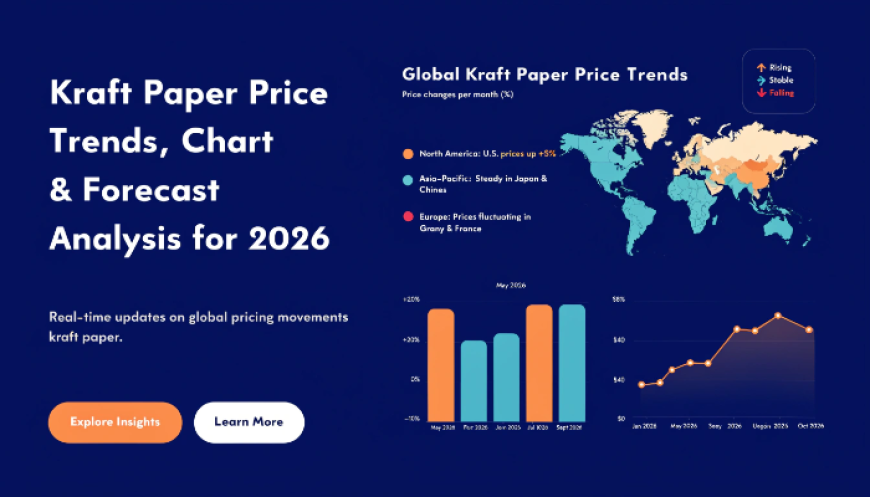
Global Kraft Paper Price Trends & Outlook – Q2 2026
Kraft Paper Price Chart data for Q2 2026 shows a wide geographic pricing range, with the supplied benchmarks spanning USD 881/MT to USD 1,482/MT. IMARC Group's Q2 2026 price-tracking database and methodology indicate meaningful regional cost differences across the reported countries, reflecting variations in recovered fiber availability, pulp costs, energy expenses, production capacity, freight, and packaging demand. The supplied dataset does not contain Q1 2026 benchmark values or a consolidated quarterly percentage movement, so a verified overall Q2 uptrend or downtrend percentage cannot be calculated without introducing unsupported information. Procurement teams can use the Kraft Paper Price Index to compare country-level benchmarks and assess sourcing exposure. The highest Q2 price was recorded in France, while Argentina reported the lowest.
Kraft Paper Prices Q2 2026: Regional Price Snapshot
- China: USD 921/MT
- France: USD 1,482/MT
- Argentina: USD 881/MT
- Thailand: USD 998/MT
- United Kingdom: USD 1,393/MT
The Q2 spread indicates a substantial USD 601/MT difference between the highest and lowest supplied benchmarks. France recorded the highest price at USD 1,482/MT, followed by the United Kingdom at USD 1,393/MT. Thailand and China remained below USD 1,000/MT, while Argentina posted the lowest benchmark. The gap highlights differences in pulp and recovered-fiber costs, manufacturing economics, freight, energy, currency conditions, and packaging demand.
Kraft Paper Price Analysis Q2 2026: What Buyers Need To Know
North America Kraft Paper Prices: USA Procurement Conditions
No USA-specific Q2 2026 price was included in the verified dataset. Therefore, a U.S. benchmark or price direction cannot be assigned reliably. North American buyers should evaluate domestic and imported kraft paper quotations based on grade, basis weight, recycled content, freight, inventory availability, and contract terms rather than substituting another country's benchmark.
Asia-Pacific Kraft Paper Prices: China, Japan, India, and Thailand
China recorded USD 921/MT, while Thailand stood at USD 998/MT. These are the only supplied Asia-Pacific benchmarks. No separate Q2 prices were provided for Japan or India, so country-specific values cannot be inferred. The available data indicates relatively lower benchmark levels in the reported Asian markets, potentially reflecting regional production capacity, fiber availability, export competition, and packaging demand.
South America Kraft Paper Prices: Argentina And Brazil
Argentina recorded the lowest supplied benchmark at USD 881/MT. No Brazil-specific Q2 price was provided and therefore no Brazilian price or movement is assigned. Argentina's lower benchmark may reflect differences in local fiber availability, production economics, domestic demand, currency conditions, and regional trade flows.
Kraft Paper Supply And Demand Overview – Q2 2026
Kraft paper pricing is closely connected to pulp and recovered-fiber availability, mill operating rates, packaging consumption, and transportation costs. Demand from corrugated packaging, industrial sacks, food packaging, e-commerce, retail, and other end-use sectors remains an important purchasing driver.
The Q2 dataset shows a clear geographical divide between the higher benchmarks in France and the United Kingdom and the lower levels reported in Argentina, China, and Thailand. These differences demonstrate why procurement managers should assess local supply-demand balances instead of applying one global price assumption. Mill capacity utilization, inventory levels, import competition, and customer order volumes can materially influence transaction prices.
Kraft Paper Price Index & Historical Analysis: Q2 2026
The Kraft Paper Price Index provides a structured framework for monitoring quarterly pricing conditions across selected locations. Q2 2026 benchmarks ranged from USD 881/MT in Argentina to USD 1,482/MT in France. However, the supplied information does not include Q1 2026 values, preventing a verified quarter-on-quarter percentage comparison.
For historical monitoring, the Q2 figures can serve as baseline observations for future quarters. Buyers should compare subsequent data against these benchmarks while tracking pulp costs, recovered paper prices, energy, freight, production rates, inventories, and packaging demand. This approach provides greater visibility into whether future changes are driven by supply constraints or downstream consumption.
Kraft Paper Price Forecast 2026: Next 12 Months
Over the next 12 months, kraft paper prices are expected to remain sensitive to pulp and recovered-fiber economics, mill utilization, packaging demand, energy costs, and freight. Strong corrugated-box and industrial packaging consumption could support prices where inventories remain constrained.
Conversely, weaker packaging orders, improved mill availability, lower fiber costs, or increased imports could limit upward pressure. Regional divergence is likely to remain important because production structures, raw-material availability, currencies, and logistics vary considerably between countries. Procurement teams should therefore use rolling country-level benchmarks when negotiating contracts and planning inventory.
Key Factors Affecting Kraft Paper Prices: Quarterly Perspective
- Pulp prices: Virgin-fiber kraft paper costs are influenced by underlying pulp economics.
- Recovered paper: Recycled kraft grades are sensitive to recovered-fiber availability and collection rates.
- Packaging demand: Corrugated boxes, sacks, e-commerce packaging, and industrial applications influence consumption.
- Energy costs: Electricity, natural gas, and fuel affect mill operating expenses.
- Mill capacity: Maintenance shutdowns and production changes can tighten or loosen supply.
- Freight: Ocean, road, and inland logistics influence delivered procurement costs.
- Inventory levels: Low inventories can strengthen buyer competition, while high stocks can reduce price pressure.
- Currency movements: Exchange-rate fluctuations can alter import costs and supplier competitiveness.
- Trade flows: Imports and exports can significantly influence regional supply balances.
What Is Kraft Paper and Why Does Its Price Matter?
Kraft paper is a strong paper material produced primarily from wood pulp through the kraft pulping process. It is widely used in corrugated packaging, paper sacks, shopping bags, wrapping materials, industrial packaging, and specialty applications.
For B2B procurement teams, its price directly affects packaging budgets and finished-product costs. Grade, basis weight, virgin or recycled fiber content, strength specifications, roll or sheet format, and delivery location should all be considered when comparing supplier quotations.
Recent Kraft Paper Developments: Q2 2026 Highlights
The most significant verified Q2 feature is the wide price differential across the supplied countries. France reached USD 1,482/MT, while the United Kingdom stood at USD 1,393/MT. Thailand and China were below USD 1,000/MT, at USD 998/MT and USD 921/MT respectively, while Argentina recorded USD 881/MT.
No verified Q2 2026 mill capacity expansion, major shutdown, supplier announcement, or specific trade-policy development was included in the supplied pricing dataset. Such events are therefore not presented as confirmed developments. Buyers should continue monitoring mill operating rates, fiber availability, imports, freight, and packaging orders for emerging cost risks.
FAQs About Kraft Paper Price Outlook 2026
What Is the Kraft Paper Price Index for Q2 2026?
The supplied Q2 2026 benchmarks range from USD 881/MT in Argentina to USD 1,482/MT in France. These country-level values establish a useful procurement baseline, but they do not represent a single global index value.
Where Can Buyers Find the Kraft Paper Price Chart?
The Kraft Paper Price Chart is available through IMARC Group's pricing intelligence and can be used to assess regional benchmarks and historical pricing conditions. It supports procurement teams in comparing supplier markets and evaluating cost movements.
What Is the Kraft Paper Price Forecast 2026?
The 2026 outlook will depend on pulp and recovered-fiber costs, packaging demand, mill capacity, energy, freight, inventories, and international trade. Buyers should monitor country-level pricing because regional supply-demand conditions can produce significantly different outcomes.
How IMARC Group Helps with Kraft Paper Price Intelligence
IMARC Group provides pricing intelligence covering regional benchmarks, historical movements, and the factors influencing kraft paper procurement costs. The Q2 2026 data show a USD 601/MT gap between the highest and lowest supplied prices. These insights can support budgeting, supplier negotiations, sourcing, and inventory planning. Looking ahead, tracking fiber costs, mill utilization, packaging demand, freight, and trade flows will be essential for anticipating kraft paper price movements.
Explore the latest commodity pricing data and industry insights: https://www.imarcgroup.com/pricing-market-reports
Contact Us:
IMARC Group
134 N 4th St., Brooklyn, NY 11249, USA
Email: sales[@]imarcgroup.com
Tel No:(D) +91 120 433 0800
United States: +1-201971-6302