How Can Furans Strengthen Heterocyclic Route Development?
 jackzkr317
Designing Efficient Chemistry Around an Oxygen-Containing Ring
Successful synthesis planning begins with a scaffold that offers structural value and practical routes for modification. Furans provide a compact, oxygen-containing ring system for intermediate development, analogue preparation and exploratory heterocyclic chemistry. Their electron-rich ring and attached functional groups can give researchers more than one site for planned transformation.
What Makes a Furan Scaffold Strategically Useful?
The furan ring contains four carbon atoms and one oxygen atom in a five-membered aromatic system. Its compact shape can introduce planarity, while its oxygen changes electron distribution. Positions 2 and 5, next to the oxygen, are especially important when selecting substituted derivatives or predicting reaction behaviour.
Furans are not simply smaller alternatives to benzene. Their electron-rich character can make them more responsive to electrophiles and more sensitive to certain acidic or oxidative environments. These differences can create useful synthetic opportunities, but they also require deliberate control of reagent strength, temperature and exposure time.
How Does Substitution Change Furan Reactivity?
A substituent can influence both the ring and the wider molecule. Electron-withdrawing groups may change electron density, while carbonyl, halogen, alkyl or carboxyl functionality can provide other reaction sites. Chemists should therefore assess the complete structure.
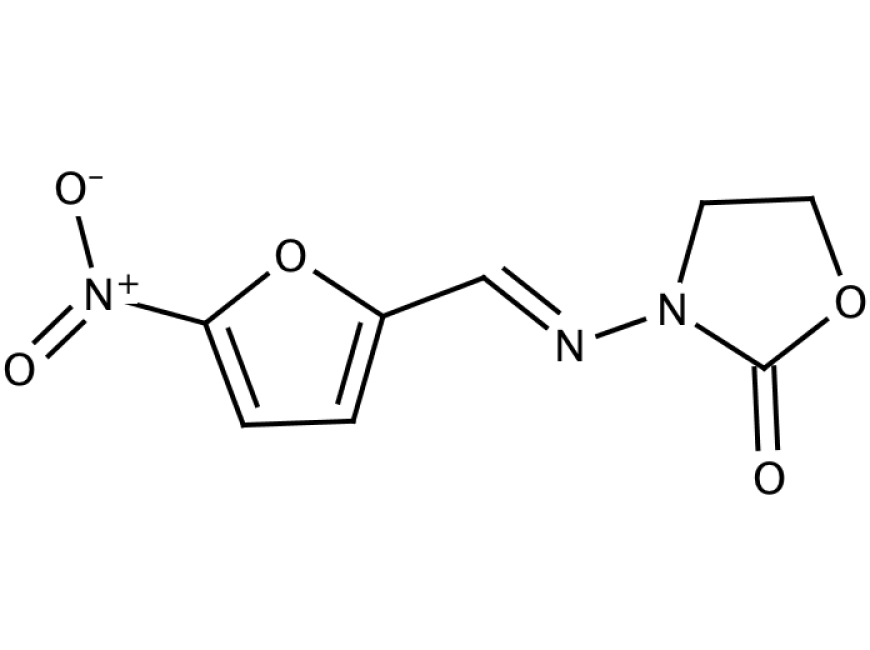
The current category includes 2-acetylfuran and furazolidone. The former combines a furan ring with an acetyl group, whereas the latter is a more elaborate nitrofuran derivative. Their functional groups, hazards and research roles differ, so they are not interchangeable.
How Can 2-Acetylfuran Support Route Design?
In 2-acetylfuran, the acetyl side chain offers a carbonyl centre for carefully selected condensation, reduction, addition or derivatisation studies. The heteroaromatic ring may also influence selectivity and stability. This dual functionality can be useful when a project requires a furan motif plus a separate point for elaboration.
Reaction feasibility should be confirmed experimentally. Conditions that transform the carbonyl successfully may still affect the ring, while strongly acidic media or prolonged heating may create unwanted pathways. Early trials should compare conversion, colour, impurity formation and isolated yield rather than relying only on disappearance of the starting material.
Which Alternative Scaffolds Should Researchers Compare?
Route design improves when the furan option is compared with structurally relevant alternatives. Aromatic Building Blocks can provide carbon-based aromatic frameworks for projects where different stability or substitution behaviour is needed. Oxygen and nitrogen-containing Oxazoles offer another five-membered heterocyclic family with a distinct electronic profile.
Six-membered nitrogen heterocycles such as Pyridines may be considered when basicity, coordination behaviour or nitrogen-based functionalisation is more important than the properties of an oxygen-containing five-membered ring. The best scaffold is determined by the target structure, planned transformations, analytical method and acceptable development risk.
What Should a Furan Reaction Screen Include?
A useful screening matrix changes one important variable at a time. Researchers can evaluate:
- Reagent identity and stoichiometry
- Solvent polarity and water content
- Reaction concentration
- Addition order and dosing rate
- Temperature and heating time
- Air, light or moisture exposure
- Quench procedure
- Conversion and impurity profile
- Isolated yield and product stability
Parallel microscale experiments can reduce material use while exposing problems early. Each vial should be labelled, and observations recorded at consistent intervals. Colour change, precipitation or gas formation may provide warning signs, but analytical evidence is still needed before drawing conclusions.
How Can Researchers Monitor Furan Transformations Quickly?
During early development, Thin-layer chromatography (TLC, HPTLC) can provide a rapid comparison of starting material and reaction samples. Suitable TLC plates allow multiple conditions to be assessed side by side when the stationary phase, mobile phase and visualisation method match the compounds being studied.
TLC should be interpreted carefully. One spot does not prove identity or complete purity, and co-eluting materials may remain hidden. A promising result should be confirmed with a more selective quantitative or spectroscopic method before the route is approved.
How Should Solvent Removal Be Managed?
Work-up conditions can influence the quality of an otherwise successful reaction. Rotary evaporators may support controlled solvent removal when the apparatus, vacuum level, bath temperature and receiving system are appropriate. Lower-pressure evaporation can reduce the temperature required, but excessive vacuum, bumping or prolonged warming may still cause product loss or degradation.
Before concentrating a mixture, researchers should consider compound volatility, boiling behaviour, thermal sensitivity and tendency to foam. Small-scale recovery tests can help establish a safe evaporation window. Final dryness should be defined by the process requirement rather than assumed from the appearance of the residue.
Which Common Development Problems Should Be Anticipated?
Furan chemistry may produce challenges such as ring degradation, oxidation, regioisomer formation, darkening or difficult purification. The likelihood depends on the individual derivative and reaction system. Practical controls include:
- Limiting unnecessary exposure to strong acids
- Avoiding excessive temperature or reaction time
- Assessing the need for an inert atmosphere
- Using freshly qualified reagents where required
- Monitoring before complete starting-material consumption
- Testing product stability during work-up
- Defining storage conditions for isolated material
These measures should be based on experimental evidence and the safety data for the exact substance.
What Documentation Should Buyers Review?
Before purchasing a furan derivative, confirm the full chemical name, CAS number, molecular formula, assay, physical form and pack size. Review the certificate of analysis, safety data sheet, storage guidance and any stated impurity limits. For 2-acetylfuran, the CAS number should be checked carefully because similar names can describe different positional isomers or related compounds.
Application suitability must not be inferred from a category description alone. The buyer should match the supplied grade and documentation to the planned research, analytical or production requirement.
Creating More Predictable Furan Development Programmes
Furan derivatives add compactness, oxygen functionality and useful reactivity to heterocyclic route design. Success depends on understanding the substituted structure, comparing alternative scaffolds and protecting ring integrity. Controlled screening, rapid monitoring, careful solvent removal and specification review can turn a promising intermediate into a reproducible research pathway.