What Is a CPA Letter for a Mortgage? Requirements & Uses
Learn what a CPA Letter for a Mortgage is, when lenders may request one, what it can include, how to obtain it, and how it differs from other mortgage documents.
 conceptscpa
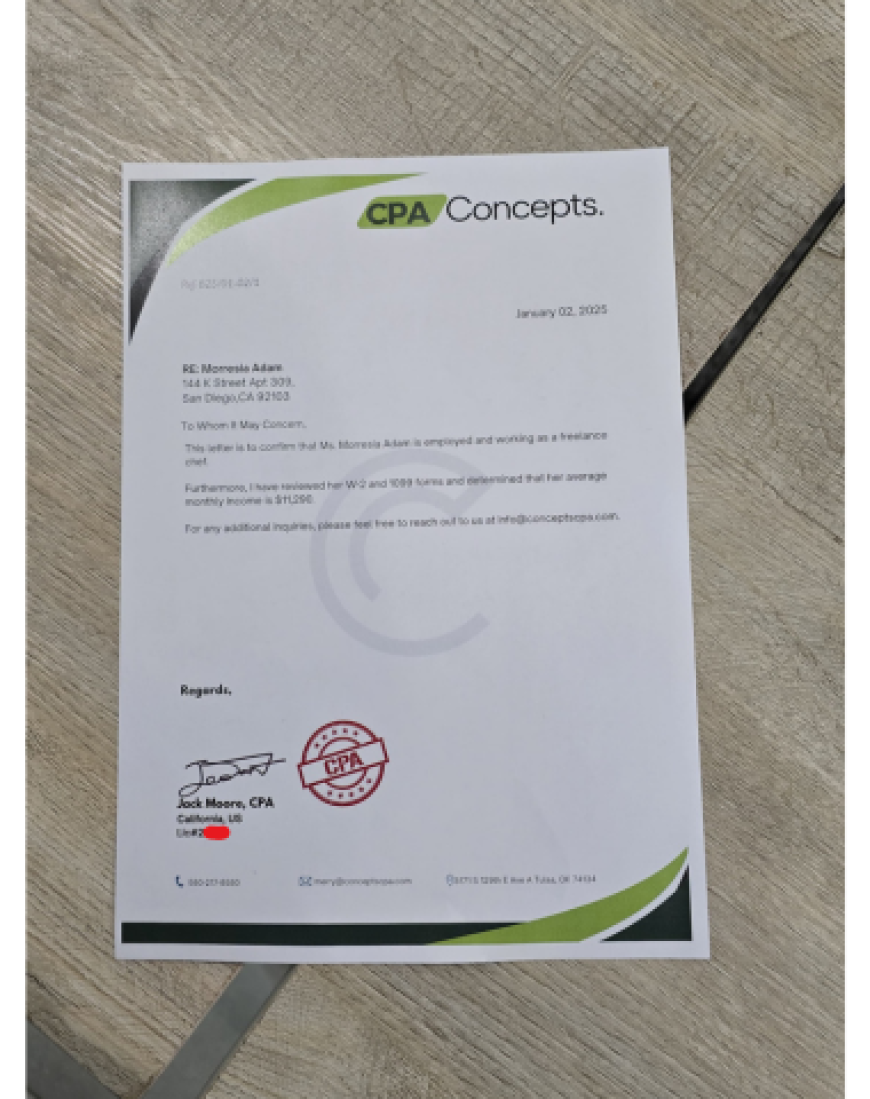
A CPA Letter for a Mortgage is a written statement from a Certified Public Accountant that provides a mortgage lender or other requesting party with specific information about a borrower's finances, business, or self-employment. These letters are especially relevant when a borrower is self-employed or has financial circumstances that require additional documentation.
A CPA letter does not have one universal format or set of requirements. The lender determines what documentation it needs, while the CPA determines what information can appropriately be provided based on the CPA's records, engagement, and professional obligations.
What Is a CPA Letter for a Mortgage?
A CPA Letter for a Mortgage is a third-party letter prepared by a CPA to address specific financial or business information requested during a mortgage application. The request may relate to self-employment, business ownership, income, or other facts that the CPA can support.
The term "comfort letter" is sometimes used informally for these third-party verification requests. The AICPA specifically describes lender verification requests as sometimes being called comfort letters and notes that mortgage applications involving self-employed borrowers are a common context.
A mortgage CPA letter may be requested when the lender needs information that is not fully addressed by the borrower's standard application documents.
For example, a lender may ask a CPA to address:
-
Whether a borrower is self-employed
-
The nature of the borrower's business
-
The borrower's business ownership interest
-
Certain historical financial information
-
Whether the CPA prepared specific tax returns
-
Other factual information relevant to the lender's request
The exact information depends on the lender and the borrower's circumstances.
Why Might a Mortgage Lender Request a CPA Letter?
A lender may request a CPA letter when additional information is needed to evaluate a borrower's income or business circumstances. This is particularly relevant for self-employed borrowers because business income can require more detailed analysis than ordinary wage income.
The CFPB states that self-employed or irregular-income borrowers may need more extensive income documentation and advises borrowers to ask lenders what documentation applies to their specific situation.
For example, a lender may need to understand:
-
How long the borrower has been self-employed
-
Whether the borrower owns a business
-
The borrower's ownership percentage
-
How business income is reported
-
Whether additional business records are needed
-
Whether the borrower's financial information requires clarification
A CPA letter can provide specific factual information, but it does not replace the lender's underwriting analysis.
Who Usually Needs a CPA Letter for a Mortgage?
Self-employed borrowers are among the people most likely to encounter a request for a CPA letter, although the request is not limited to them.
You may encounter a request if you:
-
Own a small business
-
Operate as a sole proprietor
-
Own an LLC, partnership, S corporation, or corporation
-
Receive income through a business
-
Have complex business income or ownership arrangements
-
Need clarification of financial information prepared by your CPA
-
Are using business-related assets as part of your mortgage transaction
The exact documentation depends on the lender, loan program, income structure, and underwriting circumstances.
For example, Fannie Mae's current guidance treats borrowers with a 25% or greater ownership interest in a business as self-employed for its underwriting purposes and requires lenders to analyze factors such as income stability and the business's ability to continue generating income.
That does not mean every lender uses identical rules. A borrower should follow the requirements of the lender and applicable loan program.
What Information Can a CPA Letter for a Mortgage Include?
A CPA letter can include factual information that the CPA can appropriately support. The contents should be limited to the actual request and the CPA's professional scope.
Depending on the circumstances, a letter may include:
|
Information |
What it may address |
|
CPA-client relationship |
Whether the CPA provides accounting or tax services to the borrower |
|
Tax preparation |
Whether the CPA prepared specified tax returns |
|
Self-employment |
Confirmation of the borrower's self-employed status when supportable |
|
Business ownership |
Ownership information supported by appropriate records |
|
Business information |
Business name, entity type, or nature of the business |
|
Historical financial information |
Specific figures supported by the CPA's records |
|
Requested clarification |
A factual explanation of information relevant to the mortgage application |
|
Limitations |
What the CPA did and did not verify |
Not every CPA letter will contain all of these items.
What Can a CPA Verify?
A CPA may be able to verify specific historical or factual information supported by records within the CPA's professional relationship with the client.
For example, the CPA may be able to confirm that the firm:
-
Prepared the client's federal tax returns for specified years
-
Provides accounting or tax services to the client
-
Has records showing a particular business relationship or ownership structure
-
Prepared or maintained certain financial records
-
Can confirm specified historical information based on those records
The CPA must determine whether the requested statement is appropriate before signing the letter.
What Can a CPA Generally Not Certify?
A CPA letter should not be treated as a guarantee of future financial performance or mortgage approval.
A CPA generally should not simply certify whatever language a lender or borrower requests if that language goes beyond the CPA's work or professional obligations.
For example, a CPA letter should not automatically be interpreted as certification that:
-
The borrower will qualify for a mortgage
-
The lender should approve the loan
-
Future income is guaranteed
-
A business will remain profitable
-
The borrower will repay the mortgage
-
The business is financially "safe"
-
The borrower is creditworthy
The AICPA warns CPAs about third-party verification requests that ask them to make assurances concerning matters such as a client's solvency or creditworthiness. It also emphasizes the importance of confidentiality and appropriate client authorization when information is provided to third parties.
Is a CPA Letter Required for a Mortgage?
No. A CPA letter is not a universal mortgage requirement.
Whether a lender requests one depends on the borrower's circumstances, the lender's underwriting requirements, the loan program, and the type of income or financial information being evaluated.
The CFPB explains that lenders may request additional documents after a borrower proceeds with a mortgage application and recommends asking the lender exactly what documentation is needed.
For self-employed borrowers, tax returns and other financial records may be central to the lender's income analysis. For example, Fannie Mae's underwriting guidance describes tax returns and IRS transcripts as methods lenders may use to verify self-employment income, with additional analysis and documentation depending on the circumstances.
Therefore, do not assume that a CPA letter is required simply because you are self-employed.
What Documents Might Be Needed for a CPA Mortgage Letter?
The CPA may need documents that support the specific information the lender wants verified.
Depending on the request, these could include:
-
Personal federal tax returns
-
Business tax returns
-
IRS tax transcripts
-
Profit and loss statements
-
Balance sheets
-
General ledger or bookkeeping records
-
Business formation documents
-
Ownership records
-
The lender's written request or form
-
Written authorization to release information
The documents needed by the CPA are not necessarily the same as the documents required by the mortgage lender.
For example, Fannie Mae's guidance allows lenders to use signed federal tax returns or IRS-issued transcripts for certain self-employed income verification, while additional documentation may be required depending on the borrower's situation.
How Do You Get a CPA Letter for a Mortgage?
The simplest approach is to get the lender's request in writing before asking the CPA to prepare a letter.
1. Ask the lender what it needs
Ask your loan officer or mortgage broker:
-
Is a CPA letter actually required?
-
What specific information must it address?
-
Is there a required form?
-
Who should receive the letter?
-
Is there specific wording the lender wants?
-
What is the submission deadline?
-
Can another document satisfy the same requirement?
This step can prevent you from ordering a letter that does not meet the lender's needs.
2. Give the request to your CPA
Provide the CPA with the lender's instructions or form.
The CPA can review the request and determine what information can appropriately be confirmed. A CPA may modify or decline requested language if it goes beyond the CPA's records, engagement, or professional responsibilities.
3. Provide supporting records
If the CPA needs additional records, provide them promptly.
Missing records can delay the process, especially when the request involves business ownership, income history, or multiple entities.
4. Review the completed letter
Check the final document for basic accuracy, including:
-
Your legal name
-
Business name
-
Relevant dates
-
Recipient information
-
Business ownership information
-
Financial figures, if included
-
Any stated limitations
If something is incorrect, ask the CPA to correct the document. Do not edit a signed CPA letter yourself.
Concepts CPA provides CPA letter services for individuals and businesses in the United States. If a lender has requested a specific CPA document, the lender's written requirements should guide the request.
How Long Does It Take to Get a CPA Mortgage Letter?
There is no universal turnaround time for a CPA mortgage letter.
Timing can depend on:
-
The complexity of the request
-
Whether the CPA already has the necessary records
-
Whether additional records must be reviewed
-
Whether the lender requires a specific form
-
Whether revisions are necessary
-
The CPA's current workload
If you have a mortgage closing deadline, do not wait until the final days to request the letter. Ask the CPA about the expected timeline as soon as the lender makes the request.
How Much Does a CPA Letter for a Mortgage Cost?
There is no standard nationwide fee for a CPA mortgage letter.
The price may depend on the CPA or firm, the complexity of the request, the amount of record review required, and whether additional accounting work is necessary.
Before authorizing the work, ask:
-
Is the fee flat-rate or hourly?
-
Does the fee include reviewing the lender's form?
-
Are revisions included?
-
Is expedited service available?
-
Will additional accounting work be billed separately?
-
When is payment due?
The cheapest option is not necessarily the most useful if the letter does not address the lender's actual request.
Will a Lender Accept a CPA Letter?
A lender decides whether a CPA letter satisfies its underwriting requirements.
A CPA can provide information within the CPA's professional scope, but the lender controls its own documentation and underwriting decisions.
This distinction matters because a letter that is acceptable to one lender may not satisfy another lender's requirements. The CFPB recommends asking your lender for precise instructions about what documents to submit and responding promptly to requests for additional information.
A CPA letter therefore should be viewed as supporting documentation, not as a guaranteed substitute for other mortgage documents.
Can a CPA Letter Replace Tax Returns?
Usually, you should not assume that a CPA letter can replace tax returns.
Tax returns and transcripts provide tax information that lenders may use when analyzing income. A CPA letter serves a different purpose by addressing specific facts or information requested by the lender.
For self-employed borrowers, Fannie Mae's guidelines illustrate the distinction: lenders may use signed federal tax returns or IRS transcripts to verify income and may perform a separate cash-flow analysis to determine qualifying income.
If your lender asks for both tax returns and a CPA letter, provide both unless the lender specifically tells you otherwise.
CPA Letter vs. Other Mortgage Documents
Different financial documents answer different questions.
|
Document |
Primary purpose |
Same as a CPA letter? |
|
CPA mortgage letter |
Addresses specific facts requested from a CPA |
No |
|
CPA verification letter |
Confirms specific information about a client |
Sometimes similar, but scope varies |
|
Tax return |
Reports income and tax information |
No |
|
IRS tax transcript |
Provides tax-return information obtained through the IRS |
No |
|
Profit and loss statement |
Shows business revenue, expenses, and profit or loss |
No |
|
Financial statements |
Present financial information under a specified accounting basis or framework |
No |
|
Pay stubs |
Document wage income and deductions |
No |
|
Bank statements |
Document account activity and balances |
No |
|
Proof of income |
General category of documents used to document income |
Not a single specific document |
The lender determines which documents it requires.
CPA Letter vs. CPA Verification Letter
The terms "CPA letter," "CPA verification letter," and "comfort letter" are sometimes used interchangeably in everyday conversation.
They should not automatically be treated as identical documents.
The safest approach is to focus on the purpose and requested information. Ask the lender exactly what it wants the CPA to verify rather than relying only on the name of the document.
CPA Letter vs. Profit and Loss Statement
A profit and loss statement shows business revenue, expenses, and resulting profit or loss over a particular period.
A CPA letter is a separate communication that addresses specific facts or information.
A lender may request both. For example, a current profit and loss statement may provide recent business information while a CPA letter addresses a separate factual question.
Fannie Mae's guidance recognizes that lenders may use profit and loss statements in analyzing self-employed income, but the specific circumstances determine whether such a statement is required or appropriate.
Example of a CPA Letter for a Mortgage
The following is a general educational example, not a universal lender-approved template.
[CPA Firm Letterhead]
Date: [Date]
To: [Mortgage Lender]
Re: [Borrower's Name]
At the request of our client, [Borrower's Name], we are providing the following information regarding our professional relationship with the client and the records within the scope of our services.
Our firm has provided [tax preparation/accounting] services to the client for [specified period]. We prepared [specified tax returns or financial records] for the applicable periods.
Based on the records within the scope of our engagement, we can confirm the following factual information: [specific information the CPA is able to verify].
This letter is limited to the information stated above. It does not constitute an audit, review, or other assurance engagement unless specifically stated, and it does not express an opinion regarding future income, creditworthiness, mortgage approval, or the borrower's ability to repay the loan.
Sincerely,
[CPA Name]
[CPA Firm]
The actual language should be determined by the CPA after reviewing the lender's request and the available records.
What Are the Limitations of a CPA Mortgage Letter?
A CPA letter has practical and professional limitations.
First, the CPA can only address information that is appropriately supported. A request for unsupported or speculative information may be declined or narrowed.
Second, the letter does not transfer the lender's underwriting responsibility to the CPA. The lender still has to evaluate the borrower's overall financial situation under its applicable requirements.
Third, confidentiality matters. A CPA may require the client's authorization before releasing information to a third party, particularly when tax-return information is involved. The AICPA specifically discusses the importance of appropriate client consent when CPAs respond to third-party verification requests.
Finally, a CPA letter does not guarantee approval. The lender makes the final underwriting decision.
What Should You Ask Your CPA Before Requesting a Letter?
Before asking your CPA to prepare the document, consider these questions:
-
Can you provide the type of letter my lender requested?
-
What information can you verify from your records?
-
What documents do you need from me?
-
Do you need written authorization to release the information?
-
Can you review the lender's form before agreeing to complete it?
-
Are there statements you cannot make?
-
What will the letter cost?
-
How long will it take?
-
Will you send it directly to the lender?
-
What should I do if the lender requests revisions?
These questions can help identify problems before they affect your mortgage timeline.
What Mistakes Should You Avoid?
Assuming every lender wants the same letter
Mortgage documentation requirements vary. Get the lender's exact request before ordering a CPA letter.
Asking a CPA to guarantee future income
Historical financial information and future financial predictions are different. A CPA may be able to verify documented facts but may not be able to make the assurances requested.
Waiting until closing is near
Give the CPA time to review records and communicate with the lender if clarification is needed.
Sending incomplete records
If the CPA needs tax returns, bookkeeping records, ownership documents, or other information, provide complete copies.
Treating the letter as a replacement for underwriting documents
A CPA letter may supplement tax returns, financial statements, bank statements, or other documents. It does not automatically replace them.
Editing the letter after it is signed
Never change figures, dates, wording, or conclusions yourself. Ask the CPA to issue a corrected version.
Assuming the CPA must sign the lender's form
A lender's form may contain certifications or representations that a CPA cannot appropriately make. The CPA should review the form before signing it.
Key Takeaway
A CPA Letter for a Mortgage is a purpose-specific document that can provide a lender with financial or business information supported by a CPA's records. It is most commonly relevant when additional clarification is needed, particularly for self-employed borrowers or borrowers with complex financial circumstances.
The lender determines what documentation it accepts, while the CPA determines what information can appropriately be provided. A CPA letter can support a mortgage application, but it does not guarantee loan approval or replace documents the lender separately requires.
Concepts CPA can help clients understand the information and documentation typically involved in requesting a CPA letter. The lender's written requirements should always be confirmed before the letter is prepared.
FAQs
Do all self-employed borrowers need a CPA letter for a mortgage?
No. Self-employed borrowers may need additional income documentation, but a CPA letter is not a universal requirement. The lender and applicable loan program determine what documentation is required for the individual application.
What does a CPA letter prove for a mortgage?
It may confirm specific facts supported by the CPA's records, such as a CPA-client relationship, tax preparation, self-employment, business ownership, or other requested information. The lender decides how that information fits into its underwriting process.
Can a CPA verify self-employment?
A CPA may be able to confirm self-employment when the information is supported by the CPA's records and falls within the CPA's professional scope. The lender may still require other documentation to establish the borrower's income and employment history.
Can a CPA letter verify business income?
A CPA may be able to provide certain historical income information supported by the records available to the CPA. Whether that information is sufficient for mortgage qualification depends on the lender's requirements and the applicable underwriting rules.
Can I use a CPA letter instead of tax returns?
You should not assume so. Tax returns and transcripts serve a different purpose from a CPA letter, and a lender may require both. Ask the lender whether alternative documentation is acceptable before omitting any requested tax records.
Does a CPA letter guarantee mortgage approval?
No. A CPA letter provides information within the CPA's professional scope. The lender or underwriter makes the mortgage decision after evaluating the complete application and required documentation.
Can a CPA refuse to write a mortgage letter?
Yes. A CPA may decline or limit a request if the requested statements cannot be supported, fall outside the CPA's engagement, create professional concerns, or require assurances the CPA cannot appropriately provide.
How much does a mortgage CPA letter cost?
There is no universal price. The fee may depend on the CPA or firm, complexity of the request, records involved, and amount of professional work required. Ask for the fee before authorizing the work.
How quickly can I get a CPA mortgage letter?
There is no standard turnaround time. A straightforward request may require less time than one involving multiple businesses, extensive records, or lender revisions. Ask the CPA for an expected completion date before the lender's deadline.