How a Children’s Art Camp Encourages Self-Expression and Artistic Growth
 crissmiel
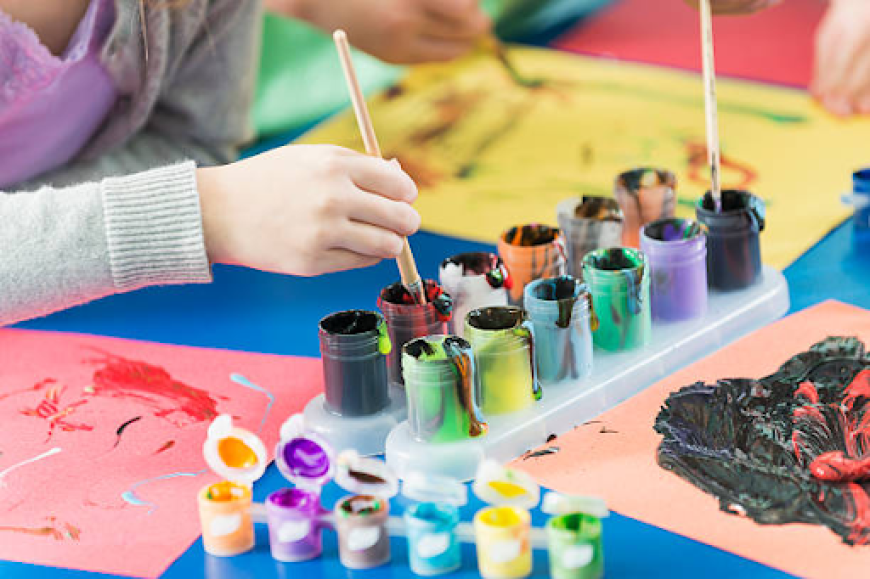
A children’s art camp is one of those spaces where kids don’t really feel “taught” in the strict sense. They just… create. And that matters more than people realize. You walk in, and it’s paint smudges, half-finished sketches, laughter, a bit of chaos, honestly. But inside that chaos, something important is happening. Kids are figuring out how to express what they can’t always say out loud.
Let’s be real, not every child fits into a rigid classroom mold. Some need color, movement, and mess. And that’s where art camps quietly step in and do their thing without making a big show of it.
Why creative space actually matters
Kids need space where nothing is “wrong.” At a good art camp, there’s no constant correction hovering over them. That freedom hits different. They start trusting their own ideas instead of waiting for approval every five seconds.
And you can see it happen slowly. A kid who was hesitant on day one suddenly starts mixing wild colors on day three. No fear. Just experimenting. That shift, it’s subtle but powerful. Creativity starts feeling safe instead of risky.
Freedom over perfection in children’s art camp settings
Perfection is kind of the enemy here. In a children’s art camp, nobody is chasing perfect lines or flawless shading. Truth is, kids don’t even care about that unless we drill it into them.
They’re more interested in “what if I do this?” than “is this correct?” And that mindset is everything. You’ll see drawings that don’t make traditional sense, but they tell a story only that child could tell. That’s real expression.
Sometimes it’s messy. Sometimes it looks nothing like what it “should.” But it’s honest, and that’s the point.
Building confidence through messy creativity
Confidence doesn’t show up in one big moment. It sneaks in through small wins. A kid finishing a painting they were unsure about. Or showing it to someone without hiding it behind their back.
In these camps, mistakes don’t get punished. They get turned into something else. A spilled color becomes part of the sky. A crooked line becomes texture. That kind of thinking changes how kids see failure in general.
And honestly, they carry that outside the camp too. You can tell.
How kids develop skills naturally over time
Nobody is forcing technique down their throat every minute. But skills still grow, which is the interesting part. They pick things up by watching, copying, messing up, trying again.
Color mixing, brush control, basic composition… it all just slips in naturally. No heavy lectures. No pressure. Just repetition inside play.
And the funny thing? They remember it better that way. Because it never felt like “work.” It felt like something they chose to do.
Social learning and shared imagination
There’s also this social layer people forget about. Kids watching each other creates a weirdly powerful learning loop. One child tries something bold, another copies it, then twists it into something new.
It’s not competition. It’s more like shared imagination bouncing around the room.
You’ll see quiet kids open up just because someone next to them started talking about their drawing. That kind of environment builds communication without forcing it.
Emotional release and self-expression through art
Art becomes a language when words don’t work. Simple as that. A lot of kids don’t know how to explain what they feel, but they can draw it.
In a good camp, you see that happen naturally. Mood shows up in color choices. Energy shows up in brush strokes. Even frustration shows up on paper.
Nobody needs to decode it perfectly. The act itself is what matters. It’s release. And kids walk out lighter than when they walked in.
Real benefits parents actually notice later
Parents usually notice small changes first. A kid is becoming more patient. More willing to try things without giving up immediately. Sometimes, even just sitting quietly and focusing longer than before.
This is also where an art class for kids environment makes a difference, because structured guidance combined with creative freedom gives balance. Not too strict, not too loose. Just enough structure to grow, but enough freedom to explore.
And yeah, there might still be paint on clothes when they get home. That part doesn’t change much.
Conclusion
At the end of the day, art camps aren’t about turning every kid into an artist. That’s not the goal. It’s about giving them a space where expression feels normal, not rare.
A place where mistakes are just part of the process. Where creativity isn’t judged every step of the way. And where kids slowly figure out who they are, one messy brushstroke at a time.