Gymnastics Bar Dimensions, Height & Weight Capacity FAQ
Learn about gymnastics bar dimensions, height adjustment, weight capacity, floor space, stability, and key factors to consider for home gymnastics training.
 airtumble
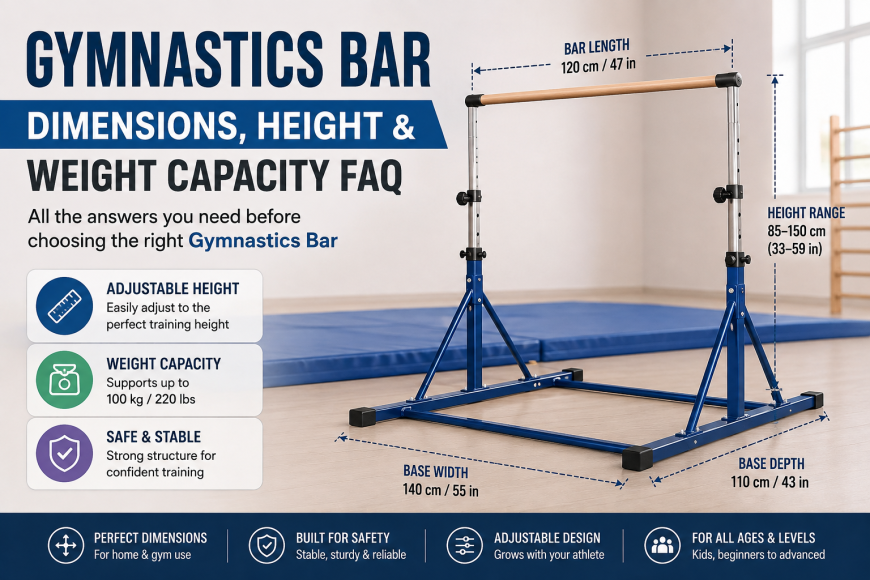
Choosing the right equipment for gymnastics training requires more than simply looking at the design or price. Dimensions, adjustable height, weight capacity, stability, and available floor space all play an important role in creating a suitable training environment.
Whether you are setting up a home practice area for a child, beginner, or experienced athlete, a Gymnastics Bar with suitable dimensions and adjustment options can make it easier to create a comfortable training setup. Understanding these specifications can help you choose equipment that matches the user's size, skill level, and training needs. This FAQ answers some of the most common questions about dimensions, height, and weight capacity.
1. What are the standard dimensions of a Gymnastics Bar?
There isn't one universal size because different models are designed for different users and training purposes. Home equipment can vary considerably in overall height, bar length, base width, and footprint.
When comparing options, look at the complete assembled dimensions rather than focusing only on the bar itself. The supporting frame and base are equally important because they contribute to overall stability.
For home use, choose dimensions that allow the athlete to practice comfortably while leaving sufficient open space around the equipment.
2. How high should a Gymnastics Bar be?
The appropriate height depends on the athlete's height, experience, and the type of movement being practiced.
Adjustable models can be particularly useful because the height can be changed as children grow or as their training requirements develop. Beginners may benefit from a lower setting for basic exercises, while more experienced users may require additional height for specific skills.
Always stay within the manufacturer's recommended adjustment range. The bar should never be raised beyond its approved maximum height.
3. Is an adjustable bar better for growing children?
An adjustable model can be a practical choice for families with growing children. Since children can change significantly in height over time, a fixed-height model may eventually become less suitable.
An adjustable design can accommodate different users and training stages. It can also be useful when siblings of different heights share the same equipment.
However, adjustability should always be combined with secure locking mechanisms and a stable frame. Check that every adjustment point is properly locked before practice begins.
4. How much floor space is needed?
The amount of space required depends on the product's overall footprint and the movements being performed.
Measure the available area before purchasing and compare it with the manufacturer's assembled dimensions. You should also leave sufficient clearance around the equipment so that the athlete isn't practicing too close to walls, furniture, or other objects.
A suitable gymnastics mat can create a dedicated practice area, but a mat doesn't replace the need for adequate clearance and supervision.
5. What is the maximum weight capacity?
Weight capacity indicates the maximum user weight the equipment is designed to support under the manufacturer's specified conditions.
This is an important specification because the frame, joints, fasteners, bar, and support structure all contribute to the equipment's load-bearing capability.
Never assume that a heavier-looking frame automatically has a higher weight limit. Always check the manufacturer's stated capacity and stay within it.
Dynamic movements can also place different forces on equipment compared with simply standing or hanging from it. Follow any additional restrictions provided for specific exercises.
6. Does the user's height affect weight capacity?
Height and weight are separate specifications, but both should be considered when selecting equipment.
A taller athlete may need a greater height-adjustment range, while a heavier athlete needs equipment with an appropriate weight rating. For children and teenagers, it can be useful to choose a model with enough adjustment range to accommodate growth.
However, future growth shouldn't be used as a reason to exceed the manufacturer's current weight or height recommendations.
7. What should I look for when buying equipment for home use?
Start by checking the most important specifications:
-
Adjustable height range
-
Maximum user weight
-
Overall dimensions
-
Base width and depth
-
Bar length
-
Frame construction
-
Stability
-
Locking mechanisms
-
Recommended age or skill level
-
Required floor clearance
You should also consider how frequently the equipment will be used and whether it will be used by one person or several members of the household.
AirTumble can be considered when comparing home gymnastics and tumbling equipment, but regardless of the brand you choose, always review the product specifications and safety instructions before use.
8. Is a wider base always better?
A wider base can help provide stability, but a wider footprint doesn't automatically mean that a product is better.
Overall stability depends on several factors, including frame design, construction materials, joints, support points, weight distribution, and the quality of the adjustment system.
A very wide base may also require more floor space. The best option is one that provides appropriate stability while fitting comfortably within your available training area.
9. Can two children use the same equipment?
A single piece of equipment may be suitable for children of different heights and weights if they remain within the manufacturer's recommended specifications.
However, this does not mean that two children should use it simultaneously. Unless the manufacturer specifically states that simultaneous use is permitted, only one user should be on the equipment at a time.
For younger children and beginners, adult supervision is recommended during practice.
10. Does height affect gymnastics training?
Yes. Equipment height can affect how comfortably an athlete performs different skills.
A setting that is too low may restrict certain movements, while an unnecessarily high setting can make mounting and dismounting more challenging. The appropriate height should therefore be based on the user's body size, ability, and the specific exercise.
Beginners should focus on developing foundational skills before progressing to movements that require greater height, strength, or coordination.
11. What measurements should I check before buying?
Before purchasing, measure the available floor area and compare it with the product's assembled dimensions.
Important measurements to check include:
-
Minimum bar height
-
Maximum bar height
-
Bar length
-
Overall frame width
-
Overall frame depth
-
Maximum user weight
-
Required clearance
-
Recommended mat size
-
Storage dimensions
Taking these measurements before ordering can help prevent problems with installation and everyday use.
12. How important is regular equipment inspection?
Regular inspection is an important part of maintaining a safe training environment.
Before each session, check the frame, bar, joints, bolts, adjustment points, and locking mechanisms. Look for loose components, cracks, bends, unusual movement, or visible damage.
If any part appears damaged or unstable, stop using the equipment until the issue has been properly addressed. Equipment should always be used according to the manufacturer's instructions.
13. Can the same equipment work for beginners and advanced athletes?
Not necessarily. Beginners generally need equipment that is easy to adjust, stable, and suitable for learning fundamental skills.
More experienced athletes may require a greater adjustment range or equipment designed to handle more advanced movements.
When choosing equipment, consider both the athlete's current ability and potential future development. However, future development should never be a reason to use equipment outside its specified limits.
14. What is the ideal height for a child's equipment?
There isn't one ideal height for every child. The correct setting depends on the child's height, ability, and the particular skill being practiced.
An adjustable model can make it easier to find an appropriate setting as the child grows. Parents should follow the manufacturer's height recommendations rather than relying solely on general age-based guidelines.
The equipment should also allow the child to practice without unnecessary difficulty when mounting or dismounting.
15. How does weight capacity affect equipment selection?
Weight capacity should be one of the first specifications checked before purchasing.
Choose equipment with a stated capacity that comfortably accommodates the intended user's body weight. If several family members will use the equipment, consider the requirements of the heaviest intended user.
Remember that the manufacturer's weight rating is not a target to exceed. Staying within the specified capacity helps ensure that the equipment is being used as designed.
16. What makes equipment stable?
Stability comes from the combination of the base, frame construction, joints, support points, and overall design.
A stable setup should sit securely on a suitable surface and shouldn't have excessive movement during normal use. The adjustment mechanisms should also lock firmly at the selected height.
Before every training session, make sure the equipment is assembled correctly and positioned on an appropriate surface.
17. Should I consider storage space?
Yes. Storage is often overlooked when choosing home training equipment.
If the equipment needs to be moved after every session, consider its overall dimensions, weight, folding mechanism, and storage requirements. A model that fits your training area but is difficult to store may become inconvenient over time.
If the equipment will remain permanently assembled, make sure the selected location has sufficient space and won't interfere with everyday household activities.
18. What is the most important specification to check?
There isn't a single specification that determines whether equipment is right for everyone. Height range, weight capacity, dimensions, stability, construction, and available space should all be considered together.
Start by identifying who will use the equipment and what type of training they intend to perform. Then compare those requirements with the manufacturer's specifications.
Continue Reading: Improve Your Airtrack Performance
If you're also interested in improving your tumbling and gymnastics training, continue reading our previous guide, “A Practical Guide to Improving Airtrack Performance.” The article provides practical information about improving body positioning, balance, landing technique, strength, flexibility, progressive practice, and developing a more effective training routine.
Final Thoughts
Understanding dimensions, height adjustment, and weight capacity can make choosing home gymnastics equipment much easier. The right setup should provide an appropriate adjustment range, suitable weight support, adequate stability, and enough space for comfortable practice.
Before every session, inspect the equipment, confirm that adjustment points are secure, and make sure the surrounding area is clear. Follow the manufacturer's instructions and never exceed the stated height or weight limits.
When suitable equipment is combined with progressive training, proper technique, adequate space, and regular inspections, athletes can create a more organized and effective home practice environment.