How Free Website Monitoring Tools Protect Your SEO from Downtime
Discover how a Free Website Monitoring Tool prevents ranking drops and ensures search engine crawlers always have access to your content.
 peterdong
Website uptime functions as a silent pillar of search engine optimization. While many digital marketers focus on keywords and backlinks, the simple availability of a site often determines whether those efforts yield results. When a server fails, the consequences extend far beyond a brief moment of offline status. It disrupts the relationship between your server and search engine crawlers.
If a search engine tries to visit your site and finds it inaccessible, it cannot index new content or verify existing pages. Frequent interruptions signal to algorithms that a website might be unreliable for users. Utilizing a Free Website Monitoring Tool offers a simple yet effective way to oversee site health and maintain a stable presence in search results.
Why Website Downtime Is a Serious SEO Risk
Search engines prioritize user satisfaction, and nothing ruins a user’s journey faster than a "Server Not Found" error. When Googlebot or Bingbot encounters a 5xx error or a timeout, it doesn't just wait around. It moves on to the next site in its queue. While a single instance of downtime rarely results in a total deindexing, a pattern of instability causes crawlers to visit less frequently.
This reduction in "crawl budget" means your newest articles or product updates take longer to appear in search results. Furthermore, the human element is just as damaging. Users who click a search result only to find a dead link will immediately return to the search results page. This behavior sends a negative signal to search engines, suggesting that your page does not fulfill the user's intent, which can lead to a gradual slide in rankings.
Understanding Free Website Monitoring Tools
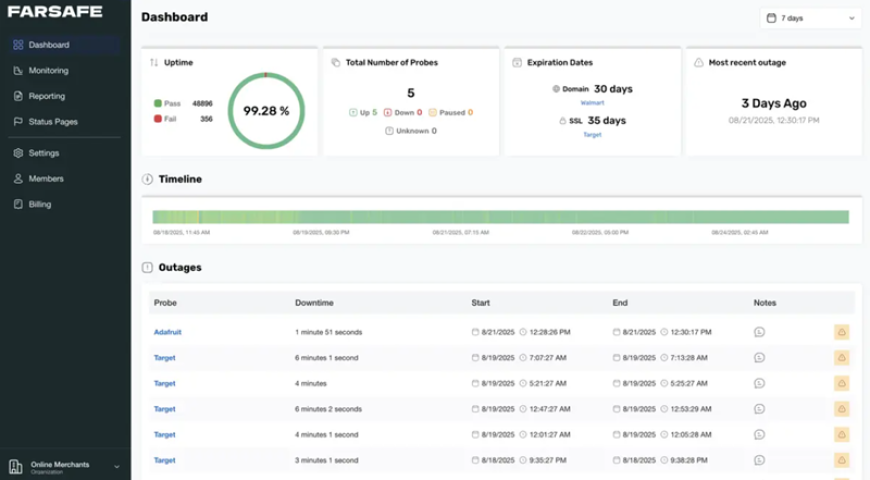
A monitoring service acts as a 24/7 sentry for your digital assets. It works by sending automated requests to your URL at specific intervals to confirm the server is responding correctly. If the tool detects a failure, it immediately notifies the site owner.
|
Feature |
SEO Benefit |
|
Real-Time Alerts |
Minimizes the duration of outages to prevent crawler errors. |
|
Regional Testing |
Ensures users in different countries can access your content. |
|
Response Speed Tracking |
Helps maintain Core Web Vitals by flagging slow server response times. |
|
SSL Monitoring |
Prevents security warnings that drive away traffic and hurt trust. |
While premium versions offer deeper analytics, a free version is often sufficient for blogs and small business sites to stay ahead of major technical failures.
How Monitoring Protects Your Search Visibility
The primary advantage of automated oversight is the speed of recovery. Most webmasters only discover a site is down when a customer complaint or they happen to visit the site themselves. By then, hours of traffic might be lost. A monitoring tool ensures you are the first to know, allowing for a fix before a search engine crawler even notices a problem.
Beyond simple availability, these tools help protect the technical integrity of your SEO. Maintaining a high uptime percentage ensures that your "Page Experience" signals remain positive. Consistent access is a foundational requirement for Google’s Core Web Vitals. According to Google Search Central, providing a smooth and reliable user experience is a confirmed ranking factor.
Best Practices for Site Maintenance
To get the most out of your monitoring setup, you should look beyond the homepage. It is wise to monitor your highest-converting landing pages or your most popular blog posts. If a specific section of your database fails while the homepage remains active, a basic check might not catch the error.
Integrating these insights with data from the Moz Health Report or other SEO auditing software creates a comprehensive safety net. Regularly reviewing your uptime reports can also help you identify if your current hosting provider is failing to meet the needs of your growing traffic, signaling that it might be time for a more robust infrastructure.
Conclusion
A website that is not visible to the world cannot rank. Downtime is an avoidable threat that can undo months of hard work in content creation and link building. By implementing a Free Website Monitoring Tool, you take a proactive step in safeguarding your organic traffic and ensuring that search engines always have an open door to your content. Reliability is the bedrock of authority, and consistent uptime is the best way to prove your site belongs at the top of the search results.
Frequently Asked Questions
Can short periods of downtime hurt my rankings?
Brief, isolated incidents usually don't cause permanent damage. However, if your site is down every time a crawler visits, your rankings will likely suffer due to perceived instability.
Is a free tool enough for a professional blog?
For many, a free tool provides the essential "up or down" notification needed to take action. As a site grows into a high-revenue enterprise, more frequent checks and advanced diagnostics may become necessary.
How does server location affect monitoring?
Sometimes a site is up in the US but down in Europe due to CDN issues. Good monitoring tools check from various global locations to ensure your international SEO remains intact.