Foot Golf and Foot Volley
The sport rewards accuracy and strategic thinking. A powerful kick is not always the best option. Players must understand when to use a controlled pass, a long-distance kick, or a carefully placed shot.
 carter234
Football has evolved far beyond the traditional 90-minute game played on a large pitch. Today, football-inspired sports offer new ways for players, families, athletes, and recreational enthusiasts to enjoy the beautiful game. Two increasingly popular variations are Foot Golf and Foot Volley. Although both sports use football skills, they provide completely different experiences.
Foot Golf combines the accuracy and strategy of golf with the kicking skills of football. Foot Volley, on the other hand, combines football techniques with the movement and competitive style of volleyball. Both sports are entertaining, challenging, and suitable for players with different levels of experience.
Understanding the rules, equipment, techniques, and benefits of these sports can help beginners get started and help clubs and organizations develop new sporting activities.
What Is Foot Golf?
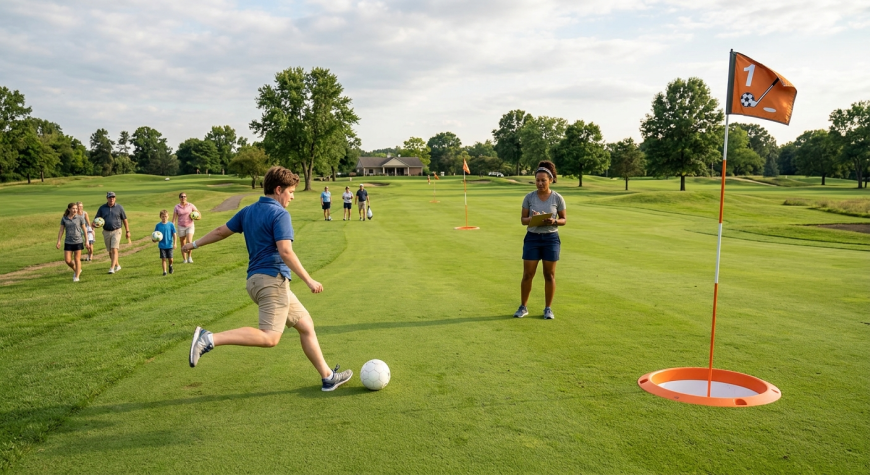
Foot Golf is a sport that combines elements of football and golf. Instead of using golf clubs and a small golf ball, players kick a football toward a large hole. The objective is simple: complete the course using as few kicks as possible.
A Foot Golf course generally resembles a golf course, with players moving from one designated starting area to another target hole. Players must consider distance, direction, terrain, obstacles, and kicking technique before making each shot.
The sport rewards accuracy and strategic thinking. A powerful kick is not always the best option. Players must understand when to use a controlled pass, a long-distance kick, or a carefully placed shot.
How Foot Golf Is Played
The basic concept is easy to understand. Each player begins at a designated starting point and attempts to reach the target hole using the fewest possible kicks.
Players normally take turns, and the player whose ball is furthest from the hole generally plays next. The total number of kicks used to complete each hole is recorded, similar to strokes in traditional golf.
At the end of the course, the player with the lowest total number of kicks wins.
The simplicity of Foot Golf makes it accessible to people who may not regularly play traditional football or golf. However, becoming highly skilled requires practice and a good understanding of ball control.
Foot Golf Equipment
One of the advantages of Foot Golf is that it does not require a large amount of specialized equipment.
The most important item is a suitable football. Players may also need appropriate footwear, comfortable sports clothing, and access to a Foot Golf course.
The ball should be durable, properly inflated, and suitable for outdoor use. Good ball control is particularly important because players need to make accurate kicks over different distances.
Some courses may have specific equipment requirements, so players should check the local rules before participating.
Important Foot Golf Skills
Accuracy is one of the most important skills in Foot Golf. Players need to control both the direction and strength of their kicks.
Distance control is also essential. A player who kicks too hard may send the ball far beyond the target, while a weak kick may leave the ball too far away.
Players should also learn to read the terrain. Slopes, grass conditions, wind, and obstacles can influence how the ball moves.
Another important skill is strategic decision-making. Players should consider the safest route rather than always attempting the most aggressive shot.
Benefits of Foot Golf
Foot Golf offers several physical and recreational benefits. Players walk around the course while repeatedly kicking the ball, providing an enjoyable form of physical activity.
The sport can also improve coordination, balance, concentration, and kicking accuracy. Because it combines football and golf concepts, it encourages players to think carefully about every shot.
Foot Golf can also be a social activity. Friends, families, colleagues, and sports groups can play together without requiring the same level of fitness or football experience needed for a traditional competitive match.
What Is Foot Volley?
Foot Volley is another football-based sport, but its format is very different from Foot Golf. Foot Volley combines football skills with the basic concept of volleyball.
Players compete across a net and attempt to send the ball into the opponent's area without allowing it to touch the ground on their side. Depending on the rules, players may use their feet, head, chest, and other permitted parts of the body rather than their hands.
The sport requires excellent ball control, quick reactions, balance, and coordination.
Foot Volley can be played recreationally or competitively, and different formats may be used depending on the number of players and available playing area.
How Foot Volley Is Played
The court is divided by a net, similar to a volleyball court. Players or teams remain on their respective sides and attempt to return the ball over the net.
The objective is to make it difficult for the opposing team to return the ball. Players need to control the ball carefully and place it strategically.
Unlike traditional football, players cannot simply pick up the ball or use their hands. Instead, they must rely on techniques such as controlled touches, volleys, headers, and chest control.
Because the ball can move quickly, players must react immediately to changes in direction and height.
Foot Volley Equipment
Foot Volley generally requires a net, a suitable playing surface, and a football designed for repeated contact.
The ball should have appropriate pressure and should be comfortable enough for players to control using different parts of the body.
Players should also wear suitable athletic clothing and footwear. Depending on the playing surface, different types of sports shoes may be appropriate.
A well-maintained playing area is particularly important because players may need to move quickly, jump, turn, and reach for difficult balls.
Essential Foot Volley Skills
Ball control is the foundation of Foot Volley. Players must be able to receive the ball and keep it under control before returning it over the net.
Timing is equally important. A player must judge the speed, height, and direction of the incoming ball and choose the correct technique.
Players should develop their ability to use different body parts. Foot control is obviously important, but chest control and heading can also be valuable.
Placement is another important skill. Instead of simply returning the ball, experienced players try to send it into areas that are difficult for opponents to reach.
Communication becomes especially important in doubles or team formats. Players need to coordinate their movements and decide who will play each ball.
Foot Golf vs. Foot Volley
Although both sports are based on football skills, their playing styles are quite different.
Foot Golf is generally slower and more strategic. Players take individual shots and focus heavily on accuracy, distance, and course management.
Foot Volley is faster and more dynamic. Players must continuously react to opponents and control balls coming over the net.
Foot Golf is often suitable for relaxed social activities and mixed groups. Foot Volley can provide a more energetic and competitive experience.
Both sports, however, can improve football-related skills while offering an alternative to traditional football.
Why These Sports Are Becoming Popular
Modern sports participants increasingly look for activities that combine competition, entertainment, and accessibility. Foot Golf and Foot Volley fit this trend because they provide football experiences without requiring a full-size football pitch or a traditional 11-player team.
These sports can also attract people from different sporting backgrounds. Golf players may enjoy the strategic aspect of Foot Golf, while football players can transfer their existing ball-control skills into Foot Volley.
Sports clubs and recreation centers can introduce these activities to attract new participants and offer additional programs.
Foot Golf for Schools and Academies
Schools and football academies can use Foot Golf as an engaging training activity. Young players can practice passing accuracy, shooting control, concentration, and decision-making in an enjoyable environment.
It can also be used during sports days, camps, and recreational programs. Because the game can be adapted to different skill levels, beginners can participate alongside more experienced players.
Coaches can create short courses or target-based activities to focus on specific skills. This makes Foot Golf a flexible addition to youth sports programs.
Foot Volley for Football Training
Foot Volley can also be used as a training tool for football players. The game encourages players to improve first touch, aerial control, reactions, coordination, and ball awareness.
Because players have limited time to control and return the ball, they must make quick decisions. This can help develop technical confidence.
Coaches can modify the rules to focus on specific skills. For example, players may be encouraged to use their weaker foot or control the ball with specific body parts.
Organizing Foot Golf and Foot Volley Events
Both sports can be used for tournaments, corporate events, school competitions, and recreational activities.
A Foot Golf event can be organized by creating a course with clearly marked starting points and target holes. Players can compete individually or in groups.
A Foot Volley tournament requires a suitable court, net, footballs, players, and a clear scoring system. Matches can be organized using knockout rounds, league formats, or group stages.
Organizers should establish rules before the event begins. This helps participants understand scoring, permitted techniques, playing areas, and match procedures.
Choosing Quality Footballs
The quality of the ball can have a significant effect on both sports. A ball that is too hard, poorly shaped, or difficult to control can negatively affect the playing experience.
For Foot Golf, players need a ball that provides predictable movement and accurate kicking response. For Foot Volley, the ball should be comfortable to control during repeated touches.
Organizations purchasing balls in bulk should consider durability, construction, size, air retention, surface quality, and intended use.