How an Accounting Outsourcing Firm Can Help UK Businesses Manage Their Finances
Discover how an accounting outsourcing firm can help UK businesses manage bookkeeping, reporting, cash flow and financial administration efficiently.
 riyasingh2
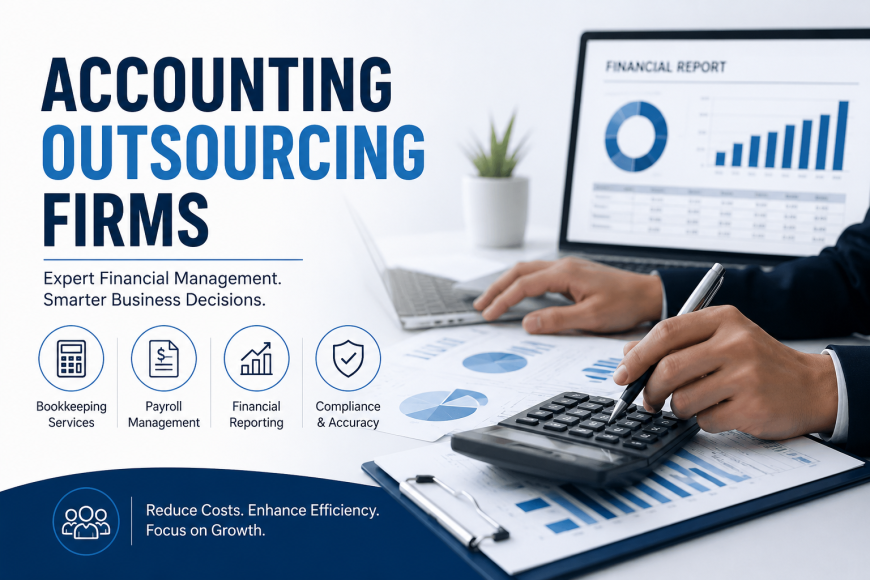
Running a business involves making hundreds of decisions, and financial administration is often one of the areas that can become difficult to manage as the company grows. From bookkeeping and payroll to accounts preparation and financial reporting, there are many tasks that require accuracy and consistency. Working with an Accounting Outsourcing Firm can give UK businesses access to professional financial support without having to build a large in-house accounts team.
Outsourcing does not mean giving up control of the company's finances. Instead, it allows businesses to delegate selected accounting responsibilities to external specialists while retaining access to the information and reports needed to make informed decisions. For many growing companies, this can be a practical and flexible approach to financial management.
What Is an Accounting Outsourcing Firm?
An accounting outsourcing firm is an external company that provides accounting and finance-related services to businesses.
The exact services available vary between providers, but they can include bookkeeping, accounts payable, accounts receivable, payroll support, management accounts, financial reporting and year-end accounts preparation.
A business can outsource a single function or combine several services depending on its requirements.
For example, a small company might only need bookkeeping and VAT-related support, while a growing organisation may require a broader outsourced finance function.
The important advantage is flexibility. Businesses can select services according to their current needs rather than building an entire accounting department from the beginning.
Why Are UK Businesses Considering Accounting Outsourcing?
There are several reasons a company may decide to outsource accounting work.
One of the most obvious is time. Business owners and managers often have more important responsibilities than spending hours every week dealing with routine financial administration.
Recruiting finance staff can also be expensive and time-consuming. Salaries are only part of the cost. Businesses may also need to consider recruitment, training, software, office space and employee benefits.
Outsourcing provides another option. A company can obtain professional support while paying for the services it actually requires.
For small and medium-sized businesses, this can be particularly attractive.
Access to Specialist Skills
An external accounting provider works with financial information every day. This can give businesses access to people who have experience with different accounting processes and software.
For a small company with limited internal resources, having access to specialist knowledge can be useful.
Instead of relying entirely on one employee to manage every financial task, a business can work with a provider that has a wider team and established processes.
However, businesses should always check the qualifications and experience of any provider before sharing sensitive financial information.
Bookkeeping and Transaction Processing
Bookkeeping is one of the most common services businesses outsource.
It involves maintaining accurate records of income, expenses, purchases, payments and other transactions.
Regular bookkeeping can help prevent financial records from falling behind. This is important because outdated records make it harder to understand the company's current position.
An outsourced team may also reconcile bank accounts and investigate discrepancies when recorded transactions do not match bank statements.
Keeping these records organised throughout the year can make wider accounting work much easier.
Accounts Payable and Accounts Receivable
Managing money going out and money coming into a business is another important part of financial administration.
Accounts payable involves tracking supplier invoices and payments. Accounts receivable focuses on customer invoices and outstanding balances.
When these processes are not managed properly, businesses can lose sight of unpaid invoices or upcoming payment commitments.
An outsourced accounting team can help maintain these records and provide information that allows management to monitor outstanding balances.
This can be particularly helpful for businesses with a large number of customers or suppliers.
Management Accounts and Financial Reporting
Business owners need more than basic transaction records to understand how their company is performing.
Management accounts can provide regular information about revenue, expenditure, profitability and other financial measures.
The frequency depends on the business. Some companies may benefit from monthly reports, while others may require reporting on a different schedule.
Regular financial information can help management identify changes in performance and make decisions based on current figures.
For example, a company might notice that a particular operating cost has increased significantly. With timely information, management can investigate the reason rather than discovering the issue months later.
Improving Cash Flow Visibility
Cash flow is an important concern for businesses of all sizes.
A company can have strong sales and still experience financial pressure if customers are slow to pay or large expenses become due unexpectedly.
Organised accounting records provide greater visibility over money coming into and leaving the business.
An outsourced provider may help businesses keep track of customer balances, supplier commitments and other financial information.
This does not eliminate cash flow problems, but it can make them easier to identify and manage.
Supporting Business Growth
Accounting requirements often change as a company expands.
A small business may initially manage its finances with basic accounting software and occasional professional assistance. As transaction volumes increase, the same approach may no longer be sufficient.
Outsourcing can provide a scalable option.
Businesses can potentially increase the level of support as their needs develop rather than immediately recruiting a larger internal finance team.
This can be useful for companies experiencing rapid growth, seasonal increases in activity or expansion into new markets.
Accounting Software and Digital Processes
Technology has changed the way businesses manage financial information.
Cloud-based accounting platforms allow businesses to store records digitally, automate certain processes and access financial information from different locations.
An accounting outsourcing firm can often work directly within the company's existing accounting system.
This can reduce duplication and make communication between the business and its external accounting team easier.
Before choosing a provider, companies should check which software platforms the firm supports and how information will be shared.
Security should also be a priority because accounting records contain confidential business information.
Outsourcing and Making Tax Digital
Digital record keeping has become increasingly important for UK businesses as Making Tax Digital continues to develop.
The requirements that apply to a particular business depend on its circumstances and the relevant tax rules. Companies should therefore check the latest guidance and seek professional advice where appropriate.
An outsourced accounting provider can help maintain organised digital financial records and support processes that fit the business's accounting systems.
It is important to remember that bookkeeping and specialist tax advice are separate areas. Businesses with complex tax matters should work with an appropriately qualified professional.
How Outsourcing Can Help Small Businesses
Smaller businesses can sometimes benefit more from outsourcing than larger organisations because they may not have the resources to maintain a complete internal finance department.
A small consultancy, retailer, contractor or professional services business may need regular accounting assistance but not enough to justify several full-time employees.
Outsourcing allows the business to access support without building a large internal team.
This can also allow owners to focus on the activities that generate revenue.
Choosing the Right Accounting Outsourcing Firm
Selecting an outsourcing partner requires careful consideration.
Price is important, but it should not be the only factor.
Businesses should look at the provider's experience, range of services, communication processes and understanding of the company's industry.
It is also worth asking who will actually manage the account. A clear point of contact can make communication easier.
Data security should be discussed as well. Businesses need to know how financial documents are stored, transferred and protected.
Finally, the scope of services should be clearly defined before work begins.
Questions to Ask Before Outsourcing
Before entering into an agreement, a business owner may want to ask:
- Which accounting services are included?
- How frequently will financial records be updated?
- Who will manage our account?
- Which accounting software do you support?
- Are bookkeeping and reconciliations included?
- Can you provide management reports?
- How do you handle confidential information?
- Can the service scale as our business grows?
- Are additional services charged separately?
- How quickly can queries normally be answered?
Clear answers can help businesses compare providers and avoid misunderstandings.
Is Accounting Outsourcing Right for Your Business?
Outsourcing is not automatically the best solution for every company.
Businesses with large internal finance departments may prefer to keep most accounting functions in-house. Smaller companies, however, may find outsourcing more flexible.
If financial administration is taking too much management time, records are regularly falling behind or the company needs access to specialist accounting skills, outsourcing may be worth considering.
The goal should be to create a finance process that is reliable, efficient and suitable for the company's current stage of development.
Final Thoughts
Financial management is an essential part of running a successful UK business, but it does not have to be handled entirely by an internal team. An Accounting Outsourcing Firm can provide flexible support across bookkeeping, accounts payable, accounts receivable, reporting and other financial functions.
The right outsourcing arrangement can help businesses save time, maintain better financial records and gain clearer visibility over their performance.
Before making a decision, companies should compare providers carefully, consider the services they actually need and ask clear questions about pricing, security, technology and communication.
For businesses that want professional accounting support without the cost and complexity of building a large internal finance department, outsourcing can be a practical option worth exploring.