Finding Authentic Experiences in Varanasi Beyond the Ghat Itinerary
It is in what those images are embedded in: a living city that has functioned continuously for longer than almost any other on earth and that shapes some of the most authentic experiences in Varanasi through its unique rhythms, traditions, and daily life.
 amitkumar
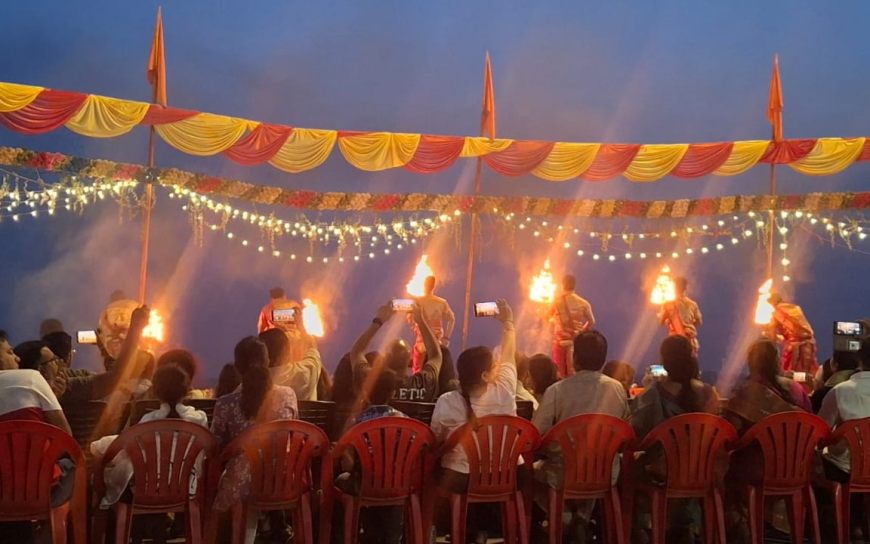
The first-time visitor to Varanasi arrives with a strong visual expectation: the ghats at sunrise, priests performing the Ganga Aarti at Dashashwamedh, narrow lanes in the old city, marigold vendors at temple entrances. These images are accurate. They are also what every other visitor to Varanasi sees on the same day, in the same light, with the same guide delivering the same interpretation.
The authentic experience of Varanasi is not in the iconic images. It is in what those images are embedded in: a living city that has functioned continuously for longer than almost any other on earth and that shapes some of the most authentic experiences in Varanasi through its unique rhythms, traditions, and daily life.
The Old City at Working Hours
The ghats at sunrise are extraordinary. The old city at 7 in the morning, when vendors are setting up, when the chai shop near Manikarnika is serving the workers who prepare cremation pyres, when the narrow lanes are busy with the morning movement of a city that has not changed its fundamental rhythm for centuries, is extraordinary in a different way.
Walking through the Vishwanath Gali on a non-festival morning, with no agenda and no guide delivering historical context, produces encounters that are impossible to script. The sound of a morning raga from an open window. A weaver's workshop at the back of a textile house, accessible through a door that looks like a residential entrance. The specific quality of light in a lane that is only a meter wide. These are Varanasi.
The Silk Weaving Tradition
Varanasi's Banarasi silk weaving tradition is designated under India's Geographical Indication registry. According to India's GI Registry , Banarasi brocade weaving involves a craft tradition with documented continuity of several centuries, producing fabrics that combine Persian design influence with distinctly Indian material and technique. The weaving neighborhoods, concentrated in the Madanpura and Alaipura areas of the city, are operating workshops, not museums. A visit to a working loom through a genuine weaving family rather than a commercial emporium is one of the most distinctive experiences available in Varanasi.
What to Specifically Seek
• A dawn boat ride that starts before the tourist boats have launched, between 4:45 and 5:15 AM during winter months, to see the ghats in the light and at the pace that changes the experience entirely.
• A Banarasi thali in a neighborhood restaurant in the old city rather than in a tourist-area dining room. The food is related but the context is different.
• A classical music performance in an intimate setting. Varanasi has deep roots in the Benaras gharana of Hindustani classical music, and evening performances in small venues are accessible through the city's cultural institutions.
• The Ramnagar Fort, on the opposite bank of the Ganga from the main ghats, which houses a working museum of the Maharaja of Varanasi that has changed little in a century. The morning light on the fort from a boat is worth planning for.
The Posture to Bring
Varanasi rewards the traveler who arrives with patience rather than an itinerary. The city does not yield its character to those who are moving quickly through it. Two days with spacious time and no plan to complete a list of attractions will produce an encounter with the city that three days of structured sightseeing cannot replicate.