Exercises to Avoid During Menopause What Every Woman Should Know
Exercises to avoid during menopause are not about restricting movement or avoiding fitness challenges.
 vikkidavisfitness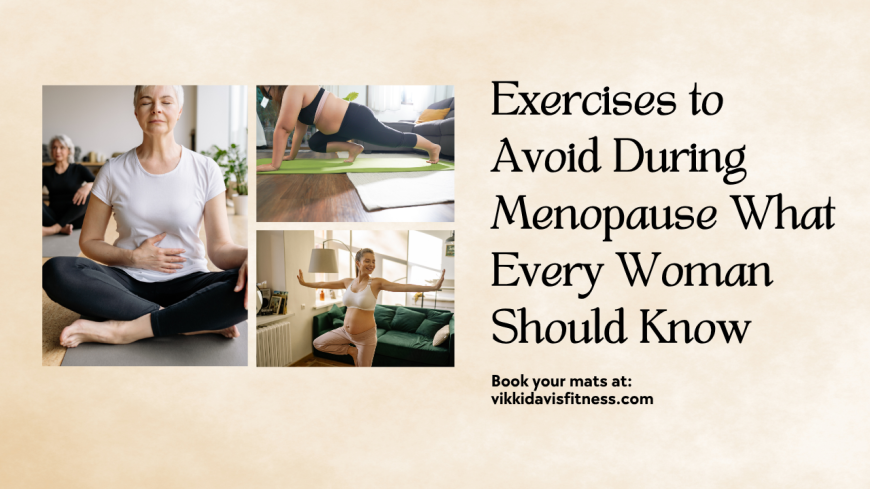
Why Exercise Needs a Different Approach During Menopause
Menopause changes many things, including the way the body responds to exercise. A workout that felt easy at 35 may feel completely different at 50. Recovery can take longer, joints may feel stiffer, energy levels can fluctuate, and muscle mass becomes harder to maintain. This does not mean women should stop exercising. In fact, regular physical activity remains one of the most effective ways to support physical and mental health during menopause.
The challenge is choosing the right activities.
Many women search for information about exercises to avoid during menopause because they want to stay active without increasing discomfort or risking injury. That is a smart approach. Fitness during menopause should focus on supporting the body, not fighting against it.
According to guidance from organizations such as the NHS, the North American Menopause Society, and the World Health Organization, consistent movement, strength training, mobility work, and cardiovascular exercise all play an important role in healthy aging. The key is selecting activities that match your body's needs rather than following every trend that appears on social media.
After all, your knees did not sign up for a fitness influencer's 100-burpee challenge.
Why Menopause Changes Exercise Recovery
One reason women start researching exercises to avoid during menopause is because recovery often feels different than it did in earlier years.
Hormonal changes can influence muscle recovery, sleep quality, energy levels, and joint comfort. Reduced estrogen levels may affect bone density and muscle maintenance, making proper exercise selection even more important.
This does not mean intense exercise is automatically bad. It simply means that recovery deserves more attention.
A workout only helps when the body has enough time and resources to adapt.
The goal should be building strength, improving mobility, and supporting long-term health rather than constantly chasing exhaustion.
High-Impact Exercise Without Proper Preparation
Many women enjoy running, jumping, and other high-impact activities. These exercises can provide cardiovascular benefits and support bone health. However, problems arise when the body is not adequately prepared for the demands of these movements.
Repeated high-impact exercise without sufficient strength training, mobility work, or recovery can place extra stress on joints, particularly the knees, hips, and lower back.
This is especially relevant for women experiencing changes in balance, flexibility, or muscle strength during menopause.
Instead of eliminating impact completely, many fitness professionals recommend gradually introducing challenging activities while prioritizing strength and movement quality.
Overtraining and Constant High-Intensity Workouts
One of the most common mistakes people make is assuming that more exercise always produces better results.
The reality is often the opposite.
Many women attempt to compensate for weight gain or changing body composition by increasing workout intensity and frequency. Unfortunately, excessive exercise can contribute to fatigue, poor recovery, and frustration.
The body responds best to a balanced fitness routine that includes recovery alongside training.
This is one reason many women transition toward lower-impact exercise strategies and structured programs rather than performing intense workouts every day.
Consistency almost always beats exhaustion.
Ignoring Strength Training
Surprisingly, avoiding strength training may be one of the biggest fitness mistakes during menopause.
Muscle mass naturally declines with age. Strength training helps preserve muscle, supports metabolism, improves balance, and contributes to long-term mobility.
Exercises using resistance bands, body weight, dumbbells, or machines can all provide meaningful benefits.
Strength training also supports bone health, which becomes increasingly important during and after menopause.
The goal is not becoming a bodybuilder. The goal is maintaining strength that supports everyday life.
Why Walking Remains One of the Best Choices
When people think about effective exercise, walking often gets overlooked because it seems too simple.
That is a mistake.
Walking remains one of the most researched and recommended forms of physical activity available. It supports cardiovascular health, improves mood, encourages movement, and helps people stay active without excessive stress on the body.
This is why many women include walkfit as part of their weekly routine.
Walkfit focuses on consistent movement rather than extreme workouts. It helps women maintain activity levels while supporting overall fitness and mobility.
Simple does not mean ineffective.
Sometimes the most sustainable solution is also the smartest one.
Core Training and Menopause Fitness
Many women become concerned about changes around the abdominal area during menopause.
While no exercise can directly target belly fat, strengthening the core can improve posture, stability, and movement quality.
This is why many women include a menopause belly exercise routine in their fitness plans.
Exercises such as bird dogs, dead bugs, planks, and glute bridges help strengthen core muscles while supporting overall movement function.
The focus should remain on building strength rather than chasing spot reduction myths.
Fitness science has repeatedly shown that the body does not selectively burn fat from one specific area simply because that area is exercised.
Pilates: A Menopause-Friendly Option
Pilates has become increasingly popular among women in midlife because it provides strength, flexibility, balance, and mobility benefits without excessive impact.
Many women begin with pilates for beginners because the movements are adaptable and accessible.
Pilates emphasizes controlled movement, breathing, posture, and core engagement. These qualities make it especially valuable during menopause when maintaining mobility and functional strength becomes increasingly important.
Unlike workouts that rely on constant intensity, Pilates encourages efficient movement patterns that support the body over the long term.
The Benefits of Pilates During Menopause
Pilates offers more than just stronger abdominal muscles.
The benefits of pilates include improved flexibility, enhanced balance, stronger stabilizing muscles, better posture, and greater body awareness.
These improvements influence daily life in meaningful ways.
Standing comfortably, moving confidently, lifting groceries, climbing stairs, and maintaining balance all become easier when the body functions efficiently.
Many women also appreciate that Pilates supports recovery rather than constantly demanding maximum effort.
Online Fitness Can Make Exercise Easier
One barrier to consistent exercise is convenience.
Busy schedules often make it difficult to attend classes at fixed times. This is one reason online workout classes have become increasingly popular.
Online fitness programs allow women to exercise from home while maintaining flexibility around work, family, and other responsibilities.
The best online programs provide structured guidance, progressive programming, and realistic expectations rather than promising overnight transformations.
Consistency matters far more than location.
Best Menopause Workouts Focus on Sustainability
The fitness industry often promotes the idea that exercise should leave people exhausted.
Healthy aging tells a different story.
Many of the best menopause workouts prioritize strength, mobility, flexibility, balance, and cardiovascular health rather than constant intensity.
Walking, Pilates, resistance training, and mobility work often provide better long-term results than extreme fitness challenges.
A workout should support your life, not take it over.
The most effective exercise routine is usually the one you can maintain consistently for years.
Frequently Asked Questions
Why do women search for exercises to avoid during menopause?
Many women experience changes in recovery, joint comfort, energy levels, and mobility during menopause. Understanding which exercises may require modification helps support safer and more effective training.
Are high-impact workouts bad during menopause?
Not necessarily. Many women can safely perform high-impact exercise. However, strength, mobility, recovery, and individual fitness levels should guide exercise choices.
Is walking enough during menopause?
Walking provides significant health benefits, but combining it with strength training and mobility work usually produces the best long-term results.
Is Pilates good for menopause?
Yes. Pilates improves posture, flexibility, balance, mobility, and strength while remaining gentle on the joints.
What are the best menopause workouts?
The best menopause workouts often combine walking, strength training, Pilates, mobility exercises, and recovery-focused activities.
Final Thoughts
Exercises to avoid during menopause are not about restricting movement or avoiding fitness challenges. They are about making smarter exercise choices that support strength, mobility, recovery, and long-term health. Whether you choose walkfit, pilates for beginners, online workout classes, menopause belly exercise routines, the benefits of pilates, or some of the best menopause workouts available today, the most important factor is consistency. Sustainable fitness will always outperform extreme fitness.