Dell 16 Plus Review: Big Screen, Bigger Value
Dell 16 Plus review: specs, performance, battery life, and how it compares to the Dell Pro Max 16 Premium. Find out if it's worth buying in 2026.
 uaetechdubai
Dell 16 Plus: The Complete 2026 Buyer's Guide to Dell's Big-Screen Everyday Laptop
If you've been shopping for a new laptop lately, you've probably noticed that Dell's lineup looks different than it used to. Gone are the days of XPS, Inspiron, and Latitude. In their place, Dell now sells three simplified families: Dell, Dell Pro, and Dell Pro Max. Sitting near the top of the consumer-facing "Dell" lineup is the Dell 16 Plus a spacious, AI-ready 16-inch laptop built for people who want a big display, solid everyday performance, and a price tag that doesn't require a second mortgage.
In this guide, we'll break down everything you need to know about the Dell 16 Plus: its specs, real-world performance, battery life, and how it stacks up against pricier siblings like the Dell Pro Max 16 Premium and the compact Dell Pro Max 14 Premium. Whether you're a student, a remote worker, or a creator looking for your next daily driver, you'll walk away knowing exactly whether this laptop deserves a spot on your desk.
What Is the Dell 16 Plus?
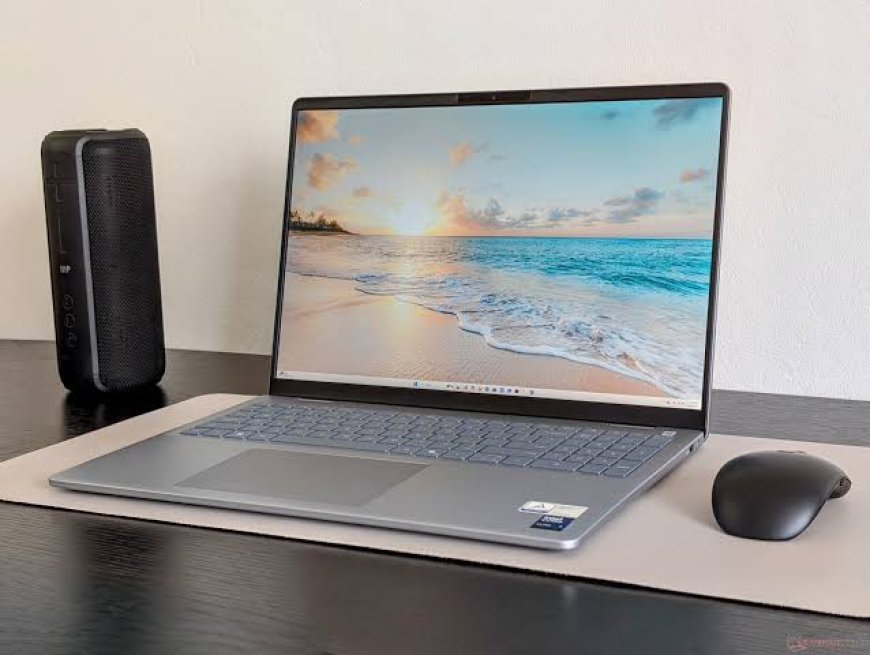
The Dell 16 Plus is part of Dell's simplified, consolidated lineup that replaced the old XPS, Inspiron, and Latitude branding. It's positioned as an everyday laptop with a spacious 16-inch display, built-in AI features, and processor options that range from efficient to genuinely powerful all wrapped in a design aimed at students, professionals, and casual creators rather than dedicated workstation users.
Key Specifications at a Glance
-
Display: 16-inch, available in FHD+ (1920×1200) or sharper 2.5K (2560×1600) resolution, both with Dolby Vision, anti-glare coating, and 100% sRGB color coverage
-
Processor: Intel Core Ultra (Series 2, "Lunar Lake") lineup, spanning from Core Ultra 5 226V up through Core Ultra 9 288V
-
Graphics: Intel Arc integrated graphics, including the Arc 140V on higher-end configurations
-
Memory: Up to 32GB of LPDDR5X RAM
-
Storage: Up to 1TB PCIe NVMe SSD
-
Connectivity: Wi-Fi 7, Bluetooth, a Thunderbolt 4 port, USB-C 3.2, USB-A, and HDMI
-
Build: Aluminum lid and base with a plastic palm rest, weighing roughly 4.12 lbs and measuring 0.67 inches thick
-
AI features: Built-in NPU for Copilot+ PC functionality, including on-device AI tools in Windows 11
That combination of a Lunar Lake processor and a genuinely large, high-resolution display is what makes the Dell 16 Plus stand out. As PCWorld noted in its review, <cite index="7-1">the Dell 16 Plus pairs an Intel Core Ultra Series 2 "Lunar Lake" processor with a price point where competitors are often still shipping previous-generation hardware</cite>, which represents a real value proposition for shoppers on a budget.
Design and Build Quality
Don't expect the Dell 16 Plus to turn heads with premium materials or ultra-thin bezels that's not its mission. Reviewers have described it as a laptop built for the real world rather than for showroom appeal. <cite index="7-1">It uses a combination of aluminum on the lid and base with plastic on the palm rest and bezel, and while it's a bit heavy for a 16-inch laptop at just over four pounds, its 0.67-inch thickness feels reasonably slim</cite> in daily use. The plastic sections aren't a downgrade in feel, either many testers describe the texture as pleasantly matte rather than cheap.
Where the design occasionally draws criticism is in port selection and long-term reliability details. Some customer feedback flags a shortage of USB-A ports, along with occasional keyboard quirks and fan noise under heavier workloads worth knowing if you rely heavily on older peripherals or work in quiet environments.
Performance: Who Is the Dell 16 Plus Really For?
The Dell 16 Plus is built around Intel's Lunar Lake architecture, a chip family designed to balance strong everyday performance with excellent power efficiency and dedicated AI acceleration. That makes the laptop well-suited to:
-
Web browsing, video calls, and productivity software (Office, Google Workspace)
-
Light photo editing and casual content creation
-
Multitasking across dozens of browser tabs and apps
-
On-device AI features like Windows Studio Effects, Recall, and Copilot's local processing
Where it starts to show its limits is in sustained, heavy workloads 3D rendering, large-scale video exports, or professional CAD work. That's intentional. The Dell 16 Plus isn't meant to compete with workstation-class machines; it's meant to be a comfortable, capable daily driver with just enough horsepower for AI-enhanced productivity.
Battery Life and Everyday Usability
Lunar Lake's efficiency-first design pays real dividends in battery life, which tends to be a strong point across the Dell 16 Plus lineup. Combined with the large, high-resolution display, this makes the laptop a genuinely comfortable choice for people who work from coffee shops, libraries, or anywhere else away from a charger for long stretches.

Dell 16 Plus vs. Dell Pro Max 16 Premium: What's the Real Difference?
This is where things get interesting for shoppers trying to decide how much laptop they actually need. The Dell Pro Max 16 Premium is a mobile workstation, not a general-purpose laptop, and the difference in intent shows up throughout its spec sheet.
|
Feature |
Dell 16 Plus |
Dell Pro Max 16 Premium |
|
Processor |
Intel Core Ultra 5–9 (Series 2, Lunar Lake) |
Intel Core Ultra 7/9 (H-series, up to 5.4GHz, 45W) |
|
Display |
16" FHD+ or 2.5K, up to 120Hz |
16" FHD+ up to OLED touch options, 500 nits, 100% DCI-P3 |
|
RAM |
Up to 32GB LPDDR5X |
Up to 64GB LPDDR5X |
|
Graphics |
Intel Arc integrated |
Intel Arc integrated or optional RTX PRO discrete GPU |
|
Target user |
Students, professionals, casual creators |
Engineers, video professionals, ISV-certified workflows |
|
Starting price |
Budget-to-midrange |
Premium workstation pricing |
The Pro Max 16 Premium is aimed squarely at professionals who need serious, sustained performance. According to StorageReview's testing, <cite index="11-1">the Dell Pro Max 16 Premium combines Core Ultra 2 processing power with an OLED touch display option, industry software certifications, dual M.2 storage slots, and an available RTX PRO graphics card</cite>. That's a fundamentally different tier of machine one built for CAD, engineering simulations, and GPU-accelerated creative work rather than everyday browsing and office tasks.
Battery life is actually a bright spot for the Pro Max 16 Premium despite its workstation-class internals. In the same review, <cite index="11-1">the laptop lasted just over ten hours in a PCMark battery test, the longest result among the models tested</cite> proof that "workstation" doesn't automatically mean "short battery life" in Dell's current lineup.
The bottom line: if your workload is writing, browsing, streaming, and light editing, the Dell 16 Plus will serve you well for a fraction of the price. If you're rendering 3D models, running simulation software, or doing GPU-intensive video work professionally, the Pro Max 16 Premium's added power and certifications will justify the higher cost.
Where the Dell Pro Max 14 Premium Fits In
For those who want workstation-grade power in a smaller, lighter chassis, Dell also offers the Dell Pro Max 14 Premium essentially a compact, portable alternative to the 16 Premium. It packs similarly serious internals, including <cite index="19-1">an Intel Core Ultra 9 285H processor, Nvidia's RTX 2000 Pro Blackwell workstation GPU, 64GB of RAM, a 1TB SSD, and a 14-inch 2880×1800 tandem OLED display</cite> in its top-tier configuration.
That said, the smaller chassis does mean some performance trade-offs compared to its 16-inch sibling. Benchmark testing found <cite index="18-1">the compact Pro Max 14 Premium delivering noticeably lower scores across professional graphics benchmarks compared to the larger 16 Plus and 18 Plus workstation models</cite>, largely due to thermal and power constraints in the smaller body. It's a worthwhile trade if portability matters more than absolute peak performance but if you need every ounce of GPU power Dell can offer, the larger chassis options pull ahead.
Real-World Use Case: Who Should Actually Buy Each Model?
Choose the Dell 16 Plus if you are:
-
A student who wants a large screen for note-taking, research, and streaming between classes
-
A remote worker who spends most of the day in browsers, email, and office apps
-
Someone who wants Copilot+ AI features without paying workstation prices
-
Budget-conscious but still want a modern processor and long battery life
Choose the Dell Pro Max 16 Premium if you are:
-
A professional in engineering, architecture, or video production who needs ISV-certified performance
-
Someone who regularly runs GPU-intensive 3D or simulation software
-
A user who wants the biggest possible display alongside workstation-grade internals
Choose the Dell Pro Max 14 Premium if you are:
-
A power user who travels often and needs workstation performance in a lighter chassis
-
Someone who values a stunning OLED display and top-tier build quality over raw peak performance
-
A professional willing to pay a premium for portability without fully sacrificing power
Pros and Cons of the Dell 16 Plus
Pros:
-
Strong value thanks to modern Lunar Lake processors at accessible prices
-
Spacious, sharp 16-inch display with Dolby Vision support
-
Genuinely good battery life for all-day use
-
Built-in AI/NPU features for Copilot+ functionality
-
Solid, road-ready build quality
Cons:
-
Limited USB-A port selection on some configurations
-
A bit heavy for a laptop primarily used on the go
-
Not designed for sustained, GPU-heavy professional workloads
-
Occasional reports of keyboard quirks or fan noise under load
Frequently Asked Questions
Is the Dell 16 Plus good for gaming? It can handle light or older titles thanks to Intel Arc integrated graphics, but it's not built for demanding modern games. If gaming is a priority, look at a laptop with discrete graphics instead.
What's the difference between the Dell 16 Plus and Dell Pro Max 16 Premium? The Dell 16 Plus is a consumer-focused everyday laptop, while the Dell Pro Max 16 Premium is a professional mobile workstation with optional discrete workstation graphics, ISV certifications, and higher RAM ceilings.
Does the Dell 16 Plus support Copilot+ AI features? Yes. Thanks to its Intel Lunar Lake processor and built-in NPU, the Dell 16 Plus supports on-device Copilot+ PC features in Windows 11.
Is the Dell Pro Max 14 Premium worth it over the 16 Premium? It depends on your priorities. The 14 Premium is lighter and more portable with a stunning OLED display, but the 16 Premium generally delivers stronger sustained graphics performance thanks to its larger chassis and better thermal headroom.
How much RAM can the Dell 16 Plus support? Configurations go up to 32GB of LPDDR5X RAM, which is more than enough for multitasking, browser-heavy workflows, and light content creation.
Final Verdict
The Dell 16 Plus earns its place as one of the more compelling budget-to-midrange laptops available right now. It pairs a genuinely modern processor with a spacious, attractive display and real AI capabilities all without workstation-level pricing. For everyday users, students, and remote professionals, it hits a sweet spot that's hard to beat.
If your workload demands more serious 3D rendering, GPU-accelerated editing, or engineering software the Dell Pro Max 16 Premium and Dell Pro Max 14 Premium are worth the upgrade, each offering a different balance of raw power versus portability.
Have you used the Dell 16 Plus or one of Dell's Pro Max models? Share your experience in the comments below, and don't forget to pass this guide along to anyone shopping for their next laptop it might save them hours of research.