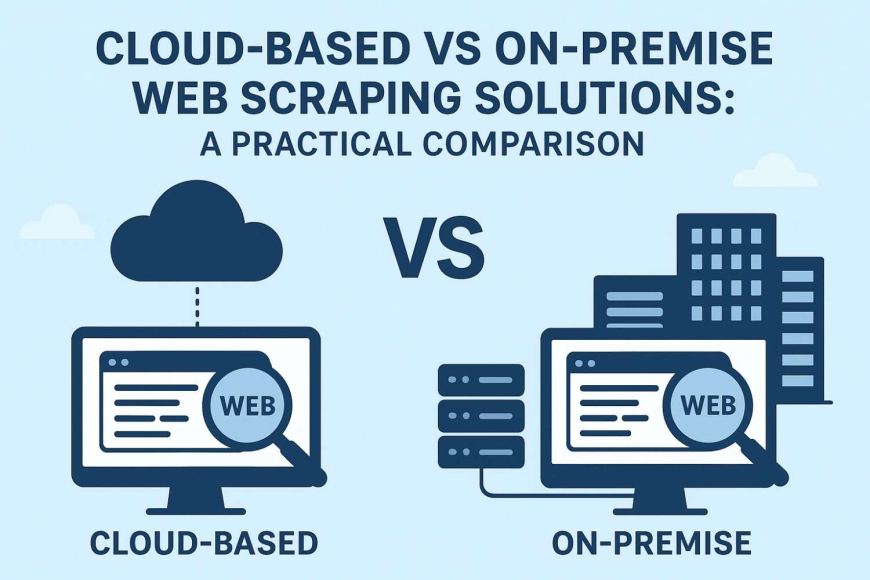
Cloud-Based vs On-Premise Web Scraping Solutions: A Practical Comparison
 Kanhasoft
Understanding the core importance of Cloud-Based vs On-Premise Web Scraping Solutions: A Practical Comparison allows businesses to evaluate how infrastructure impacts data accessibility, cost, and long-term agility. Each hosting method profoundly affects scaling, automation, and data governance. Cloud systems deliver convenience and elasticity, while on-premise setups promise deeper control and customization. Knowing these contrasts early helps organizations avoid misaligned investments that could restrict future growth. This comparison offers clarity for leaders who want stable, predictable performance without compromising compliance. Moreover, aligning hosting with business strategy ensures smoother operations, safer data handling, and stronger return on investment.
What Web Scraping Means Today
Web Scraping today plays a vital role across industries, powering analytics, forecasting, and automation. It’s no longer just about pulling data from a handful of pages; modern scraping involves large-scale extraction, dynamic rendering, proxy orchestration, and real-time monitoring. Companies now depend on scraping to track competitors, monitor markets, and enhance operational intelligence. As digital ecosystems evolve, scraping tools must adapt to JavaScript-heavy pages, anti-bot systems, and global content sources. Because Web Scraping sits at the heart of data-driven transformation, choosing the right hosting environment ensures stronger performance and reliability. Understanding this modern context prepares businesses for the comparison ahead.
The Evolution of Data Extraction Tools
Data extraction tools have evolved dramatically over the past decade. Early scrapers focused on simple HTML parsing, but today’s solutions must navigate CAPTCHAs, dynamic layouts, asynchronous content, and frequent site updates. Frameworks like Playwright, Scrapy, Selenium, and cloud-based orchestration platforms now empower organizations to handle large datasets with minimal effort. Meanwhile, on-premise systems allow deep customization for complex pipelines. This evolution creates a diverse landscape, making the choice between cloud and on-premise even more meaningful. Businesses must evaluate how modern tools align with their speed, security, and scaling requirements. Understanding this evolution helps pave a smoother decision path.
Cloud-Based Web Scraping: Key Features
Cloud-based Web Scraping offers remote execution, automatic scaling, easy deployment, and reduced infrastructure management. Providers handle everything from server orchestration to proxy integration, making it ideal for businesses wanting quick setup without operational overhead. Cloud scraping also supports high concurrency, enabling thousands of parallel requests without hardware limitations. With built-in redundancy and automated failovers, cloud tools reduce downtime and enhance consistency. Many platforms feature dashboards for logs, schedules, and visual monitoring. Because updates roll out automatically, businesses stay current with the latest scraping technologies. This convenience and flexibility make cloud solutions appealing for fast-growing teams.
On-Premise Web Scraping: Key Features
On-premise Web Scraping focuses on full control, deep customization, and local data governance. Organizations host scrapers on their own servers, allowing complete oversight of processes, code structure, and security layers. This setup is ideal for businesses with strict compliance requirements or sensitive internal workflows. On-premise systems support heavy tailoring for complex datasets and specialized extraction logic. Although they require dedicated maintenance, they offer long-term predictability and independence from third-party limitations. For teams with strong IT infrastructure, on-premise tools provide powerful, highly flexible solutions. This model suits enterprises prioritizing control, consistency, and internal security above convenience.
Comparing Infrastructure Requirements
Infrastructure plays a major role when evaluating cloud vs on-premise scraping. Cloud systems eliminate the need for physical servers, maintenance staff, or IT overhead. Everything runs in remote environments managed by service providers. On-premise setups, in contrast, require hardware, storage, networking, and trained technical teams to keep systems running smoothly. Each model carries trade-offs: cloud simplifies setup but limits deep customization, while on-premise offers full control but demands heavier investment. Businesses must assess workforce skills, available hardware, and long-term operational needs. The right choice depends on balancing convenience with internal technical capability.
Cost Comparison Between Cloud and On-Premise
Cloud-based scraping follows a subscription or pay-as-you-go model, making pricing predictable and accessible for most businesses. You pay for computing usage, storage, and proxies without worrying about hardware. On-premise scraping requires upfront investment in servers, IT staff, security systems, and ongoing maintenance. Although long-term costs may stabilize, the initial setup is significantly higher. Cloud is often more economical for fast-growing teams, while on-premise becomes cost-effective for organizations requiring large-scale custom workloads. Understanding how each model affects budgeting helps prevent unexpected expenses. A thoughtful cost comparison ensures smart, financially sound decision-making.
Performance Differences in Data Extraction
Performance varies depending on the chosen hosting model. Cloud systems excel at handling high concurrency with distributed computing power. They dynamically scale resources to manage traffic spikes, making them ideal for rapid, large-scale extraction. On-premise scraping delivers consistent performance tuned specifically for in-house workloads. With complete control over configuration, teams can optimize performance for niche or complex targets. However, scaling on-premise infrastructure may be slower due to hardware limitations. Evaluating expected volume, frequency, and extraction speed requirements helps determine which performance model best aligns with business goals.
Security Considerations in Both Approaches
Security plays a critical role in deciding between cloud and on-premise scraping. Cloud providers typically offer enterprise-grade encryption, secure containers, and robust authentication systems. However, some organizations feel uneasy storing sensitive data externally. On-premise setups allow businesses to maintain full security control, from firewall rules to data retention policies. This provides deeper peace of mind but demands more technical responsibility. Each approach offers strong benefits depending on privacy needs, regulatory obligations, and internal expertise. Understanding these differences ensures that security aligns with strategic business requirements.
Compliance Requirements in Scraping Solutions
Compliance considerations like GDPR, CCPA, and local data regulations heavily influence hosting decisions. Cloud platforms usually provide compliance-ready environments, offering built-in tools that follow global standards. On-premise setups offer even stronger control by keeping all data in-house, which is helpful when dealing with sensitive or regulated information. Regardless of the model, businesses must ensure Web Scraping targets only publicly available data and follows ethical guidelines. Choosing a hosting method aligned with compliance goals prevents costly legal issues and protects brand credibility.
Scalability Factors to Evaluate
Scalability remains one of the most important factors in choosing between cloud and on-premise scraping. Cloud systems scale automatically, enabling organizations to grow extraction volume without added hardware. On-premise solutions scale more slowly, requiring additional servers, storage, or network upgrades. For rapidly expanding businesses, cloud platforms offer elasticity and convenience. For companies with steady, predictable workloads, on-premise may suffice. Understanding how future growth impacts scraping performance helps companies choose a sustainable and budget-friendly approach.
Automation Capabilities of Web Scraping
Automation is essential for modern Web Scraping workflows. Cloud solutions often come with built-in schedulers, workflow engines, and smart monitoring dashboards. These features allow fully automated pipelines with minimal setup. On-premise tools require custom configuration for automation but offer deeper flexibility for developers who want advanced control. Businesses must assess how much daily automation they require. This ensures smooth operations, predictable delivery times, and efficient resource planning across teams.
Maintenance Demands of Cloud vs On-Premise
Cloud scraping reduces maintenance significantly since providers handle updates, patches, and server management. This ensures continuous performance without requiring internal manpower. Meanwhile, on-premise scraping demands ongoing maintenance to keep scripts, servers, proxies, and environments optimized. While on-premise gives teams maximum control, it requires dedicated IT support. Understanding these differences helps businesses allocate resources wisely. Choosing the right model ensures long-term operational stability.
Data Quality Considerations
Data quality plays a defining role in choosing between cloud and on-premise Web Scraping setups. Cloud environments typically offer built-in validation layers, automated cleaning tools, and real-time monitoring that catch common extraction issues before they affect results. On-premise systems allow deeper customization, letting teams design precision validators tailored to their internal data rules—though this requires experienced developers. With either approach, consistent quality depends on handling duplicates, missing values, and structure changes. Businesses must evaluate how much oversight they need, how frequently they scrape, and whether they require automated or manually curated quality checks. Strong data hygiene ensures accurate reporting and reliable decision-making.
How Cloud Solutions Handle Dynamic Websites
Cloud-based scraping platforms excel at managing dynamic, JavaScript-heavy websites by using distributed browsers, headless rendering, and adaptive crawling engines. These tools automatically detect DOM changes, CAPTCHA challenges, and asynchronous elements. Since cloud systems can quickly scale resources, they render dynamic sites faster and handle large workloads without slowing down. Many providers include AI-driven modules that learn patterns and adjust extraction logic automatically. For businesses dealing with fast-changing eCommerce pages, travel listings, or social feeds, cloud systems offer an advantage in maintaining stability and reducing downtime. This flexibility makes cloud solutions particularly efficient for complex, interactive websites.
How On-Premise Solutions Handle Dynamic Websites
On-premise systems handle dynamic sites through locally managed rendering engines such as Playwright, Selenium, or Puppeteer. These tools provide deep control over browser settings, custom scripts, and workflow logic. Developers can tune systems precisely—adjusting timeouts, modifying selectors, or integrating specialized libraries. While this level of customization delivers accuracy, it also demands regular monitoring and updates when websites change. Because resource scaling is limited to local hardware, heavy dynamic workloads may require additional servers. On-premise setups work best when teams need fine-grained control and internal oversight of every rendering and extraction step.
Integration With Existing Business Systems
Integration determines how smoothly extracted data reaches BI tools, CRMs, ERPs, or analytics dashboards. Cloud-based systems often offer ready-made connectors, API pipelines, and export options that simplify delivery. Data flows directly into business systems without requiring extensive development work. On-premise setups allow tighter, more customized integrations, especially for sensitive internal networks, but require additional configuration and scripting. Choosing the right integration path depends on team expertise and the need for automation. When data flows seamlessly, decision-making becomes faster, more accurate, and more consistent.
Proxy Management in Cloud Scraping
Cloud scraping platforms typically include automated proxy rotation systems with residential, datacenter, and mobile IP pools. These run behind the scenes, preventing bans and ensuring smooth extraction, especially for high-volume tasks. Cloud providers manage IP diversity, geolocation targeting, session persistence, and block detection automatically. This greatly reduces technical burden on businesses and enhances reliability. The ability to scale proxy usage on demand also helps cloud systems handle global scraping operations effortlessly. For teams without dedicated proxy management skills, cloud environments offer an efficient and worry-free solution.
Proxy Management in On-Premise Scraping
On-premise scraping requires businesses to source, configure, and rotate proxies manually or through third-party services. This provides deeper control, particularly for organizations needing specific geolocations or compliance-related routing. However, manual management increases overhead and requires technical expertise. Teams must maintain rotation logic, track failed endpoints, manage IP warm-up cycles, and monitor block statuses. While it offers precision and customization, this approach is more resource-intensive. On-premise proxy management is best suited for businesses with strong internal infrastructure and ongoing scraping demands that justify the operational effort.
When Cloud-Based Scraping is the Better Choice
Cloud-based scraping shines when businesses need fast deployment, minimal maintenance, and effortless scalability. Startups, marketing teams, and companies experiencing rapid data growth benefit from its plug-and-play simplicity. Cloud solutions are ideal for high-frequency extraction, global datasets, dynamic websites, and projects requiring 24/7 uptime. They also work well for organizations with limited IT resources. Automatic updates, elastic computing power, and integrated proxies provide long-term convenience. Cloud scraping is the better choice when agility, speed, and ease of operation matter most.
When On-Premise Scraping is the Better Choice
On-premise scraping is ideal for businesses needing strict control, internal security, and deep customization. Enterprises handling sensitive data or operating under tight regulatory oversight often prefer on-premise setups. This model suits companies with strong internal IT teams capable of managing servers, proxies, and custom scripts. On-premise solutions allow full transparency over workflows, making them well-suited for specialized extraction logic or niche data pipelines. They work best for predictable, high-volume workloads that justify dedicated hardware and maintenance.
Hybrid Scraping Models
Hybrid scraping models combine the strengths of cloud and on-premise systems. Businesses run sensitive workloads locally while leveraging cloud tools for heavy lifting or high-speed scaling. This approach provides flexibility, reliability, and controlled risk. Hybrid models are becoming increasingly popular due to their balanced cost, performance, and compliance benefits. They allow teams to adapt quickly to market fluctuations without committing entirely to one infrastructure type. For organizations wanting the best of both worlds, hybrid scraping offers a practical, future-ready solution.
Future Trends in Web Scraping Hosting
The future of Web Scraping hosting will be shaped by AI-driven selectors, automated anti-bot strategies, edge computing, and self-healing crawlers. Cloud systems will integrate deeper machine learning capabilities, enabling scrapers to adapt automatically to structural website changes. Meanwhile, on-premise setups will evolve with faster containerized environments and secure, decentralized architectures. Hybrid models will grow as businesses balance flexibility with control. These trends highlight a clear shift toward smarter, more autonomous extraction frameworks. Companies embracing these innovations will maintain a competitive advantage.
Case Studies: Cloud vs On-Premise
Case studies show how hosting affects scraping outcomes. Retailers using cloud systems often scale price-monitoring operations across thousands of stores globally with minimal downtime. Financial institutions, meanwhile, rely on on-premise architectures to extract delicate market data securely within their networks. In one example, a SaaS company achieved 3× faster deployment switching to cloud, while a regulatory firm improved compliance by moving extraction in-house. These examples demonstrate how choosing the right environment directly influences performance, cost, and risk.
Cloud-Based vs On-Premise Web Scraping Solutions: A Practical Comparison – Summary
This comparison illustrates how cloud and on-premise scraping models differ in scalability, security, cost, maintenance, and integration. Cloud solutions shine in speed and convenience, while on-premise environments excel in control and compliance. Understanding these differences helps organizations select scraping infrastructures that align with their goals, skillsets, and regulatory needs. Both models offer advantages, but the right choice depends on strategic priorities and long-term data requirements.
Conclusion
Choosing between cloud-based and on-premise Web Scraping doesn’t have a one-size-fits-all answer—only a practical one. Businesses must weigh convenience against control, agility against governance, and automation against customization. When infrastructure aligns with strategy, scraping becomes a powerful engine for insight and innovation. Ultimately, the best solution is the one that supports your long-term vision with efficiency, reliability, and confidence.
FAQs
Is cloud-based scraping faster than on-premise?
Often yes, because cloud systems scale resources dynamically and process requests in parallel.
Which is more secure, cloud or on-premise?
On-premise offers deeper control, but cloud providers implement strong encryption and enterprise-grade protection.
Does on-premise scraping cost more?
Upfront yes, but long-term costs vary depending on workload and infrastructure size.
Can both systems handle dynamic websites?
Yes, though cloud often handles them more efficiently due to elastic rendering resources.
Is hybrid scraping complicated to set up?
Not necessarily—many businesses successfully combine both environments for balanced performance and control.
Which option is best for startups?
Cloud scraping is typically better due to low cost, minimal setup, and fast deployment.