How Does Omnichannel Commerce Connect Online and In-Store Sales in 2026?
Discover how omnichannel commerce connects online and in-store sales in 2026. Learn how FSS TECH uses the best online payment gateway and AI to automate the merchant settlement process and unify global retail payments seamlessly.
 FSSTech
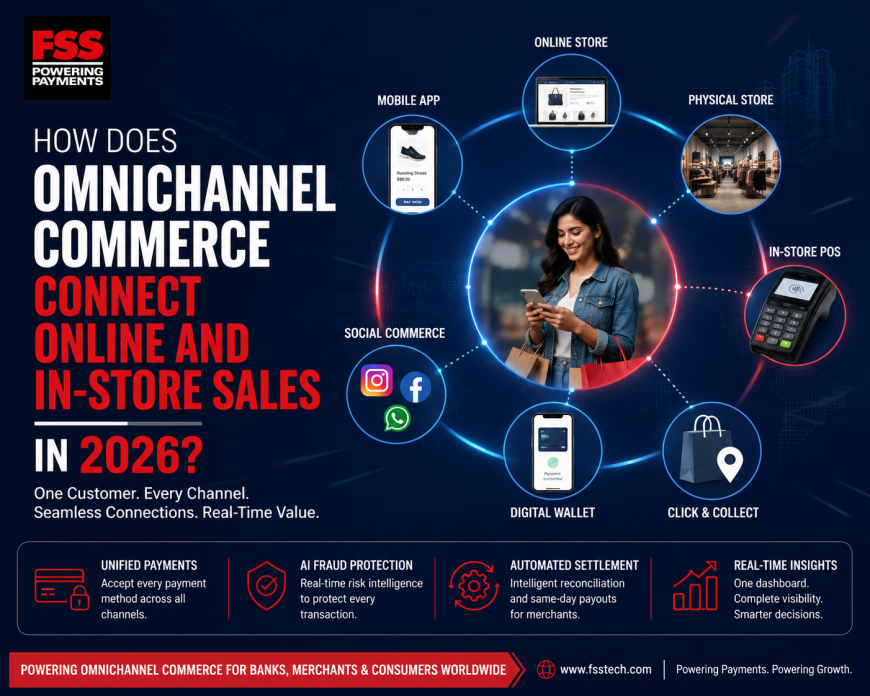
The way people shop has changed completely. A customer in 2026 might discover a product on social media while riding a train, buy it on a mobile app, and pick it up at a neighborhood physical store an hour later. If the size is wrong, that same customer expects to walk into the store, hand the item to a store associate, and receive an instant refund back to their digital wallet.
When shopping moved across mobile screens, web browsers, and physical store registers, businesses used to run each sales channel as an isolated island. Online sales went through one system, physical cash registers used another system, and mobile payment links used a third. Today, that broken experience is no longer acceptable to modern shoppers.
Omnichannel commerce solves this problem by bringing every sales channel together into one single connected network. Behind this smooth customer experience sits advanced payment technology that connects physical point-of-sale terminals, website checkout pages, mobile apps, and instant settlement banking platforms into one real-time brain.
What Is Omnichannel Commerce and Why Does It Matter Today?
Omnichannel commerce is an approach to retail and banking that unifies every place a customer can buy something into a single operational view. Unlike traditional multi-channel selling, where the physical store and the website operate like two different companies, omnichannel commerce shares real-time data across every platform.
In an omnichannel model, inventory levels, customer purchasing histories, loyalty points, and payment records update continuously across all touchpoints. If a merchant sells their last jacket in a physical store, the website immediately reflects that the item is out of stock. If a buyer earns reward points by scanning a QR code at an in-store kiosk, those points appear immediately in their mobile banking app.
For banks and merchant acquirers, omnichannel commerce is the foundation of modern merchant acquiring. It allows financial institutions to offer store owners a single, complete picture of their daily business rather than forcing them to log into multiple messy banking portals to understand their total daily sales.
Why Are Disconnected Online and Physical Payment Systems Failing?
In the past, merchants had to sign separate contracts for physical credit card machines and online web checkout systems. This old method created massive operational friction for store owners and financial institutions alike.
First, disconnected systems cause severe data blindness. A business owner could not easily tell if a valuable customer who spent money in their physical store was the same person abandoning a shopping cart on their website. Marketing teams wasted money sending generic online ads to loyal store customers.
Second, separate payment channels create accounting nightmares. Accounting teams spent hours every week manually comparing spreadsheets from physical card terminals against payment reports from online checkout providers. Finding human errors, chargeback disputes, and missing funds took days or weeks.
Finally, fragmented payment rails frustrate buyers. When a customer tries to exchange an online order inside a physical store, store clerks using older systems often have to ask the customer to wait for an online refund and then pay separately for the new item. This creates slow checkout lines and damages customer trust.
What Role Does the Best Online Payment Gateway Play in Unifying Channels?
At the center of any successful omnichannel strategy is the online payment gateway. The best online payment gateway does far more than just process credit cards on a website; it acts as a flexible, high-speed digital highway that accepts every modern payment method across both digital and physical environments.
Modern consumers want freedom in how they pay. Depending on where they live, they might want to pay using contactless credit card taps, instant account-to-account bank transfers, dynamic QR codes, digital wallets, or buy-now-pay-later payment plans. The best online payment gateway supports all of these payment methods seamlessly on a single integrated system.
When integrated into an omnichannel ecosystem, a top-tier payment gateway uses tokenization to protect shopper credentials. Tokenization replaces sensitive card numbers with safe digital tokens. This allows a merchant to safely store customer payment preferences across web checkouts, mobile apps, and physical store terminals without exposing private financial data to cyber threats.
Furthermore, intelligent gateways feature smart transaction routing engines. If a primary banking network experiences slowdowns during a major holiday shopping event, the gateway automatically reroutes the payment through the fastest alternative banking pathway in less than a second. This keeps checkout lines moving fast and prevents abandoned shopping carts both in-store and online.
How Does FSS TECH Power Modern Omnichannel Commerce for Banks and Merchants?
To connect online and physical sales at enterprise scale, major banks and global payment processors rely on specialized financial technology providers like FSS TECH. FSS TECH provides full-stack merchant acquiring and payment technology solutions that process billions of transactions across global markets.
At the heart of the FSS TECH platform is FSS BLAZE, a cloud-native architecture built with microservices. This modern infrastructure allows acquiring banks to onboard merchants rapidly, enabling small shopkeepers and global enterprise brands to go live with unified payment processing in less than a day.
FSS TECH provides a single unified dashboard, known as FSS Merchant Hub, which acts as a central control room for merchant operations. Through this single window, store owners can monitor in-store card taps, website checkout orders, mobile payment link transfers, and recurring subscription payments in real time.
By giving acquirers and merchants an end-to-end platform that includes payment gateways, physical terminal management, and analytics, FSS TECH eliminates technology silos. Banks lower their operating costs, while merchants gain the flexibility to expand their sales channels without changing their core banking provider.
How Is the Merchant Settlement Process Automated Across All Channels?
While smooth customer checkout is the most visible part of shopping, the underlying backbone of retail finance is the merchant settlement process. The merchant settlement process is the mechanism that calculates total sales, deducts processing fees, adjusts for returns, and transfers funds into the store owner's bank account.
In an omnichannel setting, automating the merchant settlement process is critical because sales arrive simultaneously from hundreds of physical stores and digital channels. Older banking systems required end-of-day batch processing, causing store owners to wait two to three business days before receiving their hard-earned money.
Modern solutions from FSS TECH transform this slow manual workflow into an automated, real-time reconciliation engine. Using artificial intelligence, FSS Recon AI matches every transaction initiated at an in-store counter or online gateway against central bank payment networks automatically.
The system automatically handles multi-party fee splits, dynamic currency conversions for international shoppers, local tax calculations, and chargeback adjustments without human intervention. As a result, merchants receive accurate, same-day payouts directly into their accounts, vastly improving their cash flow and financial stability.
How Does Real-Time AI Fraud Prevention Safeguard Omnichannel Shopping?
Connecting online and physical sales channels expands a merchant's business, but it also creates new targets for cybercriminals. Fraudsters often test stolen card details on web store checkouts before attempting larger fraudulent purchases elsewhere.
Omnichannel commerce protects against these attacks using real-time artificial intelligence and machine learning risk engines. Advanced risk management platforms, such as FSS Shield, evaluate every transaction in fractions of a second before approving a payment.
The AI analyzes subtle behavioral factors, including device fingerprints, shopper locations, transaction velocity, IP addresses, and historical spending habits. If a customer buys groceries at a physical store in Delhi and minutes later attempts an expensive online purchase from a overseas IP address, the AI detects the anomaly immediately.
Instead of using rigid rules that accidentally block real customers and hurt sales, AI-driven risk management accurately blocks true fraud while allowing legitimate shoppers to check out smoothly. This reduces chargeback losses for banks and protects brand reputation for merchants.
What Are the Real-World Benefits for Merchants, Banks, and Consumers?
The convergence of online and in-store payments creates a win-win environment across the entire financial ecosystem.
For consumers, omnichannel commerce delivers unmatched convenience. Shoppers enjoy instant checkouts, flexible payment choices, easy store returns for online purchases, and personalized reward programs that work everywhere.
For merchants, unified payment infrastructure drives higher revenues and lower overhead. Store owners eliminate redundant software fees, reduce administrative accounting errors through automated settlement, and increase sales conversion rates by offering customers their favorite payment options.
For banks and payment acquirers, adopting modular technology like FSS BLAZE and FSS Merchant Hub provides enterprise scalability, 99.999% platform availability, and faster time-to-market for new payment products. Banks can acquire merchants faster and retain long-term business clients by offering superior digital tools.
Conclusion: The Unified Future of Digital Commerce
Omnichannel commerce is no longer just a trendy phrase for forward-thinking retailers; it is the default operational standard for modern global commerce. By bridging the divide between physical store counters and digital checkout pages, unified commerce allows businesses to meet shoppers wherever they choose to spend.
Achieving this level of seamless connection requires robust technology under the hood. Powered by the best online payment gateway technology, real-time AI risk management, and an automated merchant settlement process, platforms like FSS TECH are giving financial institutions and merchants the tools they need to grow, protect their operations, and deliver world-class shopping experiences.
Frequently Asked Questions
1. How does omnichannel commerce help a business make more sales?
Omnichannel commerce connects physical store checkouts, website buying, and mobile apps into one single system. Customers can shop wherever they want, use their favorite payment methods, and easily manage orders, which helps businesses sell more products and build customer loyalty.
2. What features should a bank look for in the best online payment gateway?
The best online payment gateway should offer 99.999% uptime, process thousands of payments per second, support multi-currency checkouts, use AI to stop fraud, and provide shopkeepers with simple reporting apps. Solutions like the FSS Payment Gateway provide all these features out of the box.
3. How long does the merchant settlement process take with modern software?
With legacy systems, the merchant settlement process took two to three business days. With modern platforms from FSS TECH, funds are reconciled automatically using AI tools like FSS Recon AI, allowing shopkeepers to receive their settled money much faster, often on the same day.
4. How does artificial intelligence protect online payments from fraud?
Artificial intelligence studies spending patterns, locations, device details, and transaction speeds in less than a second. Instead of using simple static rules that accidentally block valid customers, AI risk engines spot real cyber threats accurately while letting legitimate shoppers check out smoothly.
5. Can FSS TECH payment software connect with older banking systems?
Yes, FSS TECH builds API-first, modular software like FSS BLAZE. This means banks can add modern payment gateways, merchant portals, and AI fraud tools to their existing banking setup without replacing their older databases.