Beyond Chatbots: How AI Agents Are Changing Enterprise Business Operations
AI agents are moving beyond chatbots to run real enterprise operations. See how businesses use AI agents to automate work and boost efficiency.
 wepegaf643
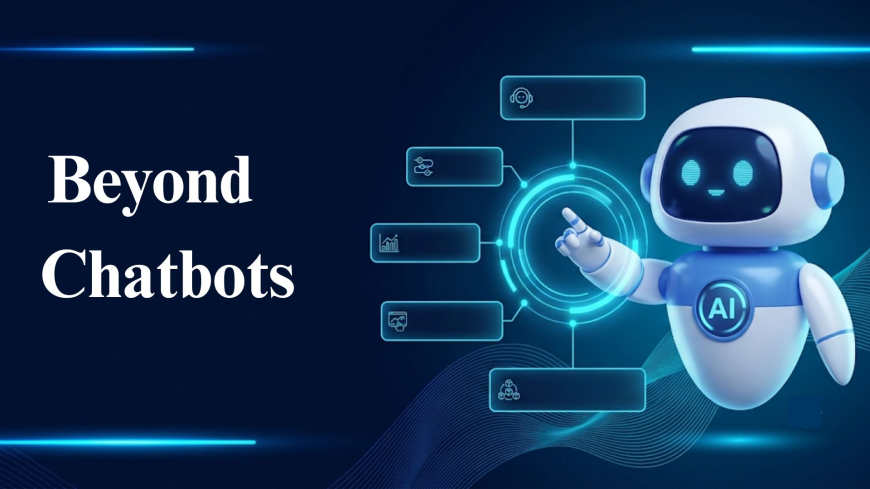
Ask someone what artificial intelligence means for business and there is a good chance they picture a chatbot. Something that answers a customer question, follows a script, and stops there. That image is already outdated. AI agents can now plan a task from start to finish, weigh several options, and act on their own without someone hovering over every step. Across industries, companies are realizing these systems do a lot more than hold a conversation. They plug into other tools, pull data from different places, and adjust what they do based on what actually happens. It is a real shift, not a minor upgrade.
Why does the distinction matter so much? Because chatbots wait for input. Agents go looking for work. That single difference is quietly rewriting how enterprises think about operations, and it is worth slowing down to understand.
What Makes AI Agents Different From Traditional Automation
Old school automation runs on fixed rules. This happens, so that happens. It works fine when the world is predictable. The moment things get messy or a case does not fit the script, though, the whole approach falls apart.
AI agents do not work that way. Give one a goal and it can break that goal into steps, look at the situation, and decide which action actually moves things forward. Rather than following a rigid command, it weighs a few paths and picks the one most likely to work.
That capacity to reason through a problem, rather than just execute a line of code, is the real difference. It is also why so many organizations are pouring resources into AI agent development right now, treating it less like an experiment and more like core infrastructure.
There is a practical reason behind that investment too. Manually written rules simply cannot keep up with how fast business data changes. Systems built around flexible reasoning can take in new information and shift their behavior without a developer rewriting the logic every single time something changes. Anyone weighing AI agent development as part of a technology roadmap tends to run into this same argument sooner or later.
Why Enterprises Are Moving Beyond Simple Chat Interfaces
Chat tools were a decent first step, sure. But they were never built to carry the weight of full business processes. A chatbot might tell someone what a policy says. It cannot go update a record on its own, chase down an approval, or manage a process that spans several stages.
That is the gap enterprise AI agents are filling. They connect to multiple systems at once, pull the data they need, apply the relevant business logic, and take action across departments, not just within one narrow interface. Think of them less as a chat window and more as a quiet coworker handling the background work nobody wants to do manually.
This matters most for teams buried in repetitive, detailed heavy work, the kind where one small slip creates a much bigger mess downstream.
The companies getting real value out of this tend to treat enterprise AI agents as something they build on over time, not a one time install. They start narrow, watch how it performs, and hand over more responsibility once trust has actually been earned.
Key Business Functions Being Transformed
Nearly every major business function is feeling this shift in some way.
Customer Support and Service Operations
Support teams now lean on agents to sort incoming requests, gather the right context, and close out simple issues without pulling in a human at all. Harder cases still get escalated, of course, but far fewer of them reach a person, which frees up the team for the interactions that actually need a human touch.
Finance and Operations
In finance, agents help reconcile records, flag anything that looks off, and put reports together. Because they can check several systems at once, they often catch mismatches that would take a person hours to track down by hand.
Human Resources and Internal Processes
From onboarding to routine internal requests, agents are taking over coordination work that used to bounce between several teams and several inboxes. Fewer delays, and a smoother experience for the employee on the other end.
How AI Automation Solutions Improve Efficiency and Accuracy
Here is the honest case for agent based systems. Speed matters, but consistency matters just as much. People are great at judgment and creativity. They also get tired, distracted, and inconsistent, especially on repetitive tasks that never really change.
Solid AI automation solutions cut down on that risk because the work gets handled the same way every time. No fatigue, no skipped steps, no dip in quality after hour six of a shift.
None of this means people step aside. What changes is where their attention goes. Instead of grinding through repetitive execution, employees spend more time reviewing results, handling the odd exception, and making the calls that genuinely need a human brain.
Picking the right starting point matters too. Organizations that choose AI automation solutions built around their existing workflows, instead of ripping everything out and starting fresh, tend to see returns much faster.
The Rise of Intelligent Business Automation Across Departments
What sets this wave apart from earlier automation trends is scale. AI-powered business automation is not confined to one department anymore or a narrow pilot project tucked away in IT. It shows up in procurement, logistics, marketing, compliance, pretty much everywhere.
Agents can watch a process as it runs, catch the moment something drifts from the expected pattern, and either fix it or flag the right person immediately. That is a real departure from older systems, which only reacted once a problem had already happened.
As more departments get on board, many organizations bring in specialized AI Services to help map out agent workflows that actually fit their existing setup instead of forcing a generic template onto a business that does not need it.
There is a bigger story underneath all this too. AI-powered business automation reflects a shift in how leadership thinks about growth generally. Instead of adding headcount for every new process, more leaders are asking whether existing teams could simply be supported by systems that absorb the extra volume without cutting corners.
Real Challenges Enterprises Should Prepare For
None of this comes free of friction. Integration with legacy systems can be a genuine headache. Data quality problems that were easy to paper over manually tend to surface fast once an agent starts relying on that same data to make real decisions.
Governance questions come up too. Who decides what an agent is allowed to do on its own, and what still needs a human sign off? Skip that conversation and autonomy stops being an advantage, it just becomes a risk with a new label.
Change management deserves just as much attention as the technology itself. People need a clear picture of how these systems fit into their day to day work, and leadership needs to be honest about what agents can and cannot handle at each stage of the rollout.
Practical Steps for Getting Started
Nobody needs to overhaul every process at once, and honestly, trying to would probably backfire. A steadier path starts with one well defined workflow, watches how it performs, and expands only once the results back it up.
A few starting points worth considering.
Pick a repetitive process with clear rules and outcomes that are easy to measure.
Get the underlying data clean and accessible before anything goes live.
Decide early where the boundaries of autonomous decision making sit.
Bring the people who will actually work alongside the system into the conversation from day one, not after launch.
That incremental approach keeps the risk manageable while still delivering real efficiency gains early on.
Looking Ahead at the Future of Enterprise Operations
The direction here is not really in question anymore. AI agents are moving out of pilot programs and into the everyday fabric of how enterprises operate. As the underlying technology keeps improving, expect these systems to take on more judgment heavy work, though human oversight will still matter for the calls that carry real strategic weight.
Companies that handle this transition with care, paying attention to data quality, governance, and the people actually doing the work, are the ones likely to hold a real advantage over those who wait it out.
Conclusion
Moving past simple chat tools toward systems that can actually think through a task on their own marks a genuine turning point for how enterprises operate. AI agents are not some distant concept anymore. They are already reshaping customer service, finance, human resources, and plenty of areas beyond that. Companies willing to understand these systems, get their data in order, and set clear governance from the start will be the ones best positioned to benefit. If your organization has been weighing where intelligent automation might fit, now is a reasonable time to start looking closely at the areas where it could make the biggest difference.