Why Should Engineers and Buyers Prioritise IC Sockets & Adapters in Electronic Projects?
Learn how IC Sockets & Adapters improve chip compatibility, testing, replacement, and circuit reliability in modern electronic design and repair.
 joddie25
Introduction
In electronics, long term performance is shaped not only by active components but also by the supporting parts that make systems easier to build, test, maintain, and upgrade. IC Sockets & Adapters are among those essential supporting components. They create a practical link between integrated circuits and the boards or tools used to operate them, helping engineers work with greater precision and flexibility throughout the product lifecycle.
From early design and prototyping to maintenance and field replacement, IC Sockets & Adapters solve problems that direct soldering often creates. They allow integrated circuits to be inserted and removed more safely, reduce stress on circuit boards, and help bridge compatibility gaps when package formats do not align. In many working environments, this makes them an important choice for improving both efficiency and reliability.
What Makes IC Sockets & Adapters Different from Fixed Mounting?
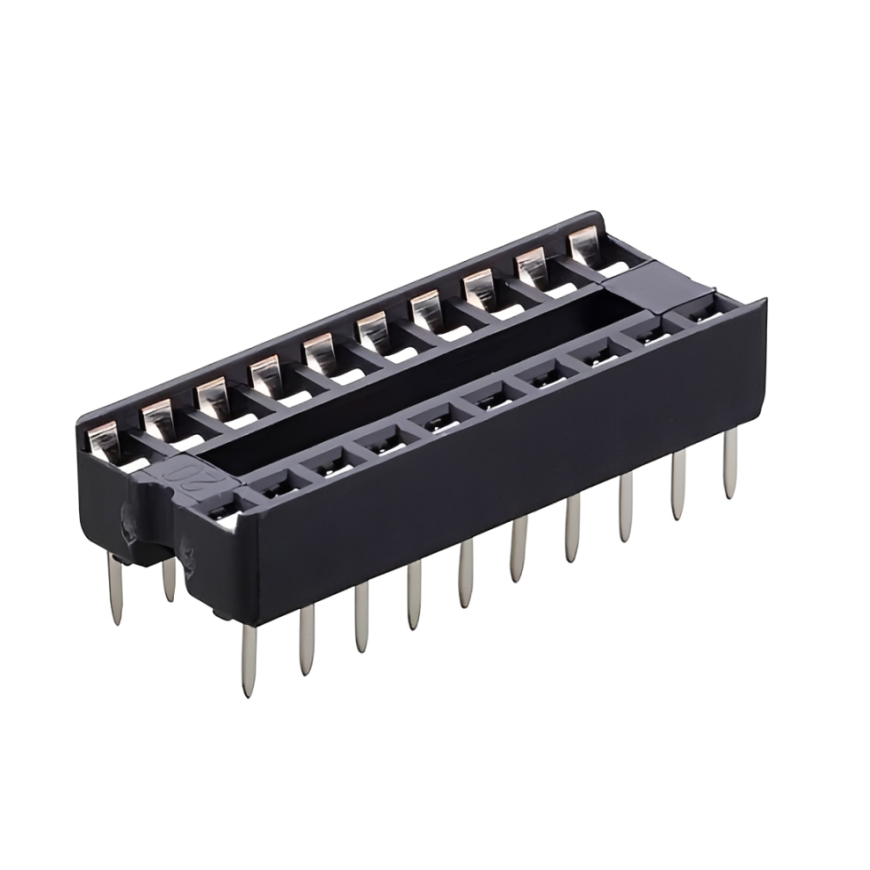
The main difference between IC Sockets & Adapters and direct board mounting is accessibility. When an integrated circuit is soldered directly onto a PCB, any change or replacement requires desoldering, which can be slow and risky. A socket provides a dedicated place for the chip to sit securely while remaining removable. An adapter extends that flexibility further by allowing one package type or configuration to connect to another.
This is valuable because electronic systems are rarely static. Development changes happen. Components fail. Device packages vary. Programming and validation tasks need repeated access. IC Sockets & Adapters help manage these realities without forcing complete redesigns or repeated manual rework.
Basic Functions of IC Sockets & Adapters
- Hold integrated circuits in a removable format
- Support safer chip replacement during servicing
- Enable compatibility between different IC package types
- Simplify testing, validation, and programming
- Reduce board wear caused by repeated rework
Why IC Sockets & Adapters Matter Across the Product Lifecycle
One of the strongest advantages of IC Sockets & Adapters is that they remain useful at more than one stage of an electronic project. Their value is not limited to development alone. They can continue to support the product during manufacturing, deployment, maintenance, and repair.
In the design phase, they help teams evaluate multiple integrated circuits or firmware options. During production support, they assist with configuration and testing workflows. After deployment, they make component replacement faster and more controlled. This broad usefulness makes IC Sockets & Adapters a practical choice for teams that want to reduce risk and improve long term serviceability.
Lifecycle Advantages
- Faster design changes during prototyping
- Easier handling of programmable or replaceable devices
- Better support for production testing setups
- Reduced maintenance time in service environments
- Longer usable life for circuit boards and assemblies
How IC Sockets & Adapters Improve Engineering Efficiency
Engineering efficiency is often tied to how quickly a team can validate a design, isolate faults, or replace a component without introducing new problems. IC Sockets & Adapters make these tasks simpler by creating a stable and repeatable connection method.
A development engineer may need to test several IC versions on the same board. A technician may need to replace a failed chip without affecting nearby components. A programming station may need to handle multiple parts during a single work cycle. In each of these situations, sockets and adapters save time while helping maintain control over the process.
Direct soldering can still be useful in permanent, space constrained designs, but it offers far less flexibility when change is expected. IC Sockets & Adapters are especially valuable where repeated access is part of the normal workflow.
Common Categories of IC Sockets & Adapters
There are many forms of IC Sockets & Adapters because integrated circuits come in a wide variety of package types and usage requirements. The correct option depends on the chip format, the application environment, and how often insertion and removal will occur.
Frequently Used Socket Types
- DIP sockets for traditional dual in line packages
- ZIF sockets for zero insertion force use in repeated testing
- PLCC sockets for compact chip carrier devices
- PGA sockets for pin grid array components
- Test sockets for engineering, diagnostics, and evaluation work
Frequently Used Adapter Types
- Package conversion adapters
- Programming adapters
- Prototype adapters
- Validation and test adapters
- Compatibility adapters for mixed design environments
Each type supports a different need. Some are intended for permanent installation on a serviceable board, while others are better suited to laboratories, production fixtures, or device programming tasks.
Where IC Sockets & Adapters Deliver the Most Practical Value
The practical value of IC Sockets & Adapters is easiest to see in environments where integrated circuits are handled more than once. These components are widely used because they reduce friction in processes that involve testing, upgrades, repairs, or format changes.
Typical Applications
- Electronic prototyping and design validation
- Semiconductor programming systems
- Industrial control board maintenance
- Legacy equipment repair
- Laboratory research and diagnostics
- Training kits and technical education platforms
In industrial maintenance, the ability to replace a chip quickly can reduce downtime. In prototype development, the ability to change devices without damaging the board can accelerate decision making. In legacy systems, adapters can help keep older equipment functional when package compatibility becomes a challenge.
What Buyers and Designers Should Consider Before Selection
Choosing IC Sockets & Adapters requires careful attention to more than size alone. A part that appears to fit physically may still be unsuitable if its contact quality, durability, or environmental rating does not match the application.
Important Selection Factors
- Exact IC package compatibility
- Pin count, pitch, and orientation
- Contact material and plating quality
- Required insertion cycle life
- Mechanical retention strength
- Temperature and environmental exposure
- Space limits on the PCB or fixture
- Electrical performance requirements
For applications that involve frequent use, contact durability is particularly important. Gold plated contacts are often selected where corrosion resistance and stable conductivity matter. In harsher environments, stronger materials and better mechanical retention can improve long term reliability.
Installation and Handling Best Practices
Even high quality IC Sockets & Adapters need correct installation and handling to deliver dependable performance. Poor alignment, contamination, or excessive force can compromise contact quality and reduce service life.
Recommended Practices
- Check package compatibility before installation
- Align pins carefully before insertion
- Keep contacts clean and dry
- Avoid forcing components into the socket
- Inspect seating before applying power
- Replace worn sockets in high cycle environments
These steps help reduce avoidable failures and maintain a stable connection over time. Good handling also protects expensive integrated circuits from physical damage during testing and servicing.
Why IC Sockets & Adapters Continue to Be Relevant
As electronics evolve, the need for flexibility has not disappeared. Engineers still need to test designs quickly. Service teams still need access to replaceable components. Buyers still need solutions that support long term usability rather than short term installation only. IC Sockets & Adapters continue to meet these needs because they offer a simple but highly effective way to improve adaptability within electronic systems.
Their relevance is especially strong in projects where change is expected. Whether that means switching devices during validation, supporting maintenance in the field, or adapting one package style to another, these components help solve real operational challenges without adding unnecessary complexity.
Conclusion
IC Sockets & Adapters play a far more important role in electronics than their size may suggest. They improve access to integrated circuits, support compatibility across different package formats, reduce board damage during maintenance, and make testing workflows more efficient. For both engineers and buyers, they offer a practical way to improve reliability, serviceability, and long term project value.
In applications where integrated circuits must be handled with care and flexibility, IC Sockets & Adapters remain an essential solution. Their ability to support development, servicing, and component management makes them a smart choice across a wide range of electronic projects.