Why Quartz Tubes Are Revolutionizing High-Temperature Applications
This article delves into the key reasons why quartz tubes are revolutionizing high-temperature applications, with a comprehensive breakdown of their advantages, usage scenarios, and performance superiority.
 antslab
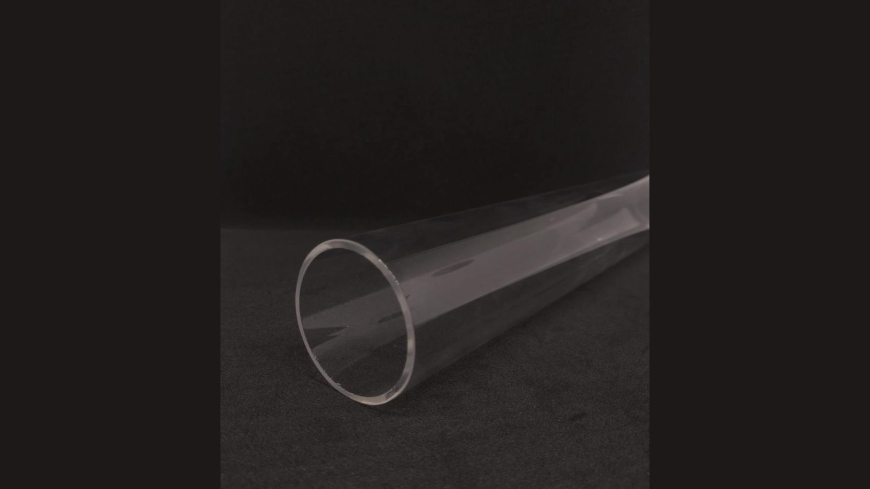
In the world of advanced thermal processing and industrial heating, quartz tubes have rapidly emerged as a game-changing material. Their exceptional thermal stability, high purity, and versatile mechanical properties make them indispensable for industries ranging from semiconductors and optics to metallurgy and chemical processing. This article delves into the key reasons why quartz tubes are revolutionizing high-temperature applications, with a comprehensive breakdown of their advantages, usage scenarios, and performance superiority.
What Are Quartz Tubes and Why Are They Unique?
Quartz tube is cylindrical components made from high-purity silica (SiO₂), often in amorphous (fused quartz) or crystalline (fused silica) forms. Unlike traditional glass, quartz can withstand extreme temperatures exceeding 1,100°C (2,012°F) without melting, deforming, or releasing contaminants.
Key Properties of Quartz Tubes:
-
High Thermal Resistance: Operate safely in environments over 1000°C.
-
Low Thermal Expansion: Minimizes cracking or stress fractures due to rapid temperature changes.
-
High Purity (99.99% SiO₂): Prevents contamination in sensitive processes like semiconductor fabrication.
-
Excellent Optical Transmission: Especially in UV and infrared spectrums.
-
Chemical Inertness: Resistant to most acids and corrosive agents.
Advantages of Quartz Tubes in High-Temperature Applications
1. Superior Thermal Shock Resistance
One of the most defining characteristics of quartz tubes is their resistance to thermal shock. In applications where sudden temperature fluctuations are the norm—such as rapid furnace cycling or plasma generation—materials often fail due to expansion and contraction stresses. Quartz, however, exhibits a thermal expansion coefficient as low as 5.5 x 10⁻⁷/°C, reducing the risk of cracking and equipment failure.
2. Unmatched Purity for Contamination-Free Environments
In industries like semiconductor manufacturing, solar energy, and laboratory analysis, even microscopic contamination can lead to significant losses. The ultra-high purity of quartz tubes ensures that no foreign particles are introduced during high-temperature processing. This is particularly critical in chemical vapor deposition (CVD) and diffusion furnace applications, where a clean environment is mandatory.
3. Exceptional Lifespan and Durability
Despite their fragile appearance, quartz tubes are remarkably durable under the right conditions. Their ability to resist degradation from high heat, chemical exposure, and UV radiation gives them a long operational lifespan, reducing replacement costs and downtime.
Industrial Applications of Quartz Tubes
1. Semiconductor and Microelectronics Manufacturing
In semiconductor production, quartz tubes are a core component of diffusion furnaces, where silicon wafers are exposed to gases at high temperatures to alter their electrical properties. Quartz’s chemical purity and thermal stability make it the only viable material for such sensitive environments.
2. Laboratory Furnaces and Thermal Analysis
Quartz tubes are widely used in tube furnaces, TGA (Thermogravimetric Analysis), and DSC (Differential Scanning Calorimetry) equipment. Their transparency allows researchers to visually monitor samples while maintaining consistent heating profiles.
3. Chemical Processing and Petrochemical Industries
Quartz tubes are often employed in reactors, flow cells, and heat exchangers where corrosive chemicals and high temperatures interact. Their inertness to most reactive agents ensures reliable performance without material degradation.
4. UV Sterilization and Optical Applications
Due to their excellent ultraviolet transmission, quartz tubes are used in UV disinfection systems, both for water treatment and air purification. Their high clarity and resistance to photonic degradation extend the life and effectiveness of UV bulbs and optical sensors.
Quartz Tubes vs. Traditional Materials
| Property | Quartz Tubes | Ceramics | Metal Tubes |
|---|---|---|---|
| Thermal Resistance | Up to 1100°C+ | Up to 1400°C | Varies (600–1000°C) |
| Thermal Shock Resistance | Excellent | Moderate | Poor |
| Chemical Resistance | High | Medium | Low to Medium |
| Contaminant Emission | None | Possible | High |
| Optical Clarity | Transparent (UV/IR) | Opaque | Opaque |
| Cost Efficiency (Long-Term) | High | Medium | Low |
Quartz’s multi-dimensional superiority allows it to outperform both ceramics and metals in most high-temperature and high-purity applications.
Design Flexibility and Customization
Manufacturers now offer custom quartz tube fabrication options that cater to specific industrial requirements. These include:
-
Double-walled tubes for enhanced insulation.
-
Flanged ends for secure mounting in reactor systems.
-
Etched or polished surfaces for optical accuracy.
-
Bored ports and joints for integration with instrumentation or flow systems.
This design flexibility enables engineers and scientists to tailor quartz components to exact project specifications without compromising performance.
Future Trends: Quartz Tubes in Emerging Technologies
As industries evolve, the demand for high-purity, thermally resilient materials continues to grow. Emerging areas where quartz tubes are finding novel applications include:
-
Hydrogen fuel cell development
-
Advanced laser systems
-
Plasma-enhanced chemical vapor deposition (PECVD)
-
Microfluidic reactors
-
Cryogenic and high-pressure lab environments
The integration of quartz-based materials in next-gen energy and research platforms points to a future where thermal resilience and chemical purity will define innovation.
Best Practices for Using Quartz Tubes
To maximize performance and longevity:
-
Avoid direct contact with cold surfaces after heating.
-
Gradually ramp temperatures to prevent thermal stress.
-
Clean regularly using approved solvents or acids.
-
Store upright or in padded, contamination-free holders.
-
Inspect for microfractures using polarized light techniques.
Proper handling ensures that quartz tubes retain their mechanical integrity and operational reliability over extended use.
Conclusion
Quartz tubes are no longer just another component in high-temperature systems—they are the foundation of modern thermal and chemical processing. Their unique blend of thermal resistance, purity, durability, and versatility has made them a standard in precision-driven industries.
As demands for cleaner, more efficient, and longer-lasting materials rise, quartz continues to set the benchmark. Companies and research institutions that adopt quartz tube solutions position themselves at the forefront of innovation, sustainability, and operational excellence.