What Office Landlords Get Wrong About Coworking: A 10-Year Lease Retrospective
For decades, commercial real estate operated on a simple, predictable formula. A landlord would sign a 10-year lease with a corporate tenant. The tenant would pay rent every month. The landlord would collect cheques. Everyone understood the rules.
 iksana
For decades, commercial real estate operated on a simple, predictable formula. A landlord would sign a 10-year lease with a corporate tenant. The tenant would pay rent every month. The landlord would collect cheques. Everyone understood the rules.
Then coworking arrived.
Some landlords embraced it. Many ignored it. And a surprising number actively fought against it, calling coworking operators "unreliable," "a fad," or "just WeWork wannabes."
Now, ten years later, we can look back with clear eyes.
The landlords who dismissed coworking made expensive mistakes. The ones who adapted are thriving. And the entire commercial real estate industry is still catching up.
Let me explain what office landlords got wrong, why their old model is breaking, and what the smart ones are doing differently now.
The Old Way: The 10-Year Lease Mindset
Before coworking became common, office landlords had a simple business model:
-
Find a large company (bank, insurance firm, government office)
-
Sign a lease for 5, 10, or even 15 years
-
Collect rent automatically every month
-
Do minimal maintenance
-
Repeat
This worked well for decades. Large companies needed long-term stability. Landlords loved predictable income. Everyone was happy.
But here is what landlords did not see coming: the way companies use office space was about to change forever.
When coworking first appeared around 2010-2015, most landlords dismissed it. They thought:
-
"Coworking is just for broke startups."
-
"No serious company will ever share space with strangers."
-
"This WeWork thing will crash and burn."
Some of these predictions came true for WeWork. But the core idea—flexible, shared, ready-to-use workspace—did not crash. It grew. And it revealed four big mistakes that landlords were making.
Mistake #1: Treating Coworking as a "Tenant" Instead of a "Partner"
The first big mistake was mindset.
Traditional landlords saw coworking operators as just another tenant. They would rent out a floor or a building, sign a lease, and then forget about the space.
But coworking is fundamentally different from a regular office tenant.
A regular tenant moves in, sets up their own furniture, hires their own cleaner, and manages their own internet. They are responsible for their own experience.
A coworking operator, on the other hand, is running a service business inside the landlord's building. They are selling desks, meeting rooms, and community experiences to dozens or hundreds of small customers.
This means the coworking operator needs:
-
Flexible lease terms (not rigid 10-year contracts)
-
Permission to make physical changes to the space
-
Support for marketing and branding
-
Help with common area maintenance
Landlords who treated coworking operators as partners—not just tenants—succeeded. They offered revenue-sharing deals instead of fixed rents. They helped with fit-out costs. They allowed shorter trial periods.
Landlords who demanded traditional 10-year leases with no flexibility? They watched coworking operators go to the building next door.
Mistake #2: Underestimating How Much Office Users Want "Amenities"
Here is a hard truth for traditional landlords:
Your plain, carpeted office floor with fluorescent lights is not exciting anymore.
Before coworking, office tenants had low expectations. A desk, a chair, and a window were enough. Maybe a water cooler if you were lucky.
Then coworking spaces introduced:
-
High-speed WiFi that actually works
-
Free tea, coffee, and snacks
-
Comfortable lounge areas with sofas
-
Phone booths for private calls
-
Outdoor terraces and green spaces
-
Event areas for workshops and networking
-
24/7 access with security
Suddenly, traditional offices felt like hospitals. Cold. Boring. Uninviting.
Landlords who failed to upgrade their buildings lost tenants to coworking spaces. Even large companies started saying: "Why should we build our own boring office when we can just move our team into that beautiful coworking space down the street?"
The landlords who survived realized that office space is no longer just square footage. It is an experience. And they started adding cafes, lounges, bike storage, shower facilities, and community event spaces to their buildings.
Mistake #3: Ignoring the Rise of Hybrid and Remote Work
This mistake hurt the most.
For years, landlords believed that remote work was temporary. They said: "Eventually, everyone will come back to the office five days a week."
That did not happen.
After COVID, hybrid work became permanent. Most companies now allow employees to work from home 2-3 days per week. This means companies need less permanent office space.
But here is what landlords missed: companies still need some office space. Just not the same amount. And not on the same rigid terms.
A company that used to rent 10,000 square feet on a 10-year lease might now want:
-
5,000 square feet of permanent space for core teams
-
Plus 50 coworking memberships for remote employees who need a desk sometimes
-
Plus bookable meeting rooms for client visits
-
Plus the ability to expand or shrink month by month
Traditional landlords could not offer this flexibility. So companies went to coworking operators instead.
The landlords who adapted started offering "hybrid leases"—a small amount of dedicated space plus access to shared coworking areas within the same building.
Mistake #4: Believing That "WeWork's Failure Means Coworking Failed"
This was perhaps the most expensive misunderstanding.
When WeWork crashed in 2019 and again in 2023, many landlords breathed a sigh of relief. They thought: "See? We were right. Coworking was a bubble. It is over."
But as we discussed in our previous blogs, WeWork's failure was not coworking's failure. It was the failure of one company's aggressive expansion, overspending, and poor governance.
The demand for flexible workspace did not disappear when WeWork struggled. It kept growing.
In India, for example, CRISIL projected the flexible workspace market to grow 16-18% through FY2026 and FY2027. JLL reported record office leasing of 83.3 million square feet in 2025, with flexible workspaces as a key driver.
Landlords who believed coworking was dead missed this growth wave. They continued offering only traditional long-term leases. Meanwhile, their competitors who partnered with coworking operators captured the new demand.
What Smart Landlords Are Doing Differently Now
Not all landlords made these mistakes. The smart ones learned fast. Here is what they are doing today:
1. Offering "Plug and Play" Spaces
Instead of handing over an empty concrete shell, smart landlords now install basic finishes, lighting, internet, and even furniture. They charge a slightly higher rent but save tenants the headache of construction.
2. Creating "Coworking Floors" Inside Traditional Buildings
Some landlords reserve one floor of their building as a flexible coworking area. Traditional tenants on other floors can use it when they need extra space. This keeps all tenants happy and reduces vacancy.
3. Switching from Fixed Rent to Revenue Share
Instead of demanding a high fixed rent from coworking operators, smart landlords offer a lower base rent plus a percentage of the operator's revenue. This aligns both parties' interests. When the coworking space does well, everyone wins.
4. Shortening Lease Terms
The old 10-year lease is dying. Smart landlords now offer 1-year, 3-year, or even month-to-month options for flexible workspace operators. They understand that flexibility is now a feature, not a risk.
5. Investing in Hospitality
The best landlords now think of themselves as hospitality providers, not just real estate owners. They hire community managers. They organize events. They keep the coffee fresh. They make sure the WiFi never fails.
The Numbers Don't Lie: Coworking Is Here to Stay
If you still doubt that flexible workspace is permanent, look at the data:
-
India's flexible workspace market is growing at 16-18% annually
-
Major corporations like Microsoft, Amazon, and Google now use coworking spaces for their satellite teams
-
The average office occupancy rate in traditional buildings has dropped, while coworking occupancy remains strong at 70-80% in good locations
Business owners are choosing coworking for clear reasons: lower setup cost, flexible plans, better infrastructure, and community. As we explored in our guide on what makes shared workspaces so powerful for entrepreneurs, the savings and flexibility are simply too valuable to ignore.
What Happens Next? The Future of Office Leasing
The next five years will bring more change, not less.
Here is what I predict:
Traditional long-term leases will not disappear completely. Large banks, government offices, and stable corporations will still want them. But they will become less common.
Mixed buildings will dominate. The most successful commercial buildings will combine traditional offices, coworking areas, event spaces, cafes, and even retail on the ground floor. They will become small ecosystems, not just office buildings.
Landlords will become service providers. The old model of "rent the space and disappear" is dying. The new model is "rent the space and keep making it better." Landlords who invest in community management, events, and hospitality will win.
Coworking operators and landlords will partner more closely. Instead of fighting each other, they will realize they need each other. Landlords have the buildings. Coworking operators have the operational expertise. Together, they can create spaces that neither could build alone.
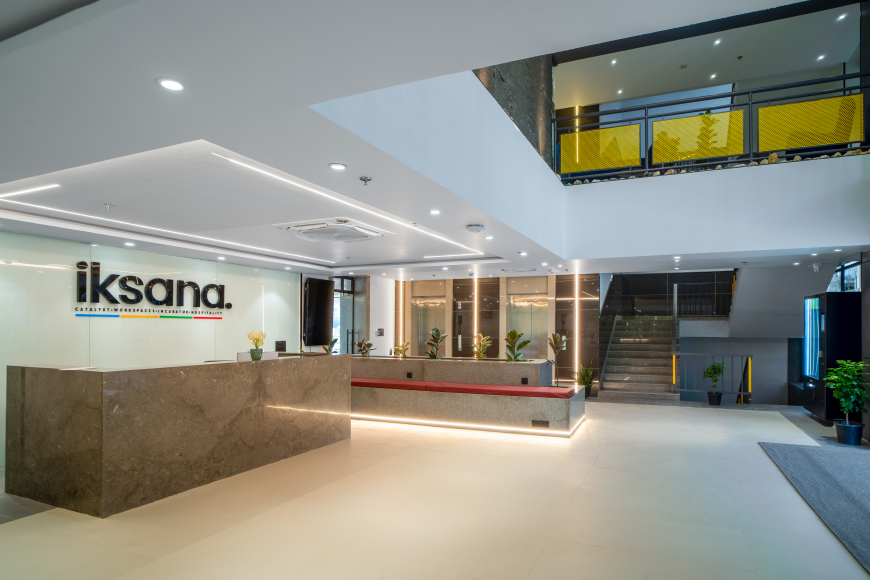
A Success Story: iKSANA Workspaces in Dehradun
One company that understands this new relationship between landlords and flexible workspace providers is iKSANA Workspaces, based in Dehradun, Uttarakhand.
iKSANA started as a coworking operator in a tier-2 city—a market that many national brands ignored. While big players fought over expensive Mumbai and Bangalore real estate, iKSANA saw opportunity in Dehradun's growing IT and startup ecosystem.
Today, iKSANA has launched over 2,000 desks across three prime locations on Sahastradhara Road and Rajpur Road. And they are not stopping. By the end of FY 2025-26, they will add another 2,000+ workstations, doubling their footprint .
What makes iKSANA different is their approach to landlord partnerships. Instead of simply renting space, they partner with property owners to transform buildings into fully-serviced, flexible workspaces. Their partnership model includes :
-
Developing the workspace strategy and financial model
-
Managing all operations, marketing, and sales
-
Sharing revenue with the landlord
-
Increasing the property's value without extra effort from the owner
This is exactly what smart landlords should be doing—finding operators who can activate their vacant spaces and share in the success.
iKSANA is also 100% bootstrapped, meaning they grew without burning investor money on fancy bean bags and rock-climbing walls. They focused on what actually matters: ergonomic designs, high-speed internet, meeting rooms, breakout zones, and a thriving business community .
For freelancers, startups, and even large enterprises in Dehradun, iKSANA offers a range of options—from hot desks to private cabins to fully managed offices. They also provide business support services like accounting, legal assistance, HR, and even seed funding mentorship .
This is the future that traditional landlords missed. Not a single giant operator taking over the world, but many local, well-run, sustainable coworking businesses partnering with property owners to create real value.
Final Lessons for Landlords (And Anyone Renting Office Space)
If you are an office landlord, here is my advice after this 10-year retrospective:
-
Stop fighting flexible workspace. It is not going away. Embrace it.
-
Find a good coworking partner. Not every operator is WeWork. Look for bootstrapped, profitable, locally-focused operators.
-
Invest in amenities. Your building needs good WiFi, good coffee, and good community spaces.
-
Offer flexible terms. The 10-year lease is no longer the only option.
-
Think like a hotelier. Your tenants are your guests. Serve them well.
And if you are a business owner looking for office space, remember: you have choices now. You do not need to sign a 10-year lease. You do not need to buy furniture or install internet. You can walk into a well-run coworking space like iKSANA and start working the same day.
The landlords who learned this lesson early are thriving. The ones who did not? They are still staring at empty floors, wondering what went wrong.
The answer is simple: they got coworking wrong. But it is not too late to get it right.