What Is Local Continuous Replication? A Complete Guide to Real-Time Data Synchronization
Local Continuous Replication
 Smith Matthew
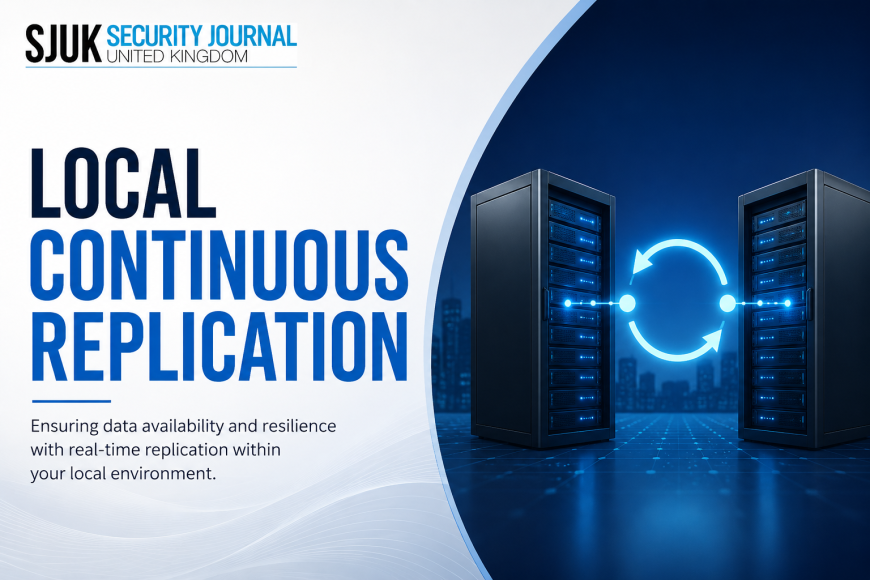
Modern digital systems depend on uninterrupted data flow and instant availability, where even a brief outage can disrupt operations, affect transactions, and damage user trust. To address these risks, organizations adopt advanced data protection mechanisms that ensure systems remain continuously operational and data remains consistently updated across environments. One such approach is local continuous replication, which enables real-time synchronization of data within a localized infrastructure, reducing the risk of data loss and downtime. By continuously mirroring changes from a primary system to a secondary system, this method strengthens resilience, supports high availability, and ensures rapid recovery in failure scenarios. It has become an essential component of enterprise architectures where reliability, speed, and consistency are critical.
What Is Local Continuous Replication?
Local continuous replication is a real-time data protection technique where changes made in a primary system are instantly duplicated to a secondary system within the same local environment. It ensures data consistency, system availability, and minimal downtime for mission-critical applications.
Real-time data mirroring
This mechanism continuously captures every data change and reflects it on a secondary system. It removes dependency on scheduled backups and ensures that both systems stay almost identical at all times for uninterrupted operations.
Local infrastructure-based replication
Unlike geographically distributed replication models, this approach works within the same data center or local network. It reduces latency and ensures faster synchronization between primary and backup systems.
High availability foundation
It plays a key role in high availability architectures by keeping a standby system ready. In case of failure, operations can switch quickly without noticeable disruption to users or services.
How Local Continuous Replication Works
Local continuous replication operates through a structured process that captures, transmits, and applies data changes in real time between systems to maintain synchronization and ensure uninterrupted data flow across environments.
Data change capture mechanism
Every transaction or modification in the primary system is captured using logs, journaling, or block-level tracking. This ensures that no update is missed during the replication process.
Continuous data streaming
Captured changes are continuously streamed to the replica system over a secure local network. This enables near-instant synchronization between both systems with minimal delay.
Sync confirmation process
Depending on configuration, replication may be synchronous or asynchronous. In synchronous mode, confirmation is required before committing changes, ensuring stronger consistency.
Key Features of Local Continuous Replication
Local continuous replication provides a set of technical capabilities designed to support uninterrupted data availability, system resilience, and fast recovery in enterprise-grade infrastructures.
Real-time synchronization capability
It ensures that data changes are replicated instantly or within milliseconds. This reduces data inconsistency risks and helps maintain system accuracy across environments.
Low latency operation
Since replication occurs within a local network, latency is significantly reduced compared to remote replication systems, making it ideal for high-speed transactional environments.
Automatic failover readiness
The system is designed to switch operations to the replica automatically or manually in case of failure, ensuring continuous service availability without major downtime.
Benefits of Local Continuous Replication
The advantages of local continuous replication extend across performance, reliability, and business continuity, making it a critical component of modern IT infrastructure.
Reduced data loss risk
Because data is continuously synchronized, the chances of losing critical transactions are significantly minimized, even during unexpected system failures.
Improved system uptime
By maintaining a live replica system, downtime is reduced dramatically, allowing applications to remain accessible even during maintenance or failure scenarios.
Faster recovery operations
Recovery processes become significantly faster because the backup system is already up-to-date, reducing dependency on manual restoration procedures.
Challenges and Limitations
Despite its advantages, local continuous replication comes with operational and technical challenges that must be addressed for stable performance and scalability.
Infrastructure cost overhead
Maintaining duplicate systems requires additional hardware, storage, and network resources, which increases overall infrastructure costs for organizations.
Performance trade-offs
In synchronous setups, write operations may experience slight delays because data must be confirmed on both primary and secondary systems before completion.
Operational complexity
Configuring and maintaining replication systems requires technical expertise, as improper setup can lead to replication lag or inconsistencies.
Use Cases of Local Continuous Replication
Local continuous replication is widely used in industries where uninterrupted access to accurate data is essential for business operations and customer trust.
Financial transaction systems
Banks and trading platforms rely on real-time replication to ensure every transaction is recorded accurately without delays or inconsistencies.
E-commerce platforms
Online retail systems use it to prevent order loss and maintain inventory accuracy during high traffic or system failures.
Enterprise SaaS applications
SaaS providers implement it to guarantee service continuity and protect user data in multi-tenant environments with strict uptime requirements.
Local Continuous Replication vs Other Methods
Understanding how local continuous replication differs from other data protection methods helps clarify its role in modern infrastructure strategies.
Backup-based systems
Traditional backups store periodic snapshots of data, which can lead to gaps and potential data loss between backup intervals.
Remote replication models
Remote replication focuses on geographic redundancy, often introducing higher latency due to distance between data centers.
Continuous local replication advantage
Local continuous replication provides real-time synchronization with low latency, making it ideal for high-performance environments requiring immediate consistency.
Best Practices for Implementation
Proper implementation is critical to ensure that local continuous replication performs efficiently and reliably under production workloads.
Optimize network performance
Use high-speed, low-latency networks to ensure smooth data transfer between primary and replica systems without bottlenecks.
Monitor replication lag
Continuous monitoring helps detect delays early and prevents data inconsistency issues that may arise due to system overloads.
Regular failover testing
Testing failover scenarios ensures that backup systems can take over seamlessly during real-world failures without service disruption.
Conclusion
Local continuous replication plays a vital role in modern IT infrastructure by enabling real-time data synchronization and ensuring uninterrupted system availability. While it introduces complexity and infrastructure costs, its benefits in reducing downtime and data loss are significant for enterprise systems. Organizations aiming for resilient architectures often adopt local continuous replication as part of their broader continuity strategy. Insights from Security Journal UK highlight its growing importance in maintaining secure and reliable digital ecosystems.
FAQs
1. What is the main purpose of local continuous replication?
The primary purpose is to maintain a real-time or near-real-time copy of data within a local environment so that systems can continue operating without disruption if the primary system fails. It ensures high availability and reduces the risk of data loss by continuously synchronizing changes between primary and secondary systems.
2. How is local continuous replication different from traditional backups?
Traditional backups capture data at scheduled intervals (hourly, daily, etc.), which creates gaps where recent data can be lost. Local continuous replication, on the other hand, continuously mirrors data changes in real time, minimizing or eliminating such gaps. Backups are for recovery; replication is for availability.
3. Does local continuous replication impact system performance?
Yes, it can introduce some overhead depending on the replication method used. Synchronous replication may slightly increase write latency because data must be confirmed on both primary and replica systems. However, with properly optimized infrastructure, this impact is usually manageable and outweighed by the benefits of high availability.
4. Where is local continuous replication commonly used?
It is widely used in environments where downtime is not acceptable, such as banking systems, e-commerce platforms, SaaS applications, enterprise databases, and healthcare systems. These systems require real-time data consistency and fast failover capabilities to ensure uninterrupted operations.