Top Applications of Metal and Non-Metallic Expansion Joints in Industrial Piping
 afsjoints
Nobody thinks much about expansion joints until one fails. That's usually when a facility manager starts making calls, trying to figure out what went wrong — and more often than not, it traces back to picking the wrong type for the job in the first place. At Advanced Flexible Systems Inc, this question comes up all the time: metal expansion joints or non metallic expansion joints? Which one actually belongs in this system?
Truth is, there's no single right answer. It comes down to heat, chemicals, pressure, and honestly, sometimes just what the budget allows. And the tricky part is that getting this wrong doesn't always show up right away. A joint can hold on for months, quietly wearing down, before the damage finally spreads to the connected piping and equipment around it.
Metal Expansion Joints: Built for Heat and Pressure
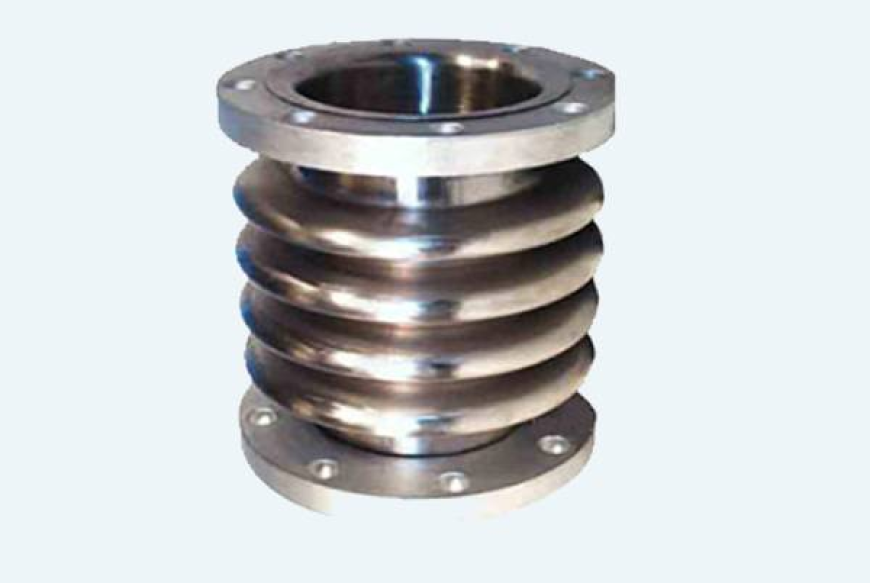
Most metal expansion joints are made from stainless steel or a similar alloy, shaped into a bellows that can flex, stretch, and compress as the system demands. You'll find them in refineries, power plants, and other heavy industrial settings where temperatures run high and shift often — sometimes swinging hundreds of degrees within a single operating cycle.
Toughness is really their calling card. Metal holds up under steam, high pressure, and constant thermal cycling better than most other materials, which is exactly why so many high-stakes systems depend on them. The tradeoff is rigidity — metal just doesn't flex the way rubber or fabric does. And if the system carries chemicals that will slowly corrode the material, metal isn't always the smart choice. That corrosion can eat away at the bellows over time, weakening it enough to cause leaks or outright failure, even in a joint that was built well to begin with.
Non Metallic Expansion Joints: Built for Flexibility and Resistance
Non metallic expansion joints are usually made from rubber, fabric, or PTFE. They can't handle the heat that metal can, but they make up for it with more flexibility and better resistance to corrosion. Plants running acids or alkalis through their systems tend to lean toward non metallic expansion joints for exactly that reason — metal wouldn't last long in that kind of environment, and constantly replacing corroded parts gets expensive in a hurry.
They're quieter too. Non metallic expansion joints do a better job absorbing vibration and cutting down noise, which is part of why they show up so often in HVAC systems, wastewater plants, and chemical processing lines. For systems that don't run especially hot, they tend to be the more practical — and usually cheaper — option. That said, they have limits of their own. Non metallic expansion joints generally aren't the right fit for high-pressure steam lines or anything pushing into extreme thermal territory, since those materials just weren't built for that kind of stress.
What Actually Decides the Choice
A handful of questions tend to settle it:
· How hot does the system run? Metal handles the high end better, while non metallic expansion joints do fine in moderate ranges.
· What's actually flowing through the pipes? If it's corrosive, non metallic usually comes out ahead.
· How much pressure is involved? High pressure generally calls for metal.
· Is vibration or noise a concern? Non metallic expansion joints tend to win here.
And what does the budget look like over the long haul? Non metallic costs less upfront, but metal can last longer under rough conditions — so the numbers sometimes even out over time anyway.
Maintenance schedules matter too, along with how much downtime a facility can realistically handle. A metal expansion joint might go longer between replacements, but when it finally does fail, the repair tends to be more involved. Non metallic expansion joints, on the other hand, are usually quicker and cheaper to swap out — which counts for a lot if a plant can't afford extended downtime.
Installation Is Half the Battle
Picking the right material only gets you halfway there. If an expansion joint isn't sized or installed correctly, it really doesn't matter whether it's metal or non-metallic — you'll end up dealing with misalignment, extra stress on the pipework, and eventually a failure nobody saw coming until it was too late. Even a well-made joint can underperform if it's forced into a system it was never designed for.
This is where experience ends up mattering just as much as the product itself. At Advanced Flexible Systems Inc, we look at the whole picture before recommending anything — temperature, pressure, what's actually moving through the lines — whether that means a heavy-duty metal expansion joint for a steam line running hot, or a flexible non metallic expansion joint for a chemical process that would chew through metal in a matter of months. We also weigh things like available space, anchor points, and how much movement the piping needs to accommodate, since those details can shift a recommendation just as much as temperature or chemical exposure does.
Neither One Is Better — They're Just Different
Metal expansion joints and non metallic expansion joints really aren't competing for the same job. They solve different problems. If a system runs hot and needs strength, metal is probably the answer. If it's dealing with corrosive chemicals or needs more give, non-metallic usually makes more sense. Plenty of facilities even use both, matching each joint to the conditions at that particular point in the line.
Advanced Flexible Systems Inc has worked through this exact decision with companies across a range of industries over the years — power generation, chemical processing, water treatment — building and supplying both metal expansion joints and non metallic expansion joints along the way.