How Can D Sub Connector Accessories Prevent Costly Installation Failures?
Explore D Sub Connector Accessories that improve cable protection, secure mounting, strain relief, shielding, and dependable electronic connections.
 joddie25
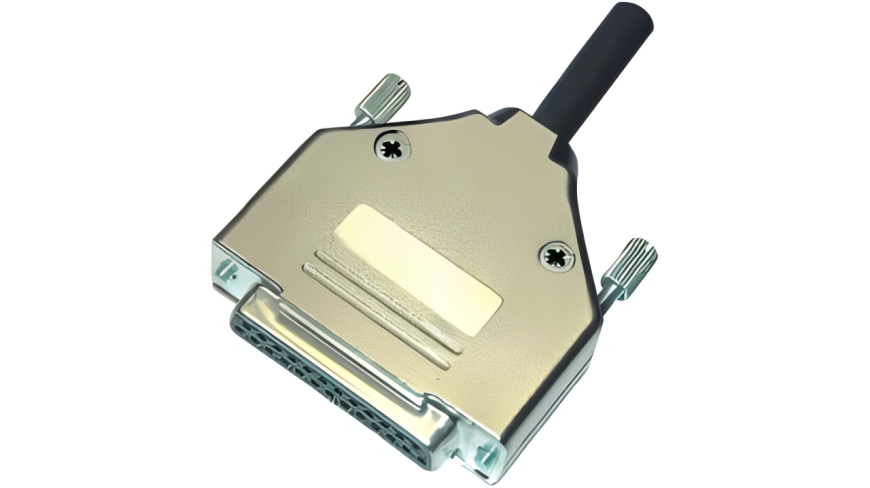
Electrical connection problems are not always caused by damaged contacts or poor-quality cables. In many systems, failures begin because the connector assembly lacks suitable protection, fastening, cable support, or shielding. D Sub Connector Accessories address these weaknesses by helping create a complete interface that can tolerate movement, repeated handling, environmental exposure, and long operating periods.
These components are used throughout industrial automation, computing, telecommunications, testing equipment, medical electronics, and control systems. Selecting them during the design stage can prevent loose connections, damaged conductors, signal disruption, and unnecessary maintenance.
Why Is a Complete D Sub Assembly Important?
A D Sub connector provides an organised contact interface between two pieces of equipment. However, the rear terminations, cable entry, mounting points, and exposed mating face may remain vulnerable without additional components.
D Sub Connector Accessories help strengthen these areas and ensure that the connector performs reliably under real operating conditions. They can also improve the appearance and organisation of equipment by keeping wires contained and cables correctly positioned.
A complete connector assembly may provide:
- Mechanical protection around wire terminations
- Secure retention between mating connectors
- Controlled cable direction and bend radius
- Support against pulling and twisting forces
- Protection for unused connector interfaces
- Improved continuity between cable and equipment shielding
- Easier access during inspection or repair
How Do Connector Backshells Improve Durability?
A backshell encloses the rear section of a connector after the wires have been terminated. This area contains delicate solder joints, crimp contacts, or insulation displacement connections that can be damaged by impact or cable movement.
Backshells provide a barrier between these terminations and the surrounding environment. They can also include cable clamps, shield connections, and selectable cable exit positions.
Plastic Backshells
Plastic versions are often suitable for general-purpose equipment operating in clean indoor locations. They provide insulation, low weight, and practical protection without adding unnecessary complexity.
They are commonly found in:
- Office electronics
- Computer peripherals
- Educational equipment
- Indoor test systems
- Light-duty control devices
Metal Backshells
Metal backshells offer greater resistance to physical damage and can support electromagnetic shielding. They are often chosen for communication systems, industrial machinery, transportation equipment, and sensitive measurement devices.
Their conductive body can connect with the D Sub shell and cable shield, creating a more continuous protective enclosure around signal conductors.
What Problems Can Strain Relief Components Prevent?
A cable may be exposed to pulling, bending, vibration, or repeated repositioning. Without strain relief, these forces can reach the individual wires attached to the connector contacts.
Over time, this mechanical stress may cause conductors to break internally, crimps to loosen, or solder joints to crack. The resulting fault may be intermittent, making it difficult to locate during maintenance.
Strain relief components protect the termination area by gripping the outer cable jacket. This transfers mechanical force away from the internal conductors.
Effective strain relief can help prevent:
- Broken wires near the connector
- Loose or unstable contact terminations
- Communication interruptions
- Unexpected equipment shutdown
- Repeated connector replacement
- Damage caused by cable weight
Why Does Connector Fastening Matter?
D Sub connectors may remain electrically connected even when they are not fully secured. However, vibration or accidental movement can gradually separate the plug and socket, causing unstable contact.
Fastening accessories such as jack screws, locking posts, retaining clips, and thumb screws hold the mating halves together. They also support proper connector alignment and reduce pressure on individual contacts.
Fastening hardware should be selected according to:
- Thread type
- Connector shell size
- Panel mounting arrangement
- Required tool access
- Vibration level
- Frequency of disconnection
Hardware should be tightened evenly. Excessive force may damage threads or distort the connector, while insufficient tightening may allow the connection to loosen.
How Can Cable Entry Direction Improve Equipment Layout?
Cable routing is an important part of connector installation. A cable that exits in the wrong direction may be forced against an enclosure wall, nearby connector, or moving component.
D Sub Connector Accessories are available with straight, side-entry, and angled cable outlets. Selecting the correct design allows the cable to follow a natural route without sharp bending.
Straight Entry Designs
Straight entry is appropriate where sufficient space is available behind the connector. It supports direct cable routing and is often used in equipment racks, desktop instruments, and spacious control cabinets.
Angled Entry Designs
Angled entry is valuable in shallow equipment, densely populated panels, and restricted spaces. It directs the cable sideways or downward to reduce rear clearance requirements.
Correct routing can provide:
- Lower stress at the cable entry
- Improved access to nearby components
- Better wiring organisation
- Reduced risk of cable crushing
- Easier enclosure closure
- Cleaner maintenance access
How Do Protective Covers Support Long-Term Reliability?
Unused D Sub ports are vulnerable to contamination and impact. Dust, liquid droplets, metal fragments, and other debris can collect inside the contact area and affect future connections.
Protective caps and covers close the interface when the connector is not in use. They are particularly useful for portable equipment, stored machinery, outdoor systems, and service ports that are only accessed occasionally.
Protective covers may include:
- Push-fit plastic caps
- Screw-retained metal covers
- Flexible rubber protectors
- Tethered caps that remain attached to the equipment
- Conductive covers for shielding requirements
When Is Electromagnetic Shielding Required?
Electronic equipment can be affected by interference generated by motors, relays, power converters, transformers, and radio-frequency devices. Sensitive data, analogue measurements, and control signals may become unstable when shielding is incomplete.
Shielded D Sub Connector Accessories help connect the cable shield to the connector shell. Metal hoods, conductive gaskets, and shield clamps can reduce gaps where electrical noise might enter or leave the assembly.
Shielding may be important in:
- Industrial automation networks
- Laboratory measurement systems
- Audio and video equipment
- Communication hardware
- Medical monitoring devices
- Transport control systems
What Should Buyers Confirm Before Ordering?
Compatibility is essential because visually similar accessories may have different dimensions or fastening arrangements. Buyers should review both the connector specification and installation conditions.
Important details include:
- D Sub shell size
- Contact configuration
- Connector gender
- Cable outside diameter
- Cable exit orientation
- Mounting hole arrangement
- Fastener thread
- Backshell material
- Shielding requirement
- Operating temperature
- Available installation space
Creating a More Dependable Electronic Interface
D Sub Connector Accessories reduce many of the mechanical and environmental risks surrounding connector installations. They secure mating parts, protect terminations, manage cable movement, support shielding, and keep unused ports clean.
Choosing compatible accessories from the beginning can reduce installation errors and improve the service life of the entire connection. A carefully assembled interface is easier to inspect, safer to maintain, and more capable of delivering dependable performance in demanding electronic systems.