Does Yoga Help Reduce Nightfall? What Science Says
Can yoga really reduce nightfall? Discover what science actually says about yoga, stress, and sleep, explained by the best IVF hospital in Trichy, with realistic expectations and practical guidance.
 suryaseo
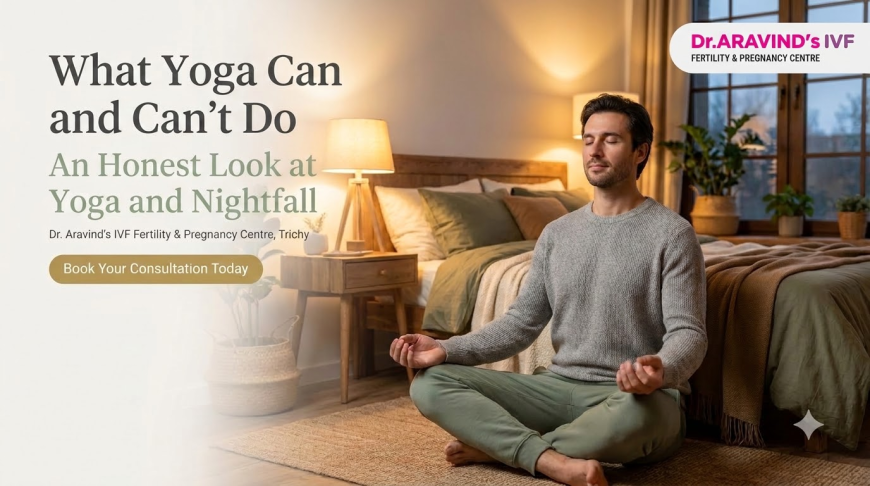
Yoga is often recommended as a natural way to manage nightfall, especially in wellness and Ayurvedic circles. But how much of this is backed by actual science, and how much is assumption? At a best IVF hospital in Trichy, this question comes up often from men exploring natural approaches alongside medical guidance.
What Science Actually Says About Yoga and Nightfall
There's no direct clinical research proving yoga stops or specifically reduces nightfall frequency. What research does support is yoga's well documented effect on stress reduction, sleep quality, and hormonal balance, all of which are loosely connected to how nightfall occurs. The claim that yoga for nightfall reduction works is best understood as an indirect benefit, not a targeted treatment.
How Yoga Affects Stress and Sleep
Regular yoga practice has been shown in multiple studies to reduce cortisol levels and improve overall sleep quality. Since sleep and hormonal activity are closely tied to nightfall patterns, better sleep quality may indirectly influence how often nightfall occurs, though this connection remains more theoretical than definitively proven for nightfall specifically.
Specific Yoga Practices Often Recommended
Certain yoga practices are commonly suggested for general stress and hormonal wellness:
- Pranayama (breathing exercises) for calming the nervous system
- Restorative poses like Shavasana for deep relaxation before sleep
- Gentle evening yoga sequences to support better sleep onset
- Meditation paired with yoga to reduce overall anxiety levels
These practices support general wellness and stress management, which may offer secondary benefits related to nightfall, even without being a direct cure. Understanding that nightfall in men is a normal physiological process to begin with also helps set the right expectations before starting any wellness routine aimed at managing it.
What Yoga Can't Do
It's important to be realistic. Yoga cannot completely eliminate nightfall, since it's a natural biological process, not a condition caused purely by stress or lifestyle. Expecting yoga alone to "cure" nightfall sets up unrealistic expectations that can lead to unnecessary disappointment or continued worry.
Building a Realistic Wellness Routine
Rather than viewing yoga as a fix, it's more useful to see it as part of a broader healthy routine, alongside good sleep hygiene, stress management, and balanced nutrition. This combined approach supports overall reproductive and hormonal health more effectively than relying on any single practice alone.
Yoga offers genuine benefits for stress and sleep, and those benefits may indirectly support hormonal balance, even if it isn't a proven direct solution for nightfall. Dr. Aravind's IVF Fertility & Pregnancy Centre, a best IVF hospital in Trichy, encourages patients to combine healthy lifestyle practices with accurate medical understanding rather than relying on any single remedy. Men in Trichy receive honest, realistic guidance for managing concerns like this.
Book Now for your consultation at Dr. Aravind's IVF Fertility & Pregnancy Centre:
https://www.draravindsivf.com/book-your-appointment
Frequently Asked Questions
Can yoga completely stop nightfall?
No, yoga cannot completely stop nightfall since it's a normal biological process, though it may indirectly help through stress and sleep improvement.
Which yoga practices are commonly suggested for nightfall related concerns?
Pranayama breathing exercises, restorative poses like Shavasana, and gentle evening yoga sequences are commonly recommended for general stress and sleep support.
Does yoga reduce cortisol levels linked to hormonal balance?
Yes, research supports yoga's role in reducing cortisol and improving stress management, which can indirectly support overall hormonal balance.
Is there scientific proof yoga directly reduces nightfall frequency?
No direct clinical evidence proves yoga specifically reduces nightfall. Any benefit is likely indirect, through improved sleep and stress levels.
Should yoga replace medical advice for concerns about nightfall?
No, yoga can support overall wellness, but it shouldn't replace proper medical evaluation if nightfall is frequent, painful, or causing significant anxiety.