Revolutionizing Urban Mobility: Stack Parking Solutions in Mumbai
Explore how stack parking solutions in Mumbai are revolutionizing urban space management. Discover types, benefits, challenges, and the future of vertical parking systems in the city.
 Minal
Minal
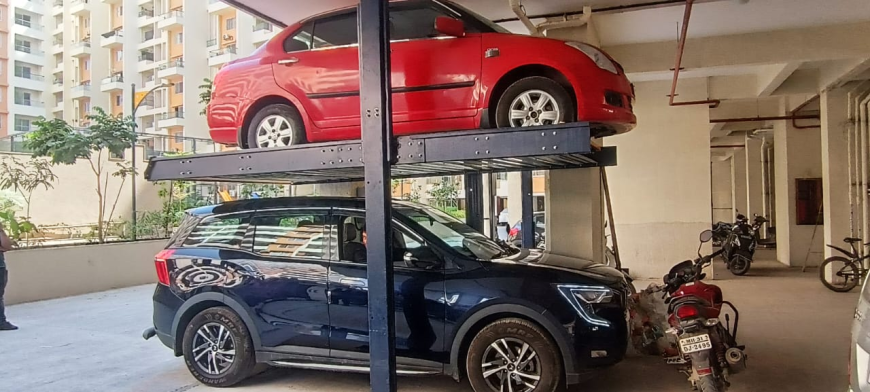
Mumbai, the bustling financial capital of India, is a city that never sleeps. With its ever-growing population, soaring number of vehicles, and limited land space, the city faces a significant challenge parking. Traditional parking lots are no longer sufficient to meet the escalating demands. Enter the game-changer: stack parking solutions in Mumbai.
This innovative system is redefining how parking is managed in metropolitan areas. As urban planning moves towards smarter and more efficient infrastructure, stack parking has emerged as a sustainable and space-saving alternative. This guest post delves into the rise, benefits, types, challenges, and future of stack parking solutions in the heart of Mumbai.
Understanding Stack Parking Systems
Stack parking is a mechanical system designed to optimize vertical space to park multiple vehicles in the footprint of a single car. Vehicles are parked on platforms that move vertically or horizontally to stack above or beside one another. These systems are categorized under automated or semi-automated parking systems.
In Mumbai, where every square foot is precious, stack parking serves as a smart response to the land crunch. It offers a practical solution for residential complexes, commercial hubs, shopping centers, hospitals, and office buildings.
Why Mumbai Needs Stack Parking Solutions
Mumbai’s urban density is among the highest in the world. With over 4 million registered vehicles, the demand for parking spaces has far exceeded the supply. Here's why stack parking solutions in Mumbai are no longer optional but essential:
-
Space Scarcity: Real estate in Mumbai is both expensive and limited. Building large horizontal parking lots is neither feasible nor cost-effective.
-
Rising Vehicle Ownership: With growing incomes and lifestyle changes, more families now own multiple vehicles, intensifying the parking crisis.
-
Traffic Congestion: A significant portion of Mumbai's traffic is attributed to drivers searching for parking. Stack parking reduces this hassle.
-
Sustainability Goals: Vertical parking systems reduce the land footprint, helping the city move towards greener urban infrastructure.
Types of Stack Parking Systems
Mumbai’s infrastructure has seen a variety of stack parking models, depending on location, demand, and budget. Below are the major types:
1. Two-Level Stack Parking
-
Ideal for residential buildings and small office complexes.
-
Allows one car to be parked above another.
-
Requires limited civil work and is cost-effective.
-
Often semi-automatic, operated with a hydraulic system.
2. Three-Level Stack Parking
-
Common in commercial zones and malls.
-
Accommodates three vehicles in a vertical stack.
-
Requires higher ceiling height and stronger structural support.
-
Significantly increases parking capacity.
3. Puzzle Parking Systems
-
Platforms move both horizontally and vertically to create an open slot.
-
Highly automated and space-efficient.
-
Preferred for high-end residential complexes and luxury malls.
4. Tower Parking Systems
-
Multi-level towers operated by robotic arms or lifts.
-
Fully automated and operated via card or mobile app.
-
Best suited for areas with very limited horizontal space.
5. Pit Stack Parking
-
Utilizes underground pits for vehicle stacking.
-
Aesthetically pleasing as vehicles are hidden from view.
-
Common in high-end bungalows and premium buildings.
Advantages of Stack Parking Solutions in Mumbai
The popularity of stack parking solutions in Mumbai is rising because of several tangible benefits:
1. Space Optimization
Stack parking can accommodate two to three times more vehicles in the same footprint as traditional parking. In space-starved Mumbai, this is a significant advantage.
2. Time Efficiency
Modern stack systems reduce the time taken to find and park a vehicle. Some systems are app-controlled, enabling users to retrieve vehicles with a click.
3. Cost Savings
While the initial investment may seem high, stack parking reduces land acquisition costs, labor costs, and operational inefficiencies.
4. Enhanced Security
Automated stack parking restricts unauthorized access. Vehicles are stored in enclosed systems, reducing the risk of theft or vandalism.
5. Environmental Benefits
Stack parking contributes to lower carbon emissions by reducing the time vehicles spend idling or searching for parking. Also, vertical designs preserve green spaces.
Challenges in Implementing Stack Parking in Mumbai
Despite its advantages, deploying stack parking solutions in Mumbai is not without challenges:
-
High Initial Investment: Advanced systems, especially automated towers, involve significant capital expenditure.
-
Maintenance Issues: Regular maintenance is essential to ensure safety and functionality. Downtime can cause inconvenience to users.
-
Power Dependency: Most stack systems are electrically powered. Any power outage can disrupt operations.
-
User Adaptability: Some residents and drivers may be reluctant to trust mechanical systems for parking.
-
Regulatory Approvals: Getting municipal clearance for mechanical parking installation can be time-consuming and bureaucratic.
Case Studies: Real-Life Applications in Mumbai
Residential Societies in Andheri and Bandra
Many new housing societies in western suburbs have adopted two-level and puzzle parking systems to accommodate more residents’ vehicles without expanding the plot.
Commercial Towers in Lower Parel
Skyscrapers and business parks have integrated three-level or tower stack systems, offering valet-like convenience to employees and visitors.
Hospitals in South Mumbai
Medical centers in areas like Girgaon and Parel have installed pit stack systems to manage parking efficiently in cramped surroundings.
Government Support and Urban Planning
The Brihanmumbai Municipal Corporation (BMC) has been pushing for innovative parking solutions through policy reforms:
-
Relaxation in FSI: Builders are allowed additional floor space index (FSI) if they provide mechanical parking solutions.
-
Mandatory Parking Norms: High-rise buildings are now encouraged to integrate automated parking systems.
-
Public-Private Partnerships: There’s growing encouragement for collaborative parking initiatives involving stack parking systems.
These policy shifts are paving the way for more widespread adoption of stack parking solutions in Mumbai.
Future of Stack Parking in Mumbai
With the rise of smart cities and digital transformation, stack parking is set to become more intelligent, connected, and automated.
Smart Integration
IoT-powered systems will provide real-time updates on slot availability, maintenance alerts, and predictive analytics for peak usage.
Mobile Accessibility
Apps will become central to the user experience, allowing contactless parking, scheduling, and even subscription-based models.
Sustainable Designs
Green stack parking with solar panels, electric charging docks, and rainwater harvesting will be key highlights of future installations.
Scalable Solutions
As Mumbai’s suburbs like Thane, Navi Mumbai, and Mira Road continue to grow, stack parking will expand into these zones, making it a city-wide standard.
Mumbai stands at the crossroads of tradition and transformation. As the city continues to grow vertically and expand outward, smart infrastructure becomes not just desirable but necessary. Stack parking solutions in Mumbai are more than just a convenience they are a vital part of the city’s sustainable future.
By embracing these vertical parking innovations, Mumbai is paving the way for a more organized, efficient, and livable urban environment. Whether it's for a residential building in Kandivali or a commercial hub in Nariman Point, stack parking offers a tailored solution that meets the unique demands of the city.
As the need for space-efficient infrastructure intensifies, stack parking is not just a trend it’s the future.