Rust Cleaning Laser: Silently Reshaping Metal Restoration
In industrial settings, workshops, and even in the realm of historic preservation, rust is more than just a nuisance—it’s a persistent and destructive force that can erode functionality, appearance, and even safety. For decades, solutions like sandblasting, chemical treatments, and abrasive grinding were the go-to methods for removing rust. But quietly and consistently, a new player has entered the scene: the rust cleaning laser.
 johnsmith
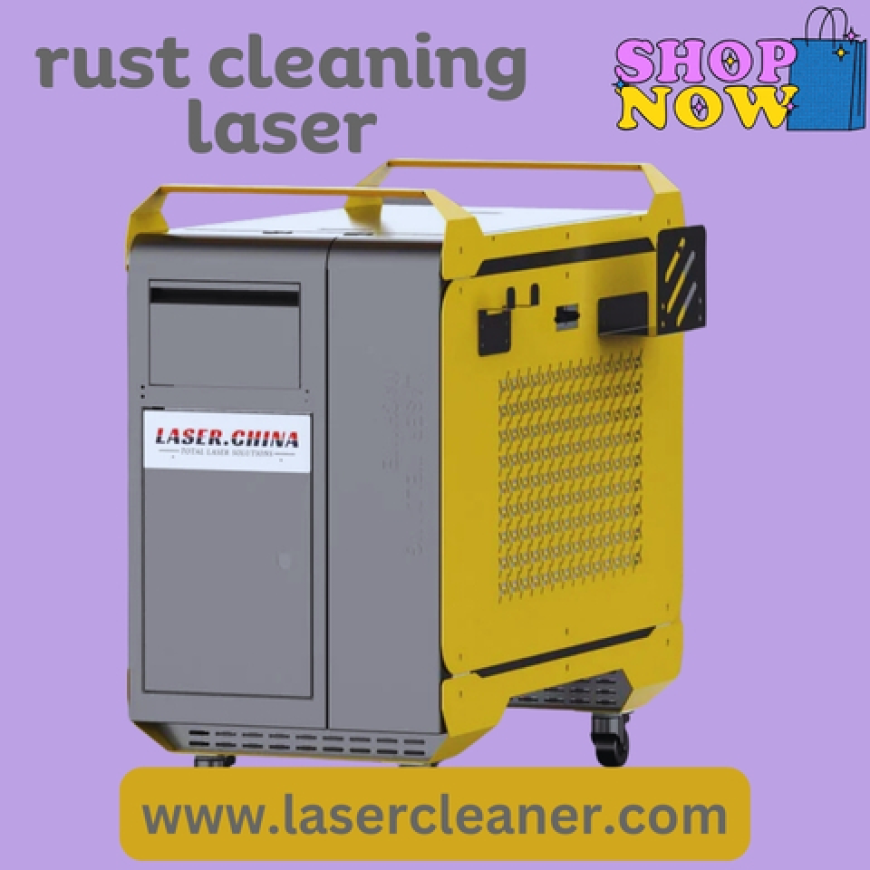
At first glance, the term “laser” might sound futuristic, almost theatrical, as if it belongs more in a sci-fi film than a workshop. However, the reality is that rust cleaning laser are not only practical—they’re revolutionizing how industries approach surface cleaning and maintenance.
Understanding the Rust Cleaning Laser
The rust cleaning laser operates using a highly focused beam of light. This laser is directed at the rusted surface, and when it hits the oxidized metal (rust), the beam generates enough heat to vaporize the corrosion without harming the underlying material. Unlike abrasive methods that scrape or chemically alter surfaces, this approach is contactless, controlled, and surprisingly precise.
This method of cleaning is referred to as laser ablation. It works by creating short bursts of intense energy that break the bond between the rust and the base material. Because the laser beam can be calibrated with exceptional precision, it becomes possible to remove rust from sensitive components without altering their physical integrity.
Why Traditional Methods Are Fading into the Background
For a long time, sandblasting and chemical solvents were standard rust removal practices. They are effective, no doubt—but they come with side effects: airborne particles, chemical exposure risks, environmental waste, and often irreversible wear to the base material. A sandblasted object can lose its precision and smoothness; chemically cleaned parts might require neutralizing treatments and safe waste disposal.
Enter the rust cleaning laser, a method that produces no physical contact, no secondary waste, and leaves behind only a clean, bare metal surface. What once took hours with harsh chemicals or powerful abrasives now happens swiftly and with surgical accuracy. There's no need for masking or secondary cleaning steps, and in many cases, the cleaned metal is ready for coating or painting almost immediately.
Precision Meets Power
One of the more remarkable aspects of the rust cleaning laser is its level of control. Operators can adjust the intensity, focus, and movement speed of the laser to match the rust's severity and the metal’s sensitivity. This makes it incredibly useful not only in industrial environments but also in the maintenance of delicate or intricate components—think aerospace parts, antique machinery, or cultural artifacts.
It’s not unusual to find rust cleaning lasers being used to restore sculptures, architectural fixtures, or valuable collectibles, where other methods would be too aggressive. In these cases, the laser isn’t just a tool—it’s a form of preservation.
A Tool for Industry and Innovation
Manufacturing facilities are adopting rust cleaning lasers for routine maintenance of their equipment and materials. Construction firms rely on them to clean rebar and steel beams before concrete pouring or welding. Automotive restoration shops use them to delicately strip rust from chassis components without damaging paint or original textures.
But perhaps the most interesting shift is in how small and mid-sized businesses are integrating rust cleaning lasers into their operations. Compact models with handheld capabilities are now available on the market, making this technology more accessible than ever before. Whether you’re a garage-based mechanic or a restoration hobbyist, it’s possible to bring this cutting-edge method right into your workspace.
Environmental and Safety Considerations
While we won’t dwell on benefits and features, it’s important to recognize how the rust cleaning laser quietly aligns with modern safety and sustainability standards. Since the process is dry and doesn’t require any consumables (like sand or chemicals), it generates minimal waste and significantly reduces the need for protective gear. It also minimizes downtime due to cleanup, which is critical in industrial workflows.
There’s no denying that safety is a key driver of innovation in the workspace, and laser-based rust removal meets that demand with a clean, controlled operation that minimizes risk to workers and the environment alike.
A Growing Market for Rust Cleaning Lasers
As awareness grows, so does demand. Manufacturers of rust cleaning lasers are responding by developing more affordable, portable, and user-friendly systems. You can now find models tailored for handheld use, robotic integration, and even automated conveyor-based systems. Businesses offering rust removal services are upgrading their technology to stay competitive, and buyers are increasingly asking vendors whether their rust removal solutions include laser technology.
This trend isn’t just a passing phase—it’s a fundamental shift in how rust is perceived and handled. The rust cleaning laser is not just another cleaning tool; it represents a modernization of maintenance itself.
The Future of Rust Removal
If you step into a high-tech automotive restoration workshop or a precision manufacturing plant today, chances are you’ll encounter a rust cleaning laser. And if you don’t see one yet, give it a few years—because the direction is clear. This isn’t about flashy technology or novelty; it’s about a better way to restore, maintain, and protect metal.
Soon, the question won’t be “Why use a laser?” but rather “Why are you still using anything else?” As more industries adopt this technology, prices continue to drop, and ease of use improves, the rust cleaning laser will become as commonplace as the power drill or the pressure washer.
Final Thoughts
The rust cleaning laser is more than just a tool; it’s a quiet revolution in the world of surface treatment and restoration. While it may not shout for attention, its impact is unmistakable. From fine-art preservation to heavy-duty industrial use, this method is rewriting the rules of rust removal. It offers unmatched precision, a clean process, and the promise of longer-lasting results.
If you're in the business of maintaining, restoring, or fabricating metal, the rust cleaning laser isn't just worth considering—it may soon become the standard by which all other methods are measured. Embracing it now means stepping into the future of clean, efficient, and responsible rust removal.
Would you like help choosing the right rust cleaning laser for your needs?