Predictive Analytics in ERP: The Next Competitive Advantage
Learn how predictive analytics is reshaping ERP systems for competitive edge. Discover how KanhaSoft integrates AI into custom ERP software.
 Kanhasoft
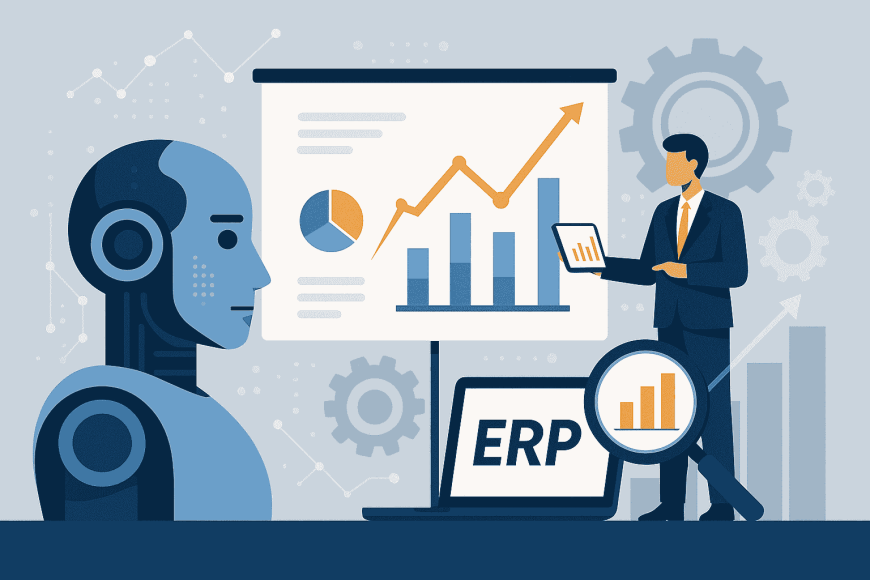
Let’s begin with a bold (yet data-backed) statement—your ERP system shouldn’t just record what’s happening. It should predict what’s coming. In 2025, we’re no longer playing checkers. Business is a 4D chessboard, and predictive analytics is that unexpected queen move that shifts the entire game in your favor.
At KanhaSoft, we’ve spent over a decade developing custom ERP solutions for businesses in logistics, healthcare, retail, and beyond—and one thing is abundantly clear: if your ERP system isn’t offering predictive capabilities, you’re leaving serious ROI on the table.
Now, before you worry that this post is heading into “corporate buzzword bingo” territory, relax. We’ve built enough real-world applications (and debugged enough 3 AM errors) to keep things practical. So grab a coffee, and let’s talk about how predictive analytics is changing the ERP game—and what you can build to win.
ERP: From Record Keeper to Revenue Whisperer
Once upon a time, ERP was glorified accounting software. It tracked what was sold, how much inventory was left, and whether Steve from Procurement ever filed that expense report (spoiler: he didn’t).
Today, modern ERP is a different beast. It’s integrated, it’s mobile-friendly, and when built right—it thinks ahead. Predictive analytics transforms ERP from a system of record to a system of anticipation.
Instead of what happened, it tells you what’s about to happen, why, and what you should do about it.
Think of it as the difference between a weather report that says “it rained yesterday” and one that says, “Take your umbrella tomorrow—you’re going to need it.”
So… What Exactly Is Predictive Analytics?
Glad you asked. In simple terms, it’s the art (and science) of using historical data, machine learning, and statistical models to forecast future outcomes.
In ERP systems, this could mean:
-
Forecasting sales based on seasonal trends
-
Predicting when a machine is likely to break down (and scheduling maintenance proactively)
-
Estimating customer churn before it actually happens
-
Identifying which suppliers are most likely to delay shipments (again...)
At KanhaSoft, we like to think of it as giving your ERP system a sixth sense—a business-savvy, coffee-fueled data brain that never sleeps.
Real-World Use Case: Predictive ERP in Logistics
Let’s get specific. One of our logistics clients came to us frustrated with delayed deliveries, mismanaged fleet resources, and chaotic warehouse workflows. Classic ERP helped them track shipments. But tracking wasn’t solving the core issues.
We integrated a predictive analytics layer that monitored vehicle usage, fuel consumption, historical delivery routes, and weather data. The result?
A system that could predict late deliveries before they happened and automatically reassign routes. It was like giving their dispatch manager a crystal ball (minus the incense).
But Wait—Isn’t This Just for Big Corporates with Big Budgets?
Short answer: nope.
Long answer: technology has leveled the playing field. Thanks to cloud infrastructure, open-source ML libraries, and cost-efficient custom ERP development, even mid-sized businesses can now bake predictive insights into their systems without breaking the bank.
(And yes, we’ve done this for companies that started with Excel sheets and post-it notes. No judgment. We’ve all been there.)
The KanhaSoft Way: How We Build Predictive ERP Modules
Let’s pull back the curtain a little. Our typical build process involves:
-
Data Audit – We dig into your existing ERP data like forensic analysts looking for hidden gold.
-
Model Building – We use frameworks like TensorFlow and scikit-learn to build machine learning models tailored to your business logic.
-
Integration – We plug the models directly into your ERP system—no extra dashboards, no Frankenstein UX.
-
Continuous Learning – Models improve with time. We set them up to learn and adapt from new data like overachieving interns.
Whether you’re in manufacturing, healthcare, eCommerce, or real estate, our approach remains rooted in solving real business problems—not just flexing AI muscle for vanity metrics.
Curious? You can read more about our work in AI/ML development.
Why Predictive Analytics Will Become Table Stakes
Imagine competing with a company that always seems one step ahead. Their stock levels are optimized. Their customer retention rates are through the roof. Their operational hiccups? Rare.
That’s not luck—it’s analytics.
In a world drowning in data, the businesses that win are the ones who use it. Predictive ERP will shift from being a “nice-to-have” to a “how-are-you-surviving-without-it?” feature.
And if your competitors are using it before you do… well, that’s like bringing a knife to a lightsaber fight.
A Personal Observation (Because We’re Not Just Robots)
One of our developers once asked, “Do you ever feel like the ERP is smarter than we are?”
We laughed. Nervously.
But the truth is, a well-architected ERP with predictive intelligence really does feel like it knows things you don’t. It quietly suggests reorder quantities, flags anomalies, and—on at least one spooky occasion—predicted a surge in customer support tickets before they came flooding in.
No black magic. Just clean data, sharp models, and smart engineering.
Final Thoughts
If you're still relying on reactive reports and historical insights, it's time for a mindset shift. Predictive analytics is not a futuristic buzzword—it’s the present tense of competitive advantage.
And if you’re worried about complexity, budget, or integration headaches—breathe. That’s where we come in. We specialize in building clean, intuitive, and genuinely useful ERP systems that think ahead so your business can, too.
At KanhaSoft, we like to say: Build smart, build lean, and let your ERP do the worrying.
Ready to turn your ERP into a future-telling powerhouse? Let’s talk.