Paithani Saree: Heritage Weave with Royal Motifs
 houseofhind
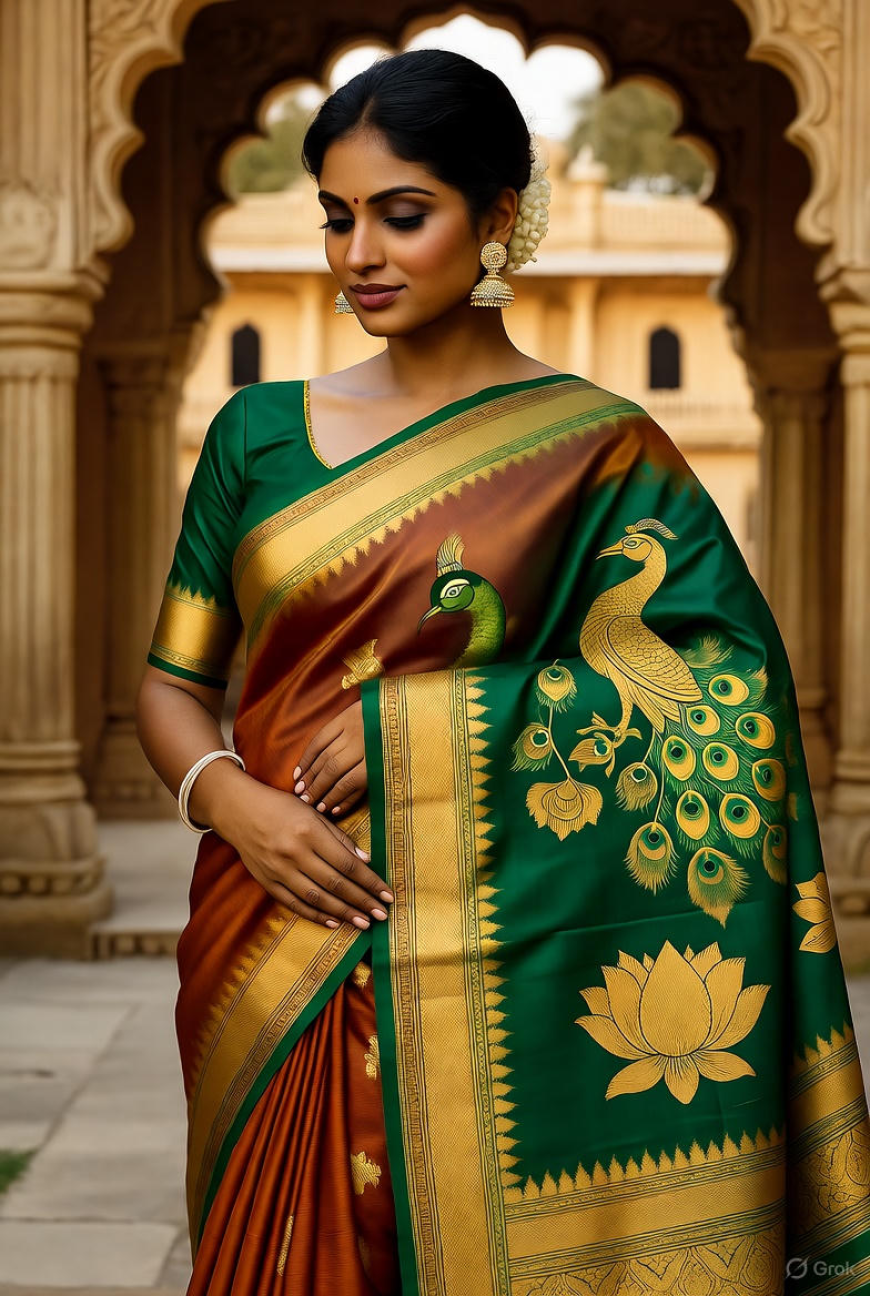
When we talk about Indian silk sarees that combine opulence, craftsmanship, and heritage, the Paithani saree immediately comes to mind. Originating from Maharashtra, Paithani is more than just fabric—it’s a living tradition, an art form, and a cultural emblem. In this post, we’ll explore the history, motifs, craftsmanship, market trends, and tips you need if you want to buy Paithani saree online, especially from known names like House of Hind. Whether you’re buying one for a festive season, wedding, or just to treasure, this guide will help you appreciate and choose the perfect Paithani.
1. What is a Paithani Saree?
A Paithani saree is a handwoven silk sari traditionally made in Paithan (in the Aurangabad district), Maharashtra. It is known for its rich silk, intricate zari work (gold or silver thread), and highly artistic pallu (the decorative loose end) and borders featuring motifs inspired by nature and royal imagery. What makes it special is not just the silk or the shine, but the weave, the motifs, and the way every element comes together: style, symbolism, and craftsmanship.
2. History and Origin
-
Ancient Roots: The Paithani weave is believed to be more than 2,000 years old, with its beginnings traced back to the Satavahana dynasty. Over centuries, it evolved through royal patronage—especially during the Peshwa period—with enhancements in weaving, color, motifs, and silk quality.
-
Cultural Significance: Paithani sarees were once the mark of royalty and elite families in Maharashtra. They were worn during grand ceremonies, marriages, and religious festivals. Even today, in many Maharashtrian weddings, owning a Paithani is considered essential, sometimes being passed down as an heirloom.
-
Geographical Influence: The small town of Paithan, with its traditional weaver community, remains the center. Techniques, motifs, color palettes, are deeply influenced by local aesthetics, flora and fauna, mythologies, and royal tastes.
3. Royal Motifs & Designs
One of the most fascinating aspects of Paithani sarees are the motifs—royal, natural, symbolic. They tell stories.
| Motif | Meaning / Significance | Where Often Seen |
|---|---|---|
| Peacock (Mor) | Symbolises beauty, grace, royalty. Very common in pallu and borders. | Pallu, border edges, body buttis |
| Lotus | Purity, revival, spiritual elevation | Along borders, pallu, Sometimes butti work |
| Parrots / Muniya | Vibrant life, companionship, often seen as friendly birds of nature | Borders (especially “Muniya border”) |
| Asawalli / Creeper vines | Nature, growth, continuity | Backgrounds, body of saree |
| Geometric patterns (diamonds, zigzags) | Balance, symmetry, regal precision | Borders, pallu separators |
| Hans (Swan) | Elegance, calmness, artistic purity | Less frequent but seen in premium Paithanis |
| Other royal elements | Elephants, hunting scene motifs, Mughal influences—these add grandeur | Premium/heritage pieces |
These motifs are not printed—they are woven, often in zari (metallic threads) or coloured silk, which adds to their richness and depth.
4. Materials, Weave & Craftsmanship
Understanding what goes into a Paithani helps appreciate the time, work, and hence cost.
-
Silk Quality: Pure handwoven silk—origins might be Bangalore silk, or other silks, depending on quality. The silk used for warp and weft is fine, smooth, and lustrous.
-
Zari Work: Traditional Paithani uses real zari (gold or silver threads). These metallic threads are woven in for motifs, borders, and highlights. The more zari, the richer the saree, and the higher the price.
-
Weaving Technique: The body, the border, the pallu—all woven with different techniques. The pallu is usually heavier, with more intricate zari and densely placed motifs. The borders too may have complex weaving (double brocade, etc.). Some Paithani sarees take months to over a year to finish, depending on complexity.
-
Handloom vs Semi-Mechanised: Authentic Paithani are handloom. Any machine work or mass production may reduce authenticity, detail, and lifespan. Hand weaving gives the saree its character—slight irregularities, richness, depth.
-
Length & Weight: A typical saree is 6 yards (approx 5.5 metres) including blouse piece. Heavier zari work, thicker silk, longer border, dense motifs add weight.
5. Current Styles & Innovations
Paithani weaving tradition is old, but weavers and designers are innovating:
-
Colour Modernisation: Alongside traditional bright colours (rich greens, maroons, golds), there are softer pastels, dual-tone weaves, experimenting with color fade, contrast borders.
-
Motif Fusion: Mixing traditional motifs with modern or regional designs. E.g., Peacocks + geometric abstract, or nature + minimal motifs.
-
Border Styles: Larger borders, contrast border colours, different motifs on body vs border vs pallu.
-
Fabric mixes (in less premium ones): Silk blends, lighter silks. But for true heritage Paithani, pure silk & zari remain standard.
-
Digital Prints / Imitation Paithani: For budget-conscious buyers, digital prints mimicking Paithani motifs exist—but they do not carry the craftsmanship and value of genuine Paithani.
6. Paithani Saree Price: What Determines It
Considering how much labour, material, and artistry go in, prices vary widely. Some key factors that determine Paithani saree price:
| Factor | Effect on Price |
|---|---|
| Zari amount & quality | Real gold/silver zari hikes price more than imitation threads. |
| Motif complexity | More motifs, detailed designs cost more. |
| Silk grade & dye quality | Better silk and colour fastness raise the cost. |
| Weave time | If it takes several months/weeks, the labour cost accumulates. |
| Brand / Artisans | More established brands or famous weavers charge premium. |
| Authenticity | Authentic handwoven Paithani fetched at higher price. Reproductions, blends, prints cost less but aren’t “heritage” level. |
| Demand and rarity | Rare colour combinations, vintage motifs, heritage styles cost more. |
To give ballpark figures (these are illustrative, subject to market fluctuations):
-
A basic Paithani with minimal zari and simpler motifs might start in a mid-thousands INR range (₹15,000-₹30,000 or more).
-
Premium, heavy zari, complex motifs, pure silk Paithani can range much higher (₹50,000-₹1,00,000+ or more).
-
Heritage, antique, or specially commissioned pieces may go even above that.
7. How to Buy Paithani Saree Online: Smart Tips
To buy Paithani saree online and get value, authenticity, and satisfaction, here are tips:
-
Check the seller’s credibility: Look for brands / platforms that are known for Paithani or handloom sarees. Read reviews, look for proof of craftsmanship.
-
Material Details: Ensure they mention silk type, percentage, zari (whether real or synthetic), finish, weight. Genuine ones declare “pure silk hand woven”, “real zari”.
-
Close-up Images: Zoom in on motifs, borders, pallu. In real Paithani, woven motifs will show subtle irregularities, depth, not like flat prints.
-
Motif & Design Description: Ask what motifs are used—peacock (mor), lotus, etc. Also boundary designs, pallu style.
-
Price vs Value: If price is very very low, check whether it's imitation, printed or synthetic blend. Very cheap ones usually compromise on material or workmanship.
-
Return / Exchange Policy: Since silk & zari are delicate, check whether seller accepts returns if you find defects.
-
Shipping and Packaging: Silk should be carefully packed (muslin or soft cloth), shipped to avoid moisture/damage.
-
Authenticity Mark / Branding: Some real Paithani have Silk Mark, artisan tags, or weaver signatures.
-
Buy paithani saree online at trusted names like House of Hind: If you are considering Buy paithani saree online at House of Hind, check their product descriptions, customer photos, and see if they ship safely, etc.
8. Caring for Your Paithani
Buying is just the first step – preserving the beauty is equally important.
-
Always dry clean, especially first few times. If hand-washing, use mild detergent, cold water, gently handle. Avoid wringing.
-
Store in muslin cloth or breathable cotton. Avoid plastic covers. Do not hang for long, as weight of zari can pull.
-
Air occasionally: keep it out of folds to avoid creases, moths, or moisture.
-
Avoid direct sunlight exposure for long durations—it can fade colours and dull the zari shine.
-
For zari, occasionally polish/dust gently. Keep away from perfumes / sprays directly that may tarnish zari.
9. Why House of Hind Is a Good Choice
Since you specifically are interested in Buy Paithani saree online at House of Hind, here’s what such a seller is likely to offer/what to check:
-
Specialization: They may specialize in Paithani or heritage weaves, which means better craftsmanship, attention to detail.
-
Authenticity: Sellers with heritage focus often ensure the weaves are hand-woven, with real zari and high-quality silk.
-
Variety with motifs: You may find a good range of royal motifs—peacocks, parrots, lotus, elaborate borders — which is important when choosing Paithani.
-
Transparent pricing: A good seller should explain why a saree is priced a certain way (how much zari, how long woven, silk quality, brand margin). This helps in understanding Paithani saree price.
-
Customer support and trust: Since buying online requires trust—return policies, delivery assurance, images, etc.—a reliable store like House of Hind would likely provide better service.
10. Conclusion
The Paithani saree is not just a garment. It’s centuries of art, heritage, royalty, and skill woven together in silk and zari. When you wear one, you carry with you stories—of weavers, of motifs from nature, of royal courts, of religious festivals, of craftsmanship passed from generation to generation.
If you plan to buy Paithani saree online, remember to balance authenticity, craftsmanship, price, and trust. Whether it’s your first Paithani, or you’re adding a heritage piece, or buying at House of Hind, let it be something you treasure.
May your Paithani give you both elegance and a deep connection with tradition.
FAQs
Below are some questions readers often have. You can include these as part of your blog:
-
What is the average Paithani saree price?
The price depends on silk quality, amount of zari, motif detail, weave time. A simpler Paithani might cost a few tens of thousands of rupees, while premium or heritage weaves can cost much more. -
How can I verify the authenticity of a Paithani saree?
Look for hand-woven motifs, real zari (gold/silver threads), weight (zari and silk add heft), no printed motifs, proper documentation/certificates if possible, close-up images, credible seller. -
Is it safe to buy Paithani saree online?
Yes, if you take precautions: buy from trusted brands, read reviews, check return policy, inspect photos, ask for videos or zooms especially on motifs and weave. -
What motifs are considered royal in a Paithani saree?
Peacock (mor), parrot (muniya), lotus, swans (hans), geometric patterns, crests, elephant or nature-inspired motifs are considered royal and traditional. -
How to style a Paithani saree for modern occasions?
Pair with minimal jewellery if the saree is heavily embellished. Contrast blouse colour can add pop. Modern draping (belted, pre-pleated) or mixing with jackets/modern blouse styles works. Let the pallu show motifs.