Light and Dark Pigmentation Spots - Dermpro
Understand the causes of light and dark pigmentation spots. Discover advanced dermatological treatments and learn how to track skin changes in this 2026 guide.
 expresslimo
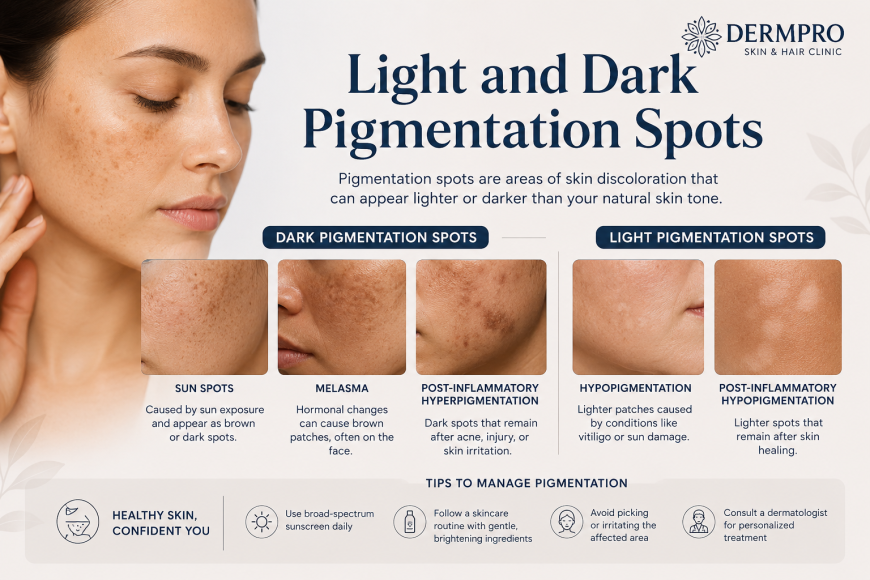
When you look in the mirror, your skin tells a story of your genetics, your age, and your time spent under the harsh Australian sun. Over time, many people notice variations in their skin tone, appearing as either lighter patches or darker blemishes. These shifts in skin color are broadly categorized as pigmentation anomalies.
While some spots are harmless cosmetic concerns, others can be early indicators of underlying cellular damage or skin cancer. Understanding the distinct differences between light and dark spots is the first step toward achieving a healthy, even complexion and protecting your long-term dermatological health.
In this clinical guide, we will break down the biological mechanisms behind both forms of discoloration, explore modern dermatological interventions, and share how to systematically monitor your skin for peace of mind.
Defining Skin Pigmentation: How It Works?
Skin pigmentation refers to the coloration of the skin, which is determined by a specialized pigment called melanin. Melanin is produced by dendritic cells located in the basal layer of the epidermis known as melanocytes.
The primary biological function of melanin is to act as a natural shield, absorbing harmful ultraviolet (UV) radiation from the sun to protect the DNA inside your skin cells from mutating. When melanocytes function normally, skin tone remains uniform. However, when these cells become damaged, inflamed, or overstimulated, two primary pigment irregularities can develop:
-
Hyperpigmentation (Dark Spots): Occurs when melanocytes produce an absolute excess of melanin, leading to localized areas of darkened skin.
-
Hypopigmentation (Light Spots): Occurs when melanocytes are depleted, damaged, or under-produce melanin, resulting in pale or entirely white patches of skin.
Dark Pigmentation Spots: Causes and Characteristics
Dark spots are exceptionally common in Australia due to high levels of ambient UV radiation. They occur when specific areas of the skin enter an overproduction state.
1. Solar Lentigines (Sun Spots and Age Spots)
Solar lentigines are flat, brown, or black spots that appear on areas of the body frequently exposed to the sun, such as the face, hands, shoulders, and forearms. They are direct evidence of cumulative UV exposure and signify that the underlying skin cells have undergone oxidative stress.
2. Melasma
Often triggered by hormonal fluctuations, melasma presents as symmetrical, patch-like brown discoloration, typically across the cheeks, forehead, bridge of the nose, and upper lip. It is heavily influenced by estrogen and progesterone, earning it the nickname "the mask of pregnancy," and it can be exacerbated by heat and sun exposure.
3. Post-Inflammatory Hyperpigmentation (PIH)
When the skin suffers an injury or inflammation such as from acne, eczema, bug bites, or aggressive cosmetic treatments it heals by producing excess melanin. This leaves behind a flat pink, red, or brown mark long after the original injury has resolved.
4. Malignant Lesions (Melanoma Risk)
Crucially, not all dark spots are benign. A dark, irregular, or changing spot can be a sign of melanoma, a life-threatening form of skin cancer. Differentiating a harmless sun spot from an atypical mole requires professional clinical scrutiny.
Light Pigmentation Spots: Causes and Characteristics
Light spots occur when melanin production drops or ceases entirely. They require a completely different diagnostic approach than dark spots.
1. Tinea Versicolor
This is a common, superficial fungal infection of the skin caused by an overgrowth of natural yeast (Malassezia). The yeast produces azelaic acid, which temporarily blocks normal melanin production, leaving behind pale, flaky spots on the back, chest, and upper arms particularly during humid summer months.
2. Idiopathic Guttate Hypomelanosis (IGH)
Often referred to as "reverse freckles," IGH presents as small, smooth, porcelain-white dots, typically 1 to 3 mm in size, appearing predominantly on the shins and forearms. Like sun spots, they are a result of long-term UV damage, but instead of overstimulating cells, the sun has completely worn out the local melanocytes.
3. Vitiligo
Vitiligo is an autoimmune condition where the body’s immune system mistakenly attacks and destroys its own melanocytes. This results in stark, sharply defined white patches that can grow progressively larger over time, often appearing symmetrically across both sides of the body.
4. Post-Inflammatory Hypopigmentation
Similar to PIH, some skin injuries or severe burns heal by losing pigment altogether. The skin in that specific zone looks pale, shiny, or scarred because the melanocytes were destroyed during the initial trauma.
Advanced Dermatological Treatments for Pigmentation
Modern clinical dermatology offers excellent targeted therapies to help balance melanin levels and restore an even skin tone.
-
Topical Tyrosinase Inhibitors: Prescription-strength topicals containing hydroquinone, kojic acid, retinoids, or azelaic acid work by blocking tyrosinase the vital enzyme melanocytes need to manufacture dark pigment.
-
Medical Chemical Peels: Advanced peels utilize glycolic, salicylic, or trichloroacetic (TCA) acids to accelerate cellular turnover, shedding the heavily pigmented outer layers of the epidermis to reveal clearer skin beneath.
-
Laser and Intense Pulsed Light (IPL) Therapy: Q-switched lasers and fractional lasers precisely target melanin clusters within dark spots, shattering the pigment particles so the body’s lymphatic system can naturally flush them away.
-
Targeted Antifungals or Immunomodulators: For light spots caused by tinea versicolor, anti-fungal washes quickly clear the yeast. For autoimmune vitiligo, specialized prescription corticosteroid ointments or phototherapy can encourage repigmentation.
Pros and Cons of Common Treatment Options
|
Treatment Modality |
Pros |
Cons / Challenges |
|
Topical Cosmeceuticals |
Non-invasive; easily integrated into a home routine; cost-effective over time. |
Requires months of daily consistency; can cause localized redness or irritation. |
|
Clinical Chemical Peels |
Quick treatment times; improves overall skin texture alongside fading discoloration. |
Can cause temporary flaking, peeling, and increased sun sensitivity for several days. |
|
Laser & IPL Systems |
Highly targeted; rapidly fades deep or stubborn dark sun spots. |
High upfront cost per session; risk of causing rebound hyperpigmentation if post-care isn't strictly followed. |
Frequently Asked Questions
Can a light spot turn into skin cancer?
Purely hypopigmented conditions like vitiligo or IGH themselves do not turn into cancer. However, because those white patches lack protective melanin, they are exceptionally vulnerable to sunburn and deep DNA damage from UV radiation. You must apply a broad-spectrum SPF 50+ to these areas diligently.
Why do my dark spots get worse in the summer even if I wear a hat?
Melanocytes are incredibly sensitive. Not only does ambient UV light bypass hats by reflecting off concrete, water, and sand, but simple heat can also trigger melasma and hyperpigmentation flare-ups by stimulating blood vessels, which in turn signals melanocytes to produce more pigment.
How do I know if a dark spot is an age spot or a dangerous melanoma?
You cannot reliably tell the difference with the naked eye. Dermatologists use the ABCDE rule (Asymmetry, Border irregularity, Color variation, Diameter over 6mm, and Evolving/changing) alongside specialized dermatoscope tools to rule out malignancy. If a spot is changing, bleeding, or itching, it needs immediate professional evaluation.
Is post-inflammatory pigmentation permanent?
Fortunately, most post-inflammatory marks are not permanent. Hyperpigmentation (dark marks) will usually fade naturally over 3 to 12 months, though clinical treatments can speed up this timeline. True hypopigmentation (loss of pigment from a deep scar) can be more stubborn and sometimes permanent if the melanocytes were entirely destroyed.
Conclusion
Whether you are dealing with stubborn melasma, mysterious pale patches, or sun spots that have accumulated over the years, variations in your skin pigmentation deserve careful attention. Protecting your skin from further UV damage with daily broad-spectrum sun protection is the foundational baseline for any recovery plan.