Laser Trackers for Heavy Machinery Assembly: A Practical Overview
Discover how laser trackers improve accuracy and efficiency in heavy machinery assembly. Learn their benefits, applications, and best practices for precision alignment.
 eliannadaniel
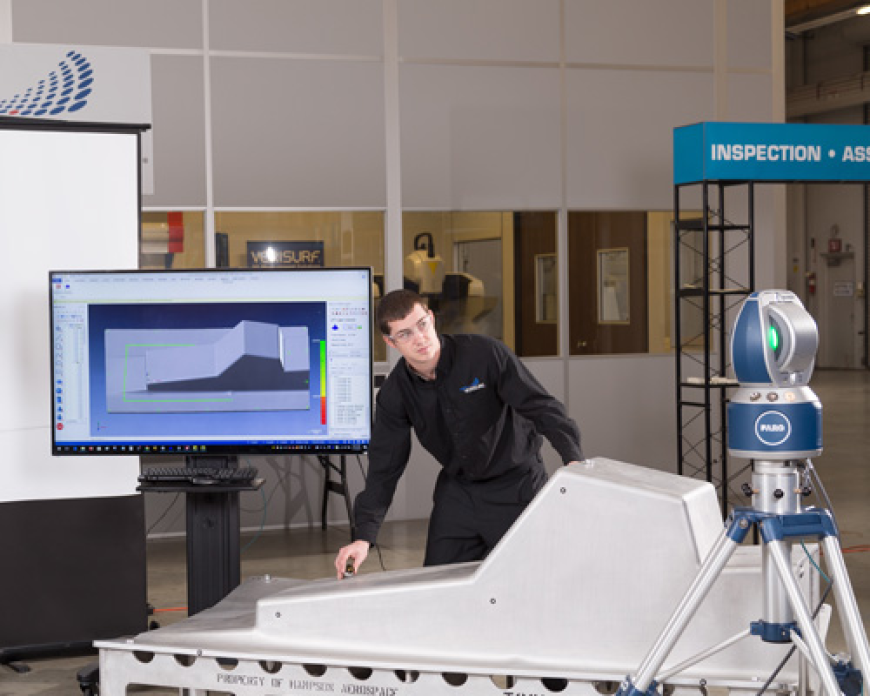
In the world of heavy machinery manufacturing and assembly, precision is everything. When you’re dealing with large-scale components — from turbines and engines to cranes and excavators — even the slightest misalignment can lead to major performance issues or costly rework. That’s where laser trackers come in. These high-precision measurement tools have revolutionized the way manufacturers assemble and inspect heavy machinery. For companies seeking accuracy, efficiency, and reliability in their assembly process, investing in Laser Trackers is a game-changer.
What Are Laser Trackers?
A laser tracker is a portable, high-accuracy coordinate measuring system that uses a laser beam to measure large objects with incredible precision. Unlike traditional measuring tools, which can be limited by distance or size, laser trackers provide three-dimensional data points over vast ranges — often up to 80 meters or more.
In simple terms, laser trackers help manufacturers measure, align, and position large components quickly and accurately, ensuring every part fits perfectly during the assembly process.
Why Accuracy Matters in Heavy Machinery Assembly
Heavy machinery components are massive, intricate, and extremely costly. A single misalignment during assembly can result in vibrations, inefficiencies, or mechanical failure down the line. Precision is critical — not just for performance but also for safety and longevity.
Traditional alignment methods like tape measures, plumb lines, or manual gauges simply don’t cut it for today’s precision requirements. Laser trackers eliminate these limitations by providing real-time, three-dimensional data, allowing engineers to verify measurements instantly.
How Laser Trackers Work
Laser trackers operate using a combination of laser beams, sensors, and reflective targets known as SMRs (Spherically Mounted Retroreflectors). Here’s a quick breakdown of the process:
-
The tracker emits a laser beam that reflects off the SMR.
-
The device calculates the exact distance, angle, and position of the reflector in three-dimensional space.
-
The system continuously tracks the reflector’s movement, allowing engineers to capture precise coordinates as parts are positioned or adjusted.
This technology enables measurements with an accuracy of up to microns, even over large distances — ideal for heavy machinery applications.
Applications of Laser Trackers in Heavy Machinery Assembly
Laser trackers are used across multiple stages of the heavy machinery manufacturing and assembly process.
1. Component Alignment
During assembly, aligning large components such as engine housings, gearboxes, or shafts requires extreme precision. Laser trackers allow teams to align these parts within micrometers of accuracy, ensuring optimal performance and minimal wear.
2. Jig and Fixture Calibration
Fixtures and jigs play a vital role in holding components during assembly. Laser trackers can verify and calibrate these tools to ensure they’re perfectly aligned before production begins.
3. Quality Inspection
Laser trackers are used for both in-process and final inspection. Engineers can verify that assembled machinery meets exact dimensional tolerances, identifying any deviations before the equipment leaves the factory floor.
4. Reverse Engineering
When legacy machinery lacks CAD data, laser trackers can capture precise 3D measurements to recreate digital models, enabling redesigns or part replacements.
5. On-Site Maintenance
Portable and versatile, laser trackers are often used in the field to inspect, align, or repair large machinery without dismantling entire systems.
Benefits of Using Laser Trackers in Assembly
1. Exceptional Precision
Laser trackers can measure to an accuracy of up to ±0.025mm, making them ideal for industries that demand high tolerances.
2. Time Efficiency
Manual measuring methods can take hours or even days to complete. Laser trackers drastically reduce setup and alignment time, increasing productivity.
3. Cost Reduction
By minimizing rework, scrap, and downtime, laser trackers save manufacturers significant costs over time.
4. Versatility
These systems can be used across a wide range of applications — from manufacturing and inspection to calibration and maintenance — all with one device.
5. Enhanced Quality Control
Laser trackers provide consistent, traceable measurements, improving overall product quality and helping companies meet strict regulatory standards.
Industries That Benefit from Laser Tracker Technology
While laser trackers are invaluable in heavy machinery assembly, they’re also used across various industries where precision is essential, such as:
-
Aerospace manufacturing – for aligning wings, fuselages, and engine components.
-
Automotive production – for frame and chassis alignment.
-
Energy and power generation – for turbine and generator assembly.
-
Shipbuilding and marine engineering – for large hull and propulsion system alignment.
-
Construction and civil engineering – for structural steel and plant equipment installation.
Companies that integrate laser tracker services into their production workflows enjoy improved accuracy, faster assembly, and fewer quality issues.
How Laser Trackers Improve Assembly Efficiency
Real-Time Feedback
Laser trackers provide live feedback, allowing teams to make adjustments instantly during assembly. This reduces the need for repeated measurements or trial-and-error alignment.
Digital Integration
Most modern laser trackers integrate seamlessly with CAD software, enabling direct comparison between measured data and 3D models. Engineers can visualize deviations in real-time, ensuring every component aligns with design specifications.
Simplified Workflow
By replacing multiple tools and manual measurements, laser trackers streamline operations. Teams can complete complex setups and alignments with minimal effort and training.
Remote Measurement Capabilities
Some systems allow remote operation, which means measurements can be taken from a distance or in challenging environments without compromising accuracy.
Challenges and Considerations
While laser trackers offer numerous benefits, successful implementation depends on proper training and setup.
-
Environmental Conditions: Temperature, vibration, and air quality can affect measurement accuracy.
-
Operator Skill: Proper use requires training and understanding of geometric alignment principles.
-
Calibration: Regular calibration ensures optimal performance and traceable results.
Choosing the right partner for laser tracker services can make a significant difference in ensuring accuracy and efficiency.
Choosing the Right Laser Tracker Service Provider
When selecting a service provider for laser trackers, look for experience, technology, and industry expertise. Reliable providers offer:
-
State-of-the-art laser tracker systems from trusted brands like FARO, Leica, or API.
-
Skilled engineers trained in metrology and geometric alignment.
-
On-site and in-house measurement services.
-
Integration with CAD/CAM and quality management software.
Companies like Expert Technologies Group Laser Trackers provide comprehensive solutions tailored for heavy machinery assembly and inspection, ensuring precision and reliability at every stage.
Future Trends in Laser Tracker Technology
Laser tracker technology continues to evolve, offering manufacturers new possibilities for accuracy and automation. Emerging trends include:
-
Wireless Systems: Reducing setup complexity and increasing mobility.
-
AI and Machine Learning Integration: Predictive alignment and error correction.
-
Automated Measurement Routines: Enabling fully autonomous inspection and calibration.
-
Improved Portability: Lighter, more compact designs for field applications.
As these advancements continue, laser trackers will become even more essential for high-precision industries.
Conclusion: Precision That Drives Performance
In heavy machinery assembly, precision isn’t optional — it’s essential. Laser trackers have become a cornerstone of modern manufacturing, providing unmatched accuracy, efficiency, and reliability. From initial alignment to final inspection, these systems help ensure every component fits flawlessly, reducing downtime and maximizing performance.
If you’re looking to enhance your assembly process and achieve next-level precision, investing in laser tracker technology is the way forward. Explore expert solutions with Laser Trackers to experience the future of accuracy and efficiency in heavy machinery assembly.