
Importance of VHF Communication for Flight Safety
Learn why VHF communication is vital for flight safety, from ATC to emergencies. See its role in advanced hubs like those in Qatar.
 kubricks
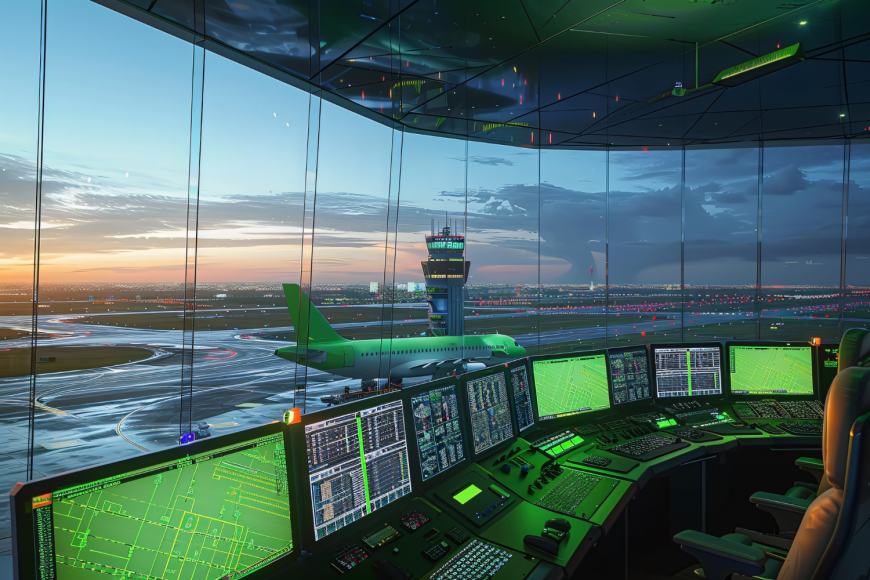
In modern aviation, safety is not an accident. It is the result of layers of technology, rigorous procedures, and, most importantly, clear communication. While aircraft are filled with advanced navigation systems and digital data links, the most critical tool for ensuring safety in the sky remains the human voice, transmitted over a Very High Frequency (VHF) radio.
This technology is the bedrock of air traffic management, providing a direct, real-time link between pilots and the controllers who guide them. For decades, it has been the primary means of maintaining order in the skies, preventing collisions, and managing emergencies.
This article will explore the immense importance of VHF in Aviation for flight safety. We will examine how this reliable technology underpins pilot-controller coordination, how it functions in emergency scenarios, and how its robust implementation, as seen in the field of Airport engineering Qatar, is essential for managing some of the world's most complex airspaces.
The Unambiguous Voice: How VHF Prevents Chaos
The core function of VHF communication is to allow pilots and air traffic controllers to talk to each other clearly and instantly. This constant dialogue is what turns a sky full of independent aircraft into a coordinated and safe transportation system.
The Backbone of Air Traffic Control (ATC)
The entire air traffic control system is built upon the principle of voice communication. Controllers use VHF radio to issue clearances, instructions, and advisories that maintain safe separation between aircraft.
- Tactical Instructions: VHF allows for immediate "tactical" commands. If two aircraft are on a potential collision course, a controller can instantly issue a heading change or an altitude adjustment. A text-based data link would introduce a delay that could be catastrophic in time-critical situations.
- Standard Phraseology: To eliminate misunderstandings, aviation uses a universal language of standardized phrases. This ensures that a pilot from any country can understand instructions from a controller anywhere in the world. Phrases like "cleared for takeoff," "maintain flight level three-five-zero," and "descend and maintain" have precise, unambiguous meanings.
- The Human Element: Voice communication conveys tone and urgency in a way that data cannot. A controller can communicate a sense of priority with their voice, and a pilot can signal distress or uncertainty. This human element is a crucial, unwritten layer of safety.
Preventing Runway Incursions
Some of the most dangerous moments in aviation occur on the ground. A runway incursion—the unauthorized presence of an aircraft, vehicle, or person on a runway—can lead to high-speed collisions. Clear and concise VHF communication between the ground controller, tower controller, and pilots is the primary defense against these incidents. Instructions to "hold short of runway," "line up and wait," or "cleared to cross" are vital commands that keep ground traffic organized and away from active runways.
A Lifeline in an Emergency
When things go wrong in the air, VHF communication becomes an indispensable lifeline. It allows pilots to declare an emergency, seek assistance, and coordinate a safe resolution with controllers on the ground.
The Guard Frequency: 121.5 MHz
Every aircraft continuously monitors the international emergency frequency, 121.5 MHz, often called "Guard." This channel is reserved exclusively for distress calls.
- Mayday Calls: A pilot facing a life-threatening situation will make a "Mayday" call on the current ATC frequency or on 121.5 MHz. This immediately alerts all nearby aircraft and ground stations to the emergency, clearing the frequency for the distressed aircraft.
- Locating Lost Aircraft: If a pilot becomes disoriented or "lost," they can transmit on 121.5 MHz. ATC can use direction-finding equipment to lock onto the transmission and guide the pilot back to safety. Emergency Locator Transmitters (ELTs) on aircraft also automatically broadcast on this frequency after a crash, aiding search and rescue teams.
Coordinated Emergency Response
Once an emergency is declared, VHF is used to coordinate the response. Controllers clear airspace around the affected aircraft, guide it to the nearest suitable airport, and alert emergency services on the ground, such as fire and rescue teams. The pilot can use the radio to communicate the nature of the problem, the number of people on board, and any special assistance required. This flow of information is critical for preparing a safe landing and effective ground response.
Engineering Safety: VHF Infrastructure in Qatar
While the principles of VHF are universal, its effectiveness depends heavily on the quality of the underlying infrastructure. In a region with rapidly growing air traffic, ensuring flawless communication is a monumental engineering task. The field of Airport engineering Qatar serves as a case study in how to build a communications network designed for maximum safety and reliability.
Hamad International Airport (HIA) in Doha is one of the busiest crossroads of international travel. The airspace is congested, and the operational tempo is high. For engineers in Qatar, this means the VHF system must be robust, redundant, and completely free of gaps.
Ensuring 100% Coverage
A lost signal, even for a moment, can compromise safety. Airport engineering Qatar places immense focus on designing for total radio coverage.
- Strategic Antenna Placement: Engineers use sophisticated 3D modeling to predict how radio waves will travel across the airport and surrounding terrain. They place main and backup antennas in optimal locations to eliminate any "dead spots" on the aprons or taxiways where buildings might block signals.
- Remote Transmitter/Receiver Sites: To cover the vast expanse of the Persian Gulf, remote radio sites are built and linked back to the main ATC center. This ensures that controllers in Doha can maintain clear, line-of-sight communication with aircraft that are hundreds of miles away but still under their control.
Building in Redundancy
The mantra of aviation safety is "always have a backup." The VHF communication system engineered for Qatar’s airports has multiple layers of redundancy.
- Hot Standby Systems: For every active radio transmitter and receiver, there is an identical "hot standby" unit. If the primary unit fails, the system automatically switches to the backup in milliseconds, with no interruption in service.
- Uninterruptible Power: The entire communications network is supported by massive uninterruptible power supplies (UPS) and on-site generators. This guarantees that ATC can continue to talk to pilots even during a complete city-wide power failure. This level of resilience is a cornerstone of safe airport design.
Integration with Advanced Safety Nets
Modern air traffic control towers, like the one at HIA, integrate VHF systems with other safety technologies. For example, the Advanced Surface Movement Guidance and Control System (A-SMGCS) uses radar and GPS to track all aircraft and vehicles on the ground. If the system detects a potential runway incursion, it can trigger an audible alarm in the control tower. The controller can then use the VHF radio to issue an immediate stop instruction to the pilot, averting a potential disaster.
Conclusion
The importance of VHF in Aviation for flight safety cannot be overstated. It is the invisible nervous system of the aviation world, connecting thousands of individual pilots and controllers into a single, cohesive unit. Its simplicity, reliability, and immediacy make it the ultimate tool for tactical control and emergency management.
While digital technologies will continue to enhance aviation, they are designed to supplement, not replace, the fundamental safety net provided by voice communication. As demonstrated by the meticulous work of Airport engineering Qatar, building a world-class aviation hub requires investing in a flawless and resilient VHF infrastructure. In the sky, where there is no room for error, the ability to have a clear and immediate conversation is, and will remain, the most vital safety feature of all.