ICO vs IDO vs IEO: Which Fundraising Model Is Best?
ICO vs IDO vs IEO: Discover key differences between blockchain fundraising models, their benefits, risks, and which is best for your crypto project success. Learn how an ICO Development company helps build secure and scalable token launch solutions.
 henryjames
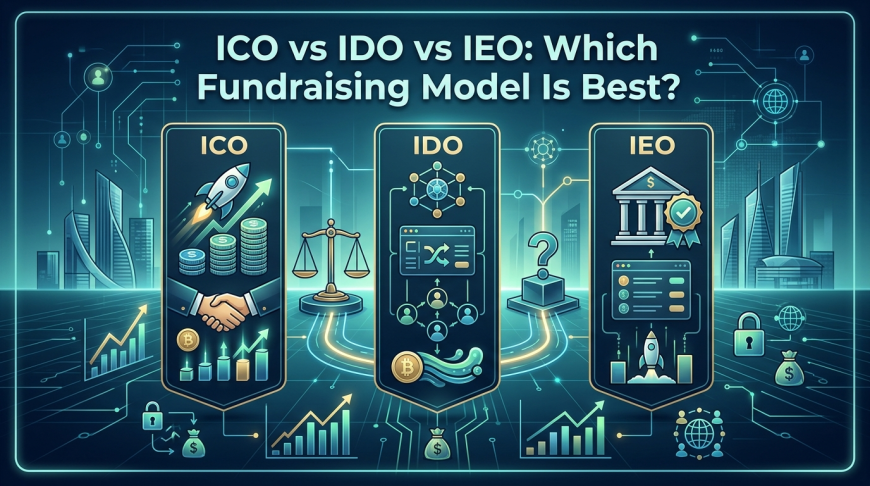
Blockchain-based fundraising has evolved into a structured ecosystem where projects can raise capital through multiple mechanisms, each shaped by different levels of decentralization, investor access, compliance, and liquidity structures. ICOs, IDOs, and IEOs have emerged as the primary models, each serving distinct strategic needs depending on the maturity of the project and its long-term roadmap. While ICOs introduced open participation in token fundraising, IDOs brought liquidity-driven decentralized exchanges into the process, and IEOs integrated centralized exchange credibility and user trust. Selecting the right approach requires a clear understanding of regulatory exposure, market reach, technical infrastructure, and investor expectations. Many startups also rely on an experienced ICO Development company to design, deploy, and manage these fundraising systems effectively, ensuring security, scalability, and investor confidence while aligning tokenomics with sustainable growth strategies.
Understanding ICO (Initial Coin Offering)
ICO represents one of the earliest and most widely recognized token fundraising mechanisms in the blockchain industry. It allows blockchain projects to raise capital directly from investors by issuing digital tokens before the project is fully developed or listed on exchanges.
-
Direct fundraising from global investors
ICOs eliminate intermediaries and allow project owners to connect directly with contributors across borders. This model creates a broad investment pool, enabling early-stage startups to secure capital without institutional dependency. However, it also demands strong transparency practices, as investor trust is entirely based on project documentation and vision clarity. -
Flexibility in token distribution and pricing
Projects launching an ICO have full control over token pricing, allocation structure, and vesting schedules. This flexibility supports experimentation with economic models that align with long-term ecosystem growth. An experienced ICO Development company often plays a crucial role in designing tokenomics that balance investor incentives with market stability. -
Lower entry barriers but higher risk exposure
ICOs are relatively simple to launch, but they carry significant risks due to limited regulatory oversight in many jurisdictions. Investors rely heavily on whitepapers and roadmap commitments, which can sometimes lead to credibility challenges if execution is weak or delayed. -
Community-driven adoption and early hype generation
ICOs often depend on community engagement, marketing campaigns, and early adopter enthusiasm. Strong narrative building is essential, as success is closely tied to public perception and trust rather than institutional backing.
Understanding IDO (Initial DEX Offering)
IDO introduces a decentralized exchange-based fundraising approach where tokens are launched directly on decentralized platforms, allowing instant liquidity and transparent trading mechanisms.
-
Instant liquidity through decentralized exchanges
One of the strongest advantages of IDO is immediate trading availability. Once the token is launched, it can be traded without waiting for centralized approval, which enhances price discovery and investor participation efficiency. -
Permissionless participation with global accessibility
IDOs are open to anyone with a compatible wallet, removing traditional gatekeeping mechanisms. This inclusivity ensures a broader investor base while maintaining decentralized governance principles across the fundraising process. -
Lower listing costs compared to centralized models
Unlike IEOs, IDOs do not require high listing fees or strict exchange negotiations. Projects can launch with minimal overhead, making it an attractive option for startups with limited funding resources. An ICO Development company often integrates smart contracts and liquidity pool structures to ensure seamless IDO execution. -
Increased reliance on automated smart contract systems
IDOs are governed by smart contracts that handle token distribution, liquidity provisioning, and trading mechanisms. While this reduces human intervention, it also requires precise code auditing to avoid vulnerabilities or exploits.
Understanding IEO (Initial Exchange Offering)
IEO is a fundraising model where cryptocurrency exchanges act as intermediaries, hosting token sales on behalf of blockchain projects and providing a trusted platform for investors.
-
Strong credibility through exchange verification
Since exchanges conduct due diligence before listing projects, IEOs offer a higher level of trust compared to ICOs. Investors are more confident due to the screening process, which reduces the likelihood of fraudulent projects entering the market. -
Simplified investment process for users
Investors can participate using existing exchange accounts without managing complex wallet setups or private keys. This accessibility improves participation rates and encourages retail investor engagement. -
Marketing and visibility support from exchanges
Exchanges actively promote IEO-listed projects to their user base, offering significant exposure. This built-in marketing advantage can accelerate token adoption and improve liquidity conditions after listing. -
Higher listing fees and centralized dependency
Despite its advantages, IEOs often require substantial listing fees and revenue-sharing agreements. Projects also become dependent on exchange policies, which may limit flexibility in token management or governance decisions.
Key Differences Between ICO, IDO, and IEO
Understanding the structural differences between these models is essential for selecting the right fundraising strategy. Each model serves different priorities in terms of control, accessibility, and trust.
-
Level of decentralization and control
ICOs provide full control to project teams, IDOs operate in a fully decentralized environment, and IEOs rely heavily on centralized exchanges. This distinction directly impacts governance structures and operational flexibility. -
Investor trust and security framework
IEOs generally provide the highest trust due to exchange vetting, while ICOs rely on project credibility and IDOs depend on smart contract integrity. Security mechanisms vary significantly across all three models. -
Liquidity availability and trading speed
IDOs typically offer immediate liquidity, ICOs may experience delayed exchange listings, and IEOs depend on exchange schedules. Liquidity access plays a key role in investor satisfaction and price stability. -
Cost structure and fundraising efficiency
ICOs and IDOs are generally more cost-effective compared to IEOs, which involve exchange listing fees. However, the trade-off often comes in the form of reduced visibility or lower investor confidence without centralized backing.
Advantages and Limitations of Each Model
Each fundraising model offers distinct benefits while presenting specific challenges that must be evaluated before implementation.
-
ICO advantages and risks
ICOs offer complete autonomy and global reach, allowing projects to shape their fundraising strategy without external interference. However, they face regulatory uncertainty and trust issues, making investor protection a critical concern. A reliable ICO Development company can help mitigate these risks through compliance-focused architecture and transparent token design. -
IDO advantages and limitations
IDOs provide instant liquidity and decentralized participation, making them attractive for modern blockchain ecosystems. Yet, they also expose projects to high volatility and require robust smart contract security to prevent exploits or liquidity manipulation. -
IEO advantages and constraints
IEOs deliver credibility, user trust, and strong market exposure through exchange partnerships. However, they come with higher costs and reduced independence, as exchanges often control listing conditions and token launch timelines. -
Impact on long-term project sustainability
The choice of fundraising model influences community building, token performance, and ecosystem stability. Projects must align their fundraising approach with long-term scalability goals rather than short-term capital gains.
How to Choose the Right Fundraising Model
Selecting between ICO, IDO, and IEO depends on multiple strategic factors, including project maturity, regulatory readiness, technical capability, and target investor demographics.
-
Assessment of project stage and technical readiness
Early-stage projects with strong vision but limited infrastructure may prefer ICOs or IDOs, while more established ventures often opt for IEOs to leverage exchange credibility and liquidity support. -
Regulatory compliance considerations
Jurisdictional laws play a significant role in determining feasibility. Projects targeting regulated markets may lean toward IEOs due to exchange-managed compliance frameworks. -
Budget allocation and fundraising capacity
ICOs and IDOs typically require lower upfront costs, making them suitable for lean startups. In contrast, IEOs require higher capital allocation for exchange partnerships and listing fees. -
Strategic role of development partners
Engaging an experienced ICO Development company can significantly influence success by ensuring secure smart contract deployment, optimized tokenomics, and end-to-end fundraising infrastructure.
Conclusion
The choice between ICO, IDO, and IEO depends on a project’s priorities regarding decentralization, investor trust, liquidity access, and regulatory alignment, with each model offering distinct strengths and operational trade-offs that influence fundraising outcomes. ICOs provide autonomy and flexibility, IDOs emphasize decentralized liquidity and accessibility, while IEOs deliver credibility through exchange-backed validation. A well-structured approach supported by a reliable ICO Development company ensures that projects can navigate these options with technical precision and strategic clarity, ultimately aligning fundraising mechanisms with long-term ecosystem sustainability and investor confidence.