"It Was Just a Bolt Away from Disaster" — A Story on the Road
Transporting construction equipment requires more than just a trailer and a driver—it demands precise planning, legal compliance, and proper equipment handling. This guide breaks down everything you need to know to move heavy machinery safely and legally across the U.S., from permit requirements and trailer types to DOT securement rules and driver qualifications. Plus, discover how ShipA1 can support your next heavy haul with certified logistics solutions.
 Mathew Harris
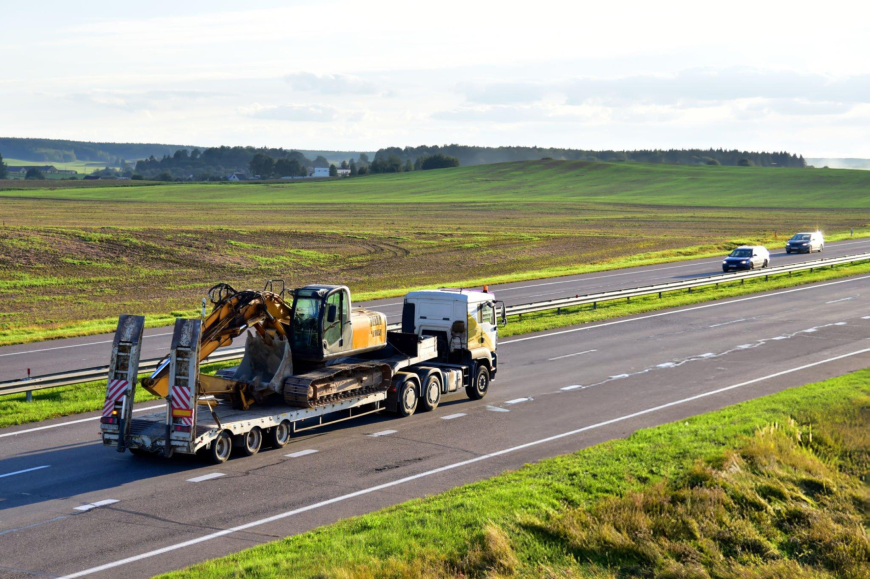
Late one evening, a beam-laden lowboy trailer crept down Main Street. The driver, Greg, had triple-checked the chains—but missed one loose bolt on a corner anchor. As the convoy hit a mild bump, the load shifted. Luckily, Greg caught it in time. That near-miss could have destroyed $250,000 worth of excavators—and endangered everyone nearby.
Greg’s story is a powerful reminder: transporting construction equipment safely and legally demands rigor at every step. In this guide, we’ll explore best practices backed by data, so your heavy gear arrives punctually and intact.
1. Pre-Transport Planning and Risk Assessment
-
Measure dimensions and weight of the machinery. Many construction machines exceed 50,000 lbs and require route surveys to avoid low clearances or bridge limits.
-
Perform a full risk assessment. Anticipating hazards reduces downtime and keeps operations compliant.
2. Legal Requirements: Permits and Escorts
-
Oversize load permits are generally required for equipment over 8’6” wide or 13’6” tall.
-
Overweight permits are needed for loads above 80,000 lbs gross vehicle weight.
-
Escort vehicles may be necessary depending on size and travel time.
3. Load Securement: Meet DOT Standards
-
DOT requires at least four tie-downs with a working load limit (WLL) of 5,000 lbs each for most construction equipment.
-
Secure all attachments, use proper edge protection, and check for wear or fraying.
4. Trailer and Equipment Choice
-
Choose the right trailer: flatbeds for general use, step-decks for taller equipment, and lowboys for oversized and heavy loads.
-
Ensure trailer brakes, lights, tires, and axle configurations are inspected and compliant.
5. Safety Checks and Inspections
-
Conduct daily inspections per DOT/OSHA requirements.
-
Equipment such as cranes or dozers must have ROPS, visibility aids, and hazard labels clearly in place.
-
OSHA reports that vehicle-related accidents remain one of the top causes of fatalities in construction annually.
6. Equipment Prep
-
Remove or secure buckets, blades, booms, and loose attachments.
-
Lower tire pressure to absorb vibration during transport if needed.
-
Maintain clearance from power lines—minimum of 10 feet for 50kV or less.
7. Driver Credentials and Route Monitoring
-
Drivers must hold a CDL with the proper endorsements.
-
Mid-route inspections and GPS tracking are essential for real-time visibility and compliance.
-
Document loading and unloading with photo audits for accountability.
Trusted Help When It Matters Most
If you're looking for a reliable construction equipment shipping partner, ShipA1 delivers a powerful combination of expertise, speed, and nationwide reach. With over 16 years in the auto and heavy equipment transport industry, ShipA1 offers:
-
Certified, trained haulers with experience moving bulldozers, cranes, graders, and more
-
Fully protected trailers including flatbeds, lowboys, and step-decks
-
24/7 support, real-time tracking, and nationwide service—from New York to California
-
Quick quote booking and personalized guidance to match your equipment with the right transport method
From complex loads to urgent deliveries, ShipA1’s logistics team is built to handle it all—safely, legally, and cost-effectively.
🔗 Learn more or request a quote here