How to Keep an Electric Tricycle Reliable in UAE Weather
 freyaparker
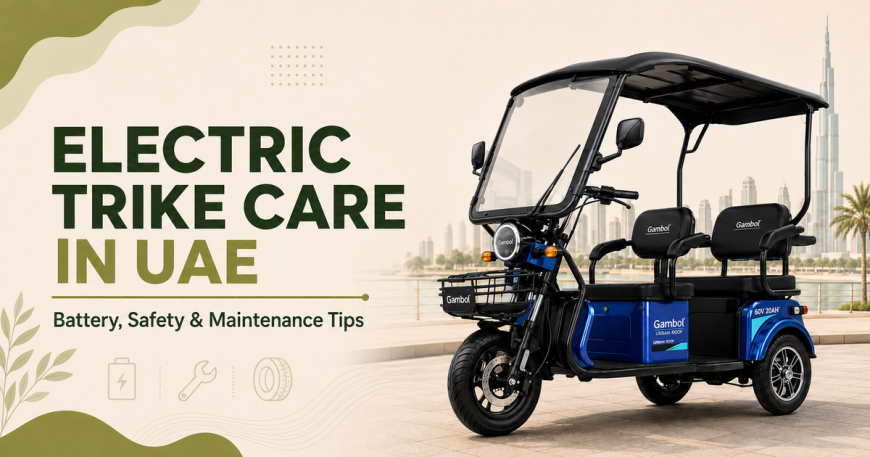
An electric trike can make short-distance travel comfortable and practical, but UAE conditions demand thoughtful care. Strong sunlight, high temperatures and airborne dust can affect the battery, tyres, brakes and electrical parts. A simple routine helps protect performance and avoid preventable breakdowns.
Whether you use Electric Trikes for personal mobility, passenger transport or light utility work, the following care and safety practices can help you get more from your vehicle.
Protect the Battery from Excessive Heat
The battery is one of the most important components of an electric trike. Heat can place additional stress on it, particularly when the vehicle is parked outdoors for hours. Store the trike in a shaded, dry and ventilated location. A roof can protect the seat and controls, but the vehicle should still be kept away from continuous direct sunlight.
After a long or demanding ride, allow the battery and motor to cool before charging. Always use the charger supplied or approved by the manufacturer, because an incompatible charger may create safety and performance problems. Charge on a stable, non-flammable surface with adequate ventilation, and do not cover the charger while it is operating.
If an e tricycle will remain unused for an extended period, follow the model-specific storage guidance in its manual. Avoid leaving a discharged battery unattended for weeks, and check its charge periodically.
Keep Dust Away from Moving and Electrical Parts
Dust is difficult to avoid in the UAE. It can settle around wheels, brakes, suspension parts, vents, switches and exposed connections. Use a soft, dry cloth for routine cleaning and a slightly damp cloth for suitable body panels. Avoid directing high-pressure water towards the motor, battery compartment, display, charging port or wiring.
Inspect the charging port before connecting the charger. If dust or moisture is visible, clean and dry the area according to the manufacturer’s instructions. Close protective covers securely after charging. Cleaning after dusty journeys also makes early wear easier to spot.
Check Tyres Before Every Important Journey
Three wheels provide stationary support, but tyre condition still has a major effect on steering, braking and ride comfort. Check all tyres for low pressure, cuts, cracking, uneven wear or embedded objects. Use the pressure recommended for the specific model rather than guessing from another scooter or bicycle.
Passenger and cargo loads increase tyre stress. Never exceed the stated capacity, and distribute permitted cargo evenly. If the steering pulls to one side or the trike feels unstable, stop riding and arrange an inspection.
Test Brakes, Lights and Controls
Before setting off, squeeze the brakes and confirm that they respond consistently. Listen for scraping, grinding or unusual noises. Test the headlight, brake light, indicators and horn where fitted. The throttle should return smoothly, and the display should show the expected battery and mode information.
An electric tricycle is heavier and wider than many two-wheel scooters, so leave additional braking space and approach turns at a controlled speed. Three wheels do not eliminate tipping; sharp turns, slopes and uneven surfaces still affect stability.
Choose Suitable Routes and Riding Times
General-purpose trikes perform best on suitable paved surfaces. Loose sand, deep gravel, potholes, standing water and steep slopes can reduce control or place extra demand on the motor. Plan the route before travelling, especially when carrying an approved passenger or load.
During hotter months, early morning or evening rides may be more comfortable. Riders should stay hydrated, wear appropriate protective equipment and avoid loose clothing near moving components. A roof provides shade but does not remove the need for heat care.
Rules for powered mobility devices can vary by location and route. Confirm current local requirements before riding in public areas, and follow any age, access, licensing, registration or safety rules that apply to the vehicle and intended use.
Follow a Simple Maintenance Schedule
A practical routine is easier to maintain when divided by frequency:
-
Before riding: Check charge level, tyres, brakes, lights, mirrors and visible wiring.
-
Weekly: Wipe away dust, inspect the charging port and look for loose fittings.
-
Monthly: Examine tyre wear, brake performance and frequently used fasteners more closely.
-
As recommended: Arrange professional servicing and replace worn components with suitable parts.
Do not attempt battery, motor or controller repairs without the correct training. Electrical faults, damaged cables, overheating, unusual smells or a battery case that appears swollen require professional attention. Stop using the vehicle until it has been checked.
Start with the Right Trike and Product Support
Maintenance is easier when the vehicle suits its rider, load and environment. Compare battery specifications, motor power, seating, maximum load, dimensions, spare-part availability and warranty support. ToysUAE offers personal, passenger, roof-covered and cargo options for different needs.
Final Thoughts
Reliable electric mobility depends on regular attention rather than complicated work. Protect the battery from excessive heat, keep dust away from sensitive parts, monitor tyres and brakes, respect the load limit and use appropriate routes. These small habits can support safer operation, more consistent performance and a better ownership experience in UAE conditions.