How to Become a Yoga Instructor: A Beginner's Guide
Ready to share your passion for yoga? Discover how to become a yoga instructor with our beginner's guide packed with tips and insights.
 RishikulYogashala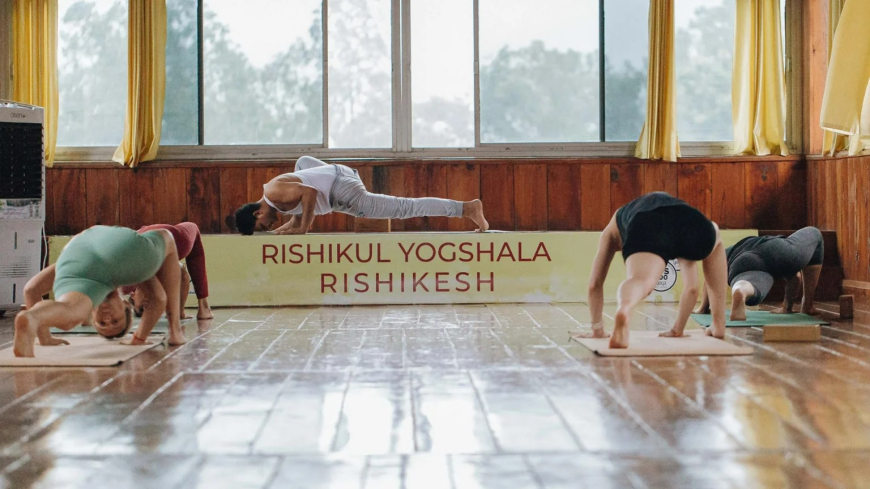
Key Highlights
- Start with a teacher training program that matches your current yoga practice and goals.
- A 200-hour course is the usual first step toward yoga certification and becoming a registered yoga teacher.
- In India, you should check recognized pathways linked to the Ministry of Ayush or trusted professional standards.
- Good training covers yoga philosophy, asana, anatomy, meditation, and yoga teaching methods.
- Your school choice matters, so look for experienced teachers and clear certification details.
- After training, build confidence through practice, small classes, and steady teaching experience.
Introduction
Becoming a yoga instructor can begin with simple curiosity and grow into a meaningful career. If you love your yoga practice and want to guide others, the right yoga teacher training in india can help you take that next step. In India, this path often combines yoga certification with deep personal growth, daily discipline, and practical learning. You do not need to start as an expert. You need commitment, openness, and a real interest in learning how yoga is taught well.
Understanding the Role of a Yoga Instructor in India
A yoga instructor in India does more than lead poses. You are expected to understand yoga philosophy, guide safe practice, and help students stay consistent. Strong teaching skills matter just as much as your own flexibility or stamina.
For many beginners, the first step is training with a recognized school and then moving toward a credible certificate or Yoga Alliance registration. That combination helps you build trust, improve yoga teaching ability, and prepare for real work in studios, retreats, or wellness settings. The role becomes clearer when you look at the daily tasks and core skills involved.
What Does a Yoga Instructor Do?
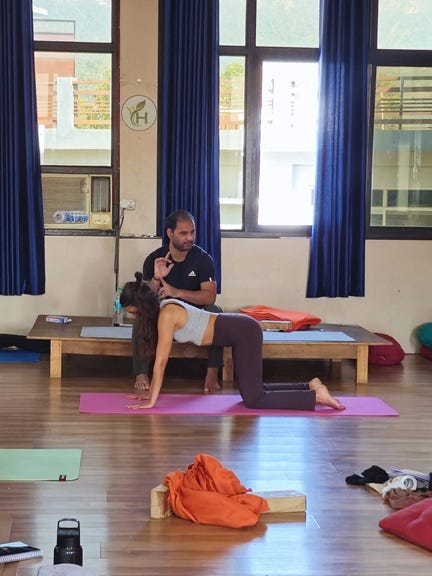
At the most basic level, a yoga instructor leads students through yoga practice in a safe, structured way. That includes demonstrating yoga asanas, correcting alignment, guiding breathwork, and creating a steady class rhythm. You are not just showing movement. You are helping people understand what they are doing and why it matters.
In many training settings in India, yoga teaching also includes meditation, pranayama, anatomy, and traditional ideas from yoga philosophy. A class may begin early, move through physical practice, and end with stillness or reflection. This gives students a fuller experience of yoga, not just exercise.
As your role grows, your teaching methods become more important. You learn how to observe different ability levels, explain clearly, and hold space with confidence. That is why the steps to become a certified yoga instructor in India usually begin with formal training, supervised practice, and a strong foundation in both theory and application.
Key Skills Needed for Yoga Teaching
You do not need to arrive like a yoga master before joining a course. Still, strong yoga teaching grows from a few essential abilities. A school may accept beginners, but your progress depends on how willing you are to learn, practice daily, and listen carefully.
The most useful teaching skills usually include:
- Clear verbal instruction during yoga practice
- Basic understanding of yoga philosophy and class structure
- Patience with students at different levels
- Confidence in demonstrating and adjusting safely
- Openness to feedback and steady improvement
- Discipline to build real teaching experience over time
Just as important, you need consistency. Many teachers improve because they show up every day, not because they start with perfect technique. Before enrolling, ask yourself a simple question: are you ready to learn seriously? If the answer is yes, you can begin building the knowledge, presence, and trust that good yoga teaching requires.
Types of Yoga Teacher Training Courses in India
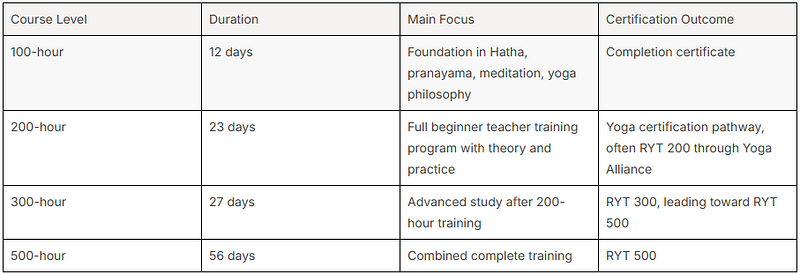
India offers several course formats, and each serves a different stage of learning. A yoga teacher training in india may begin with a 100-hour foundation, move into a 200-hour certification, and then continue to 300-hour or 500-hour advanced study. Some schools also issue a teacher training certificate for shorter introductory programs.
When comparing options, look at the school’s standing, the syllabus, and whether the path fits your goals. A registered yoga school may follow professional standards such as Yoga Alliance, while official Indian pathways may connect with the Yoga Certification Board. The next two sections explain the most common course choices.
200-Hour Yoga Teacher Training Explained
For most beginners, the 200 hour yoga teacher training in India is the standard starting point. It is the most widely recognized yoga teacher training in india program for becoming a certified teacher. In Rishikesh, one example runs as a 23-day residential format with training in Hatha, Ashtanga, pranayama, meditation, anatomy, philosophy, and teaching methodology.
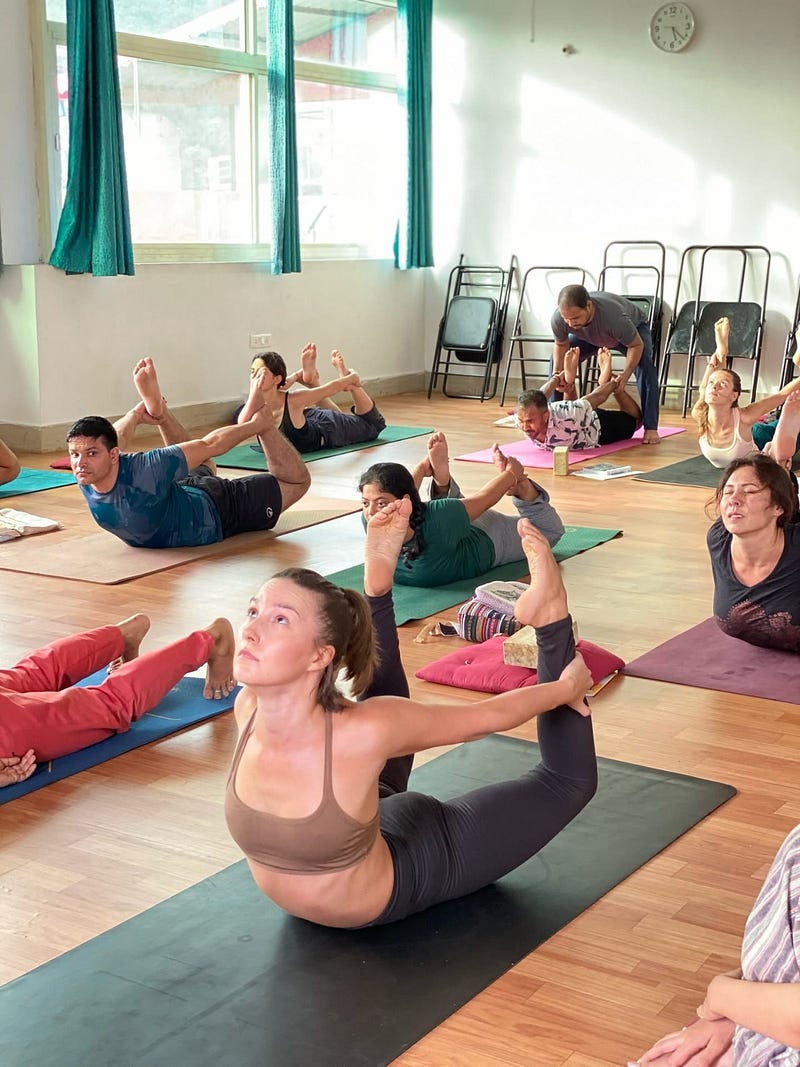
This kind of comprehensive training is designed to help you move from student to teacher. You study theory, practice daily, and learn how to guide a class. If the school is registered with Yoga Alliance, you may become eligible for registration after completing the course.
Certificate vs. Diploma in Yoga Teaching
A teacher training certificate usually refers to a shorter or clearly defined course outcome. For example, a 100-hour program may give you a completion award, but it may not work as a standalone teaching qualification. It is useful if you want a gentle start before committing to comprehensive training.
A diploma in yoga teaching is not described in the provided school information, so the clearest distinction here is between shorter certificates and longer, more complete teacher training routes. Different levels of certification usually reflect the depth of study, supervised practice, and final teaching readiness.
Here is the practical difference:
- A teacher training certificate may mark course completion at an introductory level
- A longer program gives more comprehensive training in teaching methods and philosophy
- The Yoga Certification Board is relevant when you want official Indian certification pathways
- Different levels of certification suit different career goals
- A 200-hour course is the common first professional step
Eligibility and Qualifications Required to Start
Many beginners worry about eligibility criteria before they apply. The good news is that a 200-hour course can be open to complete beginners, and commitment often matters more than advanced skill. If your aim is general teaching, yoga certification begins with choosing the right level and meeting the school’s entry requirements.
At the same time, official roles such as yoga protocol instructor may follow separate standards under bodies linked to the Government of India. Some jobs in wellness centers also prefer recognized credentials. Before applying, it helps to understand both the practical and personal requirements for starting well.
Academic and Physical Prerequisites
You usually do not need advanced academic prerequisites to begin a beginner-level teacher training course. What matters more is your willingness to follow the schedule, study consistently, and take yoga education seriously. Many schools welcome students from different countries and backgrounds.
Physically, you do not need perfect flexibility. You do need enough physical fitness to participate in daily sessions, which may start early and continue through the day. Since training includes repeated yoga asanas, pranayama, meditation, and self-study, basic stamina and discipline help a lot.
You may need to prepare:
- A valid id proof or passport copy
- Basic health awareness before intensive training
- Comfortable clothing for daily practice
- Readiness for regular yoga asanas and class attendance
- Commitment to follow school rules and schedule
Personal Qualities and Mindset for Success
A strong start in yoga teaching is not only about certificates. Your mindset shapes how far you go. If you are patient, open to correction, and serious about personal practice, you are already building the right foundation. Good teachers keep learning even after the course ends.
Success also grows from personal growth. Residential training in India often changes how you live, eat, study, and relate to daily life. That experience can influence your teaching style in a grounded way. Students often become more observant, disciplined, and calm through the routine itself.
The qualities that help most are:
- Respect for steady personal practice
- Curiosity to build necessary knowledge
- Humility when receiving feedback
- Consistency in study and attendance
- A sincere wish to help others learn safely
What You Need to Get Started as a Beginner
Starting as a beginner does not need to feel complicated. You mainly need a realistic view of your current yoga practice, a school that fits your level, and a plan for regular participation. Whether you hope to become a yoga wellness instructor or later train as a yoga protocol instructor, your early choices matter.
You should also think about practical needs such as yoga equipment, study materials, and the kind of learning environment that suits you best. Some yoga schools offer fully residential training, which can make the beginner journey more focused and easier to follow.
Essential Yoga Equipment and Resources
Before joining a teacher training course, keep your setup simple. You do not need fancy gear. What helps most is having the basics that support daily yoga practice and note-taking. In a residential course, many needs are already built into the schedule and environment.
You may also want yoga resources that deepen understanding beyond the mat. The compiled material mentions recommended reading such as Yoga Anatomy, Yoga Nidra, Lights on Yoga, and Yoga Mala. These can help you understand the body, sequencing, and traditional approaches to practice.
Useful basics include:
- A comfortable yoga mat and simple yoga equipment for daily classes
- Loose clothing that allows easy movement
- A notebook for anatomy, philosophy, and teaching methods
- Personal toiletries and needed medication
- A white outfit for opening or closing ceremonies if recommended
- A few trusted yoga resources for self-study
How to Find Reputable Yoga Teacher Training Schools
Finding a good school in India starts with verification. Do not rely only on marketing. Check whether the institution is a registered yoga school, how long it has been operating, and whether its teachers have real experience. A strong yoga teacher training program should clearly explain what is included, who teaches, and what certificate you receive.
It also helps to know which system matters for your goals. If you want international teaching mobility, schools with Yoga Alliance registration are common. If you are looking at official Indian pathways, learn how the Yoga Certification Board and the Ministry of Ayush fit into your plan.
Look for these signs:
- Verified status as a registered yoga school
- Clear certification details and honest course structure
- Experienced teachers with long teaching backgrounds
- Genuine student reviews across trusted platforms
- Reasonable batch size for personal attention
- Transparent fees, accommodation, and daily schedule
Step-by-Step Guide to Becoming a Certified Yoga Instructor
If you are asking what the steps are to become a certified yoga instructor in India, the process is usually straightforward. Your first step is choosing a teacher training program that matches your level and future plans. Then you complete training, meet the school requirements, and receive the appropriate training certificate or recognized credential.
This comprehensive guide also reminds you to check whether your chosen path aligns with professional standards or official Indian systems connected to the Ministry of Ayush. Each step below helps you move from interest to action with more clarity and less confusion.
Step 1: Research Recognized Training Programs
Begin by comparing course types and checking who recognizes them. Some students want a globally known school, while others want a route connected to official Indian standards. That is where it helps to understand the difference between a registered yoga school, Yoga Alliance, and systems linked to the Yoga Certification Board or Ministry of Ayush.
You should also read the course outline carefully before filling out any application form. A good program will clearly list duration, subjects, residential details, and the final credential. If the information feels vague, pause and verify before paying anything.
Check these points first:
- Whether the teacher training program is clearly structured
- If the school is a verified registered yoga school
- What kind of certificate or credential you receive
- Whether the course aligns with Yoga Alliance or official Indian standards
- How the application form and admission process work
- What is included in fees, stay, and meals
Step 2: Enroll in a Suitable Yoga Teacher Training Course
Once your research is done, choose from yoga teacher training in india courses based on your readiness and learning style. If you are a beginner, a 200-hour teacher training course is often the best fit. A 100-hour option can work as a preview, but it is not usually a full teaching qualification.
From the compiled information, residential in-person learning offers immersion, teacher feedback, and a structured rhythm that is hard to replace. This is useful when deciding between online and offline options. If your goal is deep yoga education and confident teaching, a live training environment gives you more direct support.
Ask yourself:
- Am I ready for a full 200-hour yoga certification path?
- Do I want a Yoga Alliance-linked school for international recognition?
- Would a residential teacher training course help me stay focused?
- Do I need a shorter beginner option before full enrollment?
Step 3: Complete Practical and Theoretical Training
During training, you study both practice and theory every day. A good training program includes yoga practice, pranayama, meditation, anatomy, philosophy, and teaching methodology. In a 200-hour format, the idea is to help you understand yoga as a complete system, not only a set of postures.
You also build teaching skills through observation, repetition, and practical demonstration. Residential courses often create a steady rhythm that helps you improve faster. Morning sessions, study blocks, and supervised class work shape your confidence over time.
Your training usually includes:
- Daily yoga practice and posture work
- Study of yoga philosophy and traditional principles
- Anatomy and body awareness
- Teaching methods and class sequencing
- Practical demonstration and guided instruction practice
Step 4: Obtain Certification from Approved Organizations
After completing training, you receive the certification attached to that course. In a Yoga Alliance-registered school, finishing the required hours can support your next step toward professional registration. In official Indian pathways, the relevant authority is the Yoga Certification Board, which is linked to the Ministry of Ayush.
If you are asking whether there are official certificates provided through the Ministry of Ayush, the answer is yes through systems tied to the Yoga Certification Board, including roles such as Yoga Protocol Instructor and Yoga Wellness Instructor. The exact process depends on the certification track you choose.
Keep these points in mind:
- Confirm the type of yoga certification before you enroll
- Ask whether a written exam or assessment is required
- Understand if you receive a training certificate or exam-based credential
- Check whether the path connects to the Yoga Certification Board
- Match the certificate to your career goal
Step 5: Start Teaching and Building Experience
Certification is the beginning, not the finish. Once your course ends, start small and teach often. Real teaching experience grows when you guide actual students, notice common mistakes, and learn how to adapt your voice, pacing, and energy. This is where your yoga teaching becomes practical and personal.
Career opportunities can grow in several directions. The compiled information shows openings in yoga studios, retreats, online classes, resorts, wellness centers, and corporate wellness programs. Some teachers later build their own student communities or continue to advanced training.
You can begin by:
- Teaching beginner classes in yoga studios
- Offering sessions in wellness centers or retreat spaces
- Exploring corporate wellness programs
- Teaching online to build reach and flexibility
- Assisting senior teachers to gain confidence
- Keeping your own practice strong in daily life
Frequently Asked Questions (FAQ)
Understanding the journey to becoming a yoga instructor can raise several questions. Many potential students wonder about the necessary steps to obtain a yoga certification, or what the differences are between various yoga teacher training in india programs. Others seek clarity on the relevance of yoga philosophy in practical teaching situations or how to gain teaching experience at wellness centers. These inquiries help guide individuals towards their personal growth and ensure they choose the right training program aligned with their aspirations in yoga education.
Are online yoga teacher training courses valid in India?
Online courses can help with learning, but validity depends on the certificate and your goal. For strong practical training, in-person study is often preferred. Always check whether the teacher training certificate connects to recognized yoga certification standards, Yoga Alliance requirements, or official systems linked to the Ministry of Ayush.
What official certifications are recognized by the government or Ministry of Ayush?
Official certifications recognized through the Ministry of Ayush are connected to the Yoga Certification Board. A YCB certification may include roles such as Yoga Protocol Instructor and Yoga Wellness Instructor. If you want a government-linked path, check the exact level, exam process, and eligibility before applying.
How do I choose between an online and offline yoga teacher training course?
Choose based on how you learn best and what you want from yoga teaching. Online courses offer convenience, but offline courses give hands-on feedback, immersion, and daily discipline. If your teacher training course is meant to prepare you for real class leadership, in-person study often gives stronger practical confidence.
What career opportunities are available after becoming a certified yoga instructor?
Career opportunities include teaching in yoga studios, retreats, resorts, wellness centers, and online platforms. With more teaching experience, you may also work in corporate wellness programs or build private classes. Your options usually grow as your confidence, student base, and professional reputation become stronger.
Conclusion
In conclusion, embarking on the journey to become a yoga instructor can be both fulfilling and transformative. By understanding the essential skills, qualifications, and training required, you’re better equipped to take your first steps in this rewarding career. Remember, it is not just about teaching yoga; it’s about fostering a community and sharing the enriching benefits of yoga with others. Whether you choose an online or offline training course, ensure it aligns with your goals and values. Embrace the process, stay dedicated, and you can turn your passion for yoga into a thriving profession. If you’re ready to take the leap, consider enrolling in a training program that resonates with you!