Higher Order Aberrations: Advanced Vision Solutions
 diyam
diyam
Clear vision is more than just 20/20 eyesight. While standard eye exams measure basic visual acuity, many people still experience blurred or distorted vision due to imperfections in the eye that go beyond simple nearsightedness, farsightedness, or astigmatism. These imperfections, known as higher order aberrations, can significantly affect visual quality, particularly in low-light conditions, while driving at night, or when reading fine print.
Advances in ophthalmic technology, such as the Pentacam AXL Wave and Ovitz technology, are transforming how eye care specialists detect and correct these subtle visual distortions. Combined with expert care, these innovations offer patients a pathway to sharper, more precise vision.
Understanding Higher-Order Aberrations
Unlike lower-order refractive errors like myopia, hyperopia, and regular astigmatism, higher order aberrations are complex imperfections in the optical system of the eye. They result from irregularities in the cornea, lens, or other internal structures that scatter light and reduce the clarity of the image formed on the retina. Common symptoms include halos, glare, starbursts around lights, poor night vision, and eye strain.
Detecting and correcting these aberrations is challenging because they require detailed measurements of the eye’s optical profile. Traditional methods like basic eye charts cannot capture these subtle distortions, which is why advanced diagnostic tools are essential for comprehensive vision correction.
The Role of the Pentacam AXL Wave
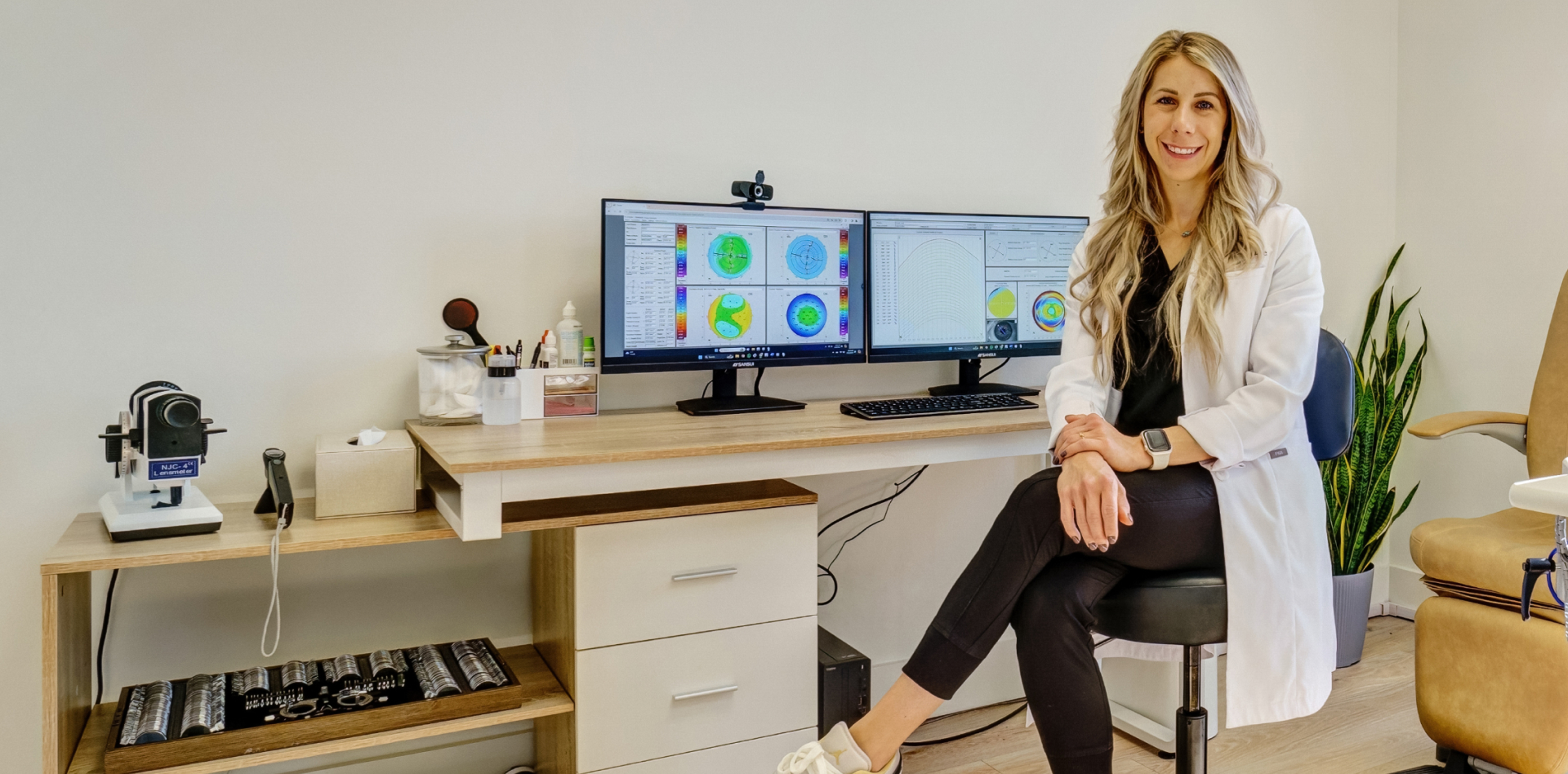
The Pentacam AXL Wave is one of the most advanced diagnostic tools in modern ophthalmology. This sophisticated device combines anterior segment tomography with wavefront aberrometry, allowing eye specialists to capture an exceptionally detailed map of the eye’s optical system.
Key features of the Pentacam AXL Wave include:
- Corneal Topography: Provides a 3D map of the cornea, highlighting irregularities that contribute to higher-order aberrations.
- Wavefront Analysis: Measures how light passes through the eye, identifying distortions invisible to traditional eye exams.
- Axial Length Measurement: Crucial for precise lens calculations, especially in cataract surgery and refractive procedures.
By using this comprehensive data, ophthalmologists can design personalized treatment plans that target the root cause of visual distortions rather than just correcting standard refractive errors.
Ovitz Technology: Precision in Vision Correction
In addition to precise diagnostics, Ovitz technology has emerged as a breakthrough in the correction of higher-order aberrations. This innovative approach integrates the detailed eye mapping from the Pentacam AXL Wave with advanced laser and lens-based treatments to improve visual quality beyond standard prescriptions.
Ovitz technology focuses on:
- Customized Laser Treatments: Using wavefront-guided laser procedures, it reshapes the cornea with micron-level precision, correcting complex optical imperfections.
- Premium Intraocular Lenses (IOLs): For patients undergoing cataract surgery, Ovitz technology allows the implantation of IOLs specifically designed to reduce higher-order aberrations and enhance contrast sensitivity.
- Enhanced Night Vision: By correcting subtle distortions, patients often experience reduced halos, glare, and starbursts, significantly improving night-time visual performance.
This combination of advanced diagnostics and personalized treatment represents a major leap in how eye care providers address visual clarity and patient satisfaction.
The Importance of Expert Care
Technology alone is not enough. Achieving the best outcomes in higher-order aberration correction requires the expertise of experienced ophthalmologists. Professionals trained in wavefront analysis and laser vision correction can interpret complex diagnostic data, develop tailored treatment strategies, and monitor post-procedure recovery to ensure optimal results.
Expert care also ensures:
- Accurate selection of treatment modalities based on individual eye anatomy.
- Prevention of complications through precise procedural planning.
- Continuous evaluation of visual outcomes to refine corrective measures.
Patients benefit not only from sharper vision but also from improved overall visual comfort, reduced eye strain, and enhanced quality of life.
Conclusion
The correction of higher-order aberrations represents the next frontier in vision care. With technologies like the Pentacam AXL Wave and Ovitz technology, eye care specialists can now detect and treat complex optical imperfections with unprecedented accuracy. When combined with expert care, these innovations provide patients with clearer, sharper vision, improved night-time performance, and a higher quality of life.
Investing in advanced diagnostics and personalized treatments ensures that visual clarity goes beyond standard prescriptions. For anyone experiencing blurred or distorted vision despite having 20/20 eyesight, consulting a specialist skilled in higher-order aberration correction may be the key to seeing the world with remarkable clarity.