Hair Transplant Thailand: Complete Guide to Hair Restoration
Discover Hair Transplant Thailand, including FUE, DHI and FUT techniques, costs, recovery, benefits, risks and tips for choosing the right clinic.
 vinodgupta
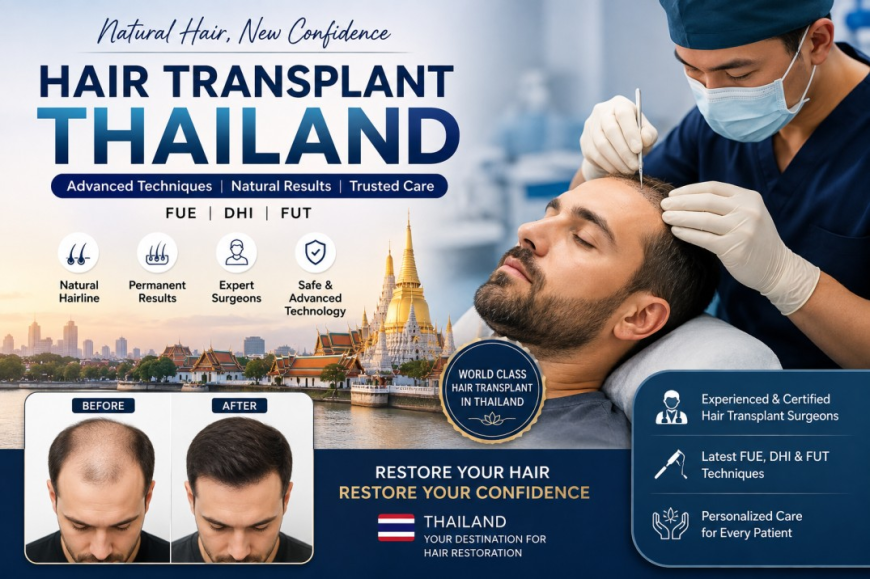
Hair loss can affect appearance, confidence and overall quality of life. For people experiencing receding hairlines, thinning crowns, bald patches or progressive hair loss, hair transplantation can provide a long-term hair restoration option.
Hair Transplant Thailand has become an increasingly considered option for people seeking modern hair restoration procedures in Asia. Thailand offers access to clinics using techniques such as Follicular Unit Extraction (FUE), Direct Hair Implantation (DHI) and Follicular Unit Transplantation (FUT). The appropriate technique depends on factors such as the extent of hair loss, donor-hair availability, hair characteristics, desired density, budget and the surgeon's assessment.
This comprehensive guide explains everything you should know before considering a Hair Transplant in Thailand, from consultation and techniques to costs, recovery, risks and selecting a qualified provider.
What Is a Hair Transplant?
A hair transplant is a surgical hair restoration procedure in which healthy hair follicles are taken from a donor area and transplanted into areas affected by hair thinning or baldness.
The donor area is commonly located at the back or sides of the scalp because these follicles may be more resistant to the factors responsible for common pattern hair loss. The transplanted follicles can then produce hair in the recipient area.
A successful procedure involves much more than simply moving hair follicles. Hairline design, graft placement, direction, angle, density and preservation of the donor area all play important roles in achieving a natural-looking result.
Why Consider Hair Transplant Thailand?
Thailand is an established medical-tourism destination, and hair restoration clinics in the country offer several modern transplantation techniques.
Some patients consider Thailand because of:
-
Availability of FUE and DHI procedures
-
Experienced hair-restoration specialists
-
Modern medical facilities
-
International-patient services
-
Access to English-speaking medical staff at some clinics
-
Combination of treatment and travel
-
A variety of clinic and treatment options
-
Competitive pricing compared with some Western markets
However, price should not be the only factor when choosing a clinic. Hair transplantation is a medical procedure, and surgeon qualifications, medical supervision, clinic standards, donor management and long-term follow-up are extremely important.
Hair Transplant Techniques Available in Thailand
There is no single technique that is best for every patient. The three commonly discussed techniques are FUE, DHI and FUT.
1. FUE Hair Transplant
FUE stands for Follicular Unit Extraction.
During FUE, individual follicular units are extracted from the donor area using a small punch instrument. The grafts are then prepared and implanted into the recipient area.
Advantages of FUE
-
Individual graft extraction
-
No linear strip scar
-
Generally smaller donor-area marks
-
Suitable for many types of hair loss
-
Often preferred by people who wear shorter hairstyles
-
Recovery is generally shorter than traditional FUT
The final outcome depends heavily on graft quality, surgical technique, donor management and appropriate placement.
2. DHI Hair Transplant
DHI stands for Direct Hair Implantation.
DHI is generally based on the principles of follicular extraction but uses an implanter device to place grafts into the recipient area. This allows the clinician to control the positioning of individual grafts.
Potential advantages include precise placement and control over the angle and direction of transplanted follicles. However, DHI is not automatically better for every patient, and suitability should be determined during a professional consultation.
3. FUT Hair Transplant
FUT stands for Follicular Unit Transplantation and is also known as the strip technique.
In FUT, a strip of scalp containing hair follicles is surgically removed from the donor area. The strip is then dissected into individual follicular units for transplantation.
FUT can be considered when a large number of grafts are required, but it leaves a linear scar and generally involves a different recovery process from FUE.
FUE vs DHI vs FUT
|
Feature |
FUE |
DHI |
FUT |
|
Extraction |
Individual grafts |
Individual grafts |
Strip of scalp |
|
Linear scar |
No |
No |
Yes |
|
Implantation |
Recipient channels/incisions |
Implanter device |
Recipient channels/incisions |
|
Short hairstyle |
Generally suitable |
Generally suitable |
May reveal linear scar |
|
Recovery |
Generally shorter |
Generally shorter |
Usually longer |
|
Large graft sessions |
Depends on donor capacity |
Depends on donor capacity |
Can be useful |
|
Cost |
Varies |
Often higher |
Varies |
|
Suitability |
Case-dependent |
Case-dependent |
Case-dependent |
The best technique should be selected based on the patient's individual hair-loss pattern rather than simply choosing the newest or most expensive procedure.
Who Is a Good Candidate for Hair Transplantation?
A good candidate generally needs sufficient healthy donor hair and a realistic understanding of what transplantation can achieve.
Potential candidates may include people experiencing:
-
Receding hairline
-
Male or female pattern hair loss
-
Crown thinning
-
Localized bald patches
-
Reduced hair density
-
Certain types of hair loss after evaluation by a qualified professional
-
Hair loss caused by previous procedures or injuries in selected cases
Age alone does not determine eligibility. A medical assessment is important because ongoing hair loss may need to be stabilized or treated before transplantation.
Hair Transplant Consultation in Thailand
A proper consultation should be one of the most important steps in your treatment plan.
During the consultation, the doctor may evaluate:
-
Your current pattern of hair loss
-
Scalp condition
-
Donor-area density
-
Hair calibre and characteristics
-
Existing miniaturized hair
-
Hairline position
-
Crown and mid-scalp density
-
Previous hair-transplant procedures
-
Medical and medication history
-
Your expectations and long-term goals
The surgeon should also explain whether transplantation is appropriate and how many grafts may reasonably be required.
How Many Grafts Do You Need?
The required number of grafts varies considerably from person to person.
A small receding hairline may require significantly fewer grafts than extensive frontal and crown baldness. The calculation depends on:
-
Size of the recipient area
-
Existing hair density
-
Desired density
-
Hair thickness
-
Donor supply
-
Hair-loss progression
-
Hairline design
-
Number of previous procedures
Avoid choosing a clinic solely because it promises a particular graft number. Overharvesting the donor area can compromise future restoration options.
Hair Transplant Thailand Cost
The cost of a Hair Transplant Thailand procedure varies depending on the technique, number of grafts, surgeon involvement, clinic, procedure complexity and services included.
Recent published Thailand-focused pricing information places a typical FUE procedure involving approximately 2,000–4,500 grafts in a broad range of around US$2,500–$5,500, although individual cases can be substantially different. DHI, long-hair procedures, repair cases and senior-surgeon-led treatments may cost more.
A clinic quotation may include some or all of the following:
-
Consultation
-
Surgeon fees
-
Graft extraction
-
Graft preparation
-
Implantation
-
Medication
-
Post-operative instructions
-
Follow-up appointments
-
PRP or other supportive treatments
-
Transportation or accommodation in medical-tourism packages
Always ask for an itemized quotation rather than comparing headline prices alone.
What Affects Hair Transplant Cost in Thailand?
Several factors influence the final price.
Number of Grafts
More grafts generally mean a more complex and time-consuming procedure.
Technique
FUE, DHI and FUT can have different pricing structures.
Surgeon Experience
A highly experienced surgeon may charge more because of their expertise and involvement.
Clinic Location
Prices can vary between Bangkok, Phuket, Chiang Mai and other locations.
Procedure Complexity
Repair procedures, large bald areas and previous unsuccessful transplants may require more planning.
Additional Services
Medication, follow-up, PRP, accommodation and transportation may affect the total package price.
Hair Transplant Procedure: Step-by-Step
A typical hair transplantation process can involve several stages.
Step 1: Consultation
The doctor assesses your hair loss and donor area and discusses your goals.
Step 2: Hairline Planning
The proposed hairline and recipient zones are designed according to facial proportions, age and available donor hair.
Step 3: Donor Area Preparation
The donor area is prepared according to the selected technique.
Step 4: Follicle Extraction
For FUE-based procedures, individual follicular units are extracted from the donor region.
For FUT, a strip is removed and subsequently divided into follicular units.
Step 5: Graft Preparation
The extracted grafts are carefully examined and prepared for implantation.
Step 6: Recipient Area Preparation
Small recipient sites are created according to the planned hair direction, angle and density.
Step 7: Graft Implantation
The prepared follicles are placed into the recipient area.
Step 8: Post-Procedure Care
You receive instructions regarding scalp care, washing, medications, physical activity and follow-up.
Recovery After Hair Transplant
Recovery varies depending on the procedure and individual healing.
During the initial period, patients may experience:
-
Mild swelling
-
Redness
-
Scabbing
-
Temporary sensitivity
-
Tightness or discomfort
-
Small crusts around implanted follicles
Your clinic should provide specific aftercare instructions.
Many patients can resume normal activities relatively quickly after minimally invasive transplantation, but strenuous exercise, swimming and activities that could disturb the scalp may need to be restricted temporarily.
Hair Growth Timeline After Transplantation
Hair transplantation does not produce an immediate full head of hair.
The transplanted follicles need time to establish themselves and enter their normal growth cycle.
A typical progression may involve:
First few days:
The scalp begins healing and small crusts may develop.
First few weeks:
Temporary shedding of transplanted hair can occur.
Around 3–4 months:
Early new growth may become noticeable.
Around 6 months:
More visible density and growth may develop.
Around 9–12 months:
The result generally becomes significantly more developed.
12–18 months:
Hair growth may continue maturing, particularly in some areas such as the crown. Published medical-tourism guidance also emphasizes that final results can take many months to mature. Individual results vary, so these timelines should be considered general rather than guaranteed.
Is Hair Transplant Permanent?
Transplanted follicles are generally intended to provide long-term hair growth. However, transplantation does not necessarily stop the progression of untreated hair loss in non-transplanted areas.
This is why long-term planning is important.
A younger patient with continuing pattern hair loss may require a treatment strategy that considers future thinning and preservation of the donor area.
Risks and Possible Complications
Like any surgical procedure, hair transplantation has potential risks.
Possible complications can include:
-
Infection
-
Bleeding
-
Swelling
-
Scarring
-
Temporary numbness
-
Folliculitis
-
Poor graft growth
-
Uneven density
-
Unnatural hairline
-
Overharvesting of donor hair
-
Need for corrective surgery
The risk profile depends on the patient, technique, medical conditions and quality of surgical care.
Seek professional medical advice promptly if you develop significant pain, fever, excessive bleeding, pus, worsening swelling or other concerning symptoms after surgery.
How to Choose the Best Hair Transplant Clinic in Thailand
Choosing the right clinic is more important than simply finding the cheapest package.
Check the Doctor's Credentials
Confirm the qualifications, training and relevant experience of the doctor who will actually perform or supervise your procedure.
Understand Who Performs Each Step
Ask whether the surgeon personally performs critical parts of the surgery or whether technicians perform significant portions of the procedure.
Ask About Graft Planning
A reputable clinic should explain why a particular number of grafts is recommended.
Review Before-and-After Results
Look for consistent results from patients with hair-loss patterns similar to yours.
Ask About Follow-Up
International patients should know how post-operative support will be provided after returning home.
Understand the Full Price
Ask whether medication, consultation, follow-up and additional services are included.
Avoid Guaranteed Results
No ethical clinic should guarantee an identical result for every patient. Hair growth depends on individual biological factors and surgical variables.
Medical Tourism and Traveling to Thailand for Hair Transplantation
If you are traveling internationally for Hair Transplant Thailand, treatment planning should include more than the surgery itself.
Consider:
-
Travel time
-
Recovery requirements
-
Accommodation
-
Airport transportation
-
Clinic location
-
Follow-up appointments
-
Emergency contact information
-
Medical documentation
-
Travel insurance considerations
-
Time needed before flying home
Do not plan an unnecessarily tight itinerary immediately after surgery. Your doctor should provide specific advice about air travel and post-operative restrictions.
Questions to Ask Before Booking
Before paying a deposit, consider asking:
-
Who is my operating surgeon?
-
What are the surgeon's qualifications?
-
Which technique is recommended for me and why?
-
How many grafts do I actually need?
-
How much donor hair do I have?
-
Who performs extraction and implantation?
-
What happens if graft growth is below expectations?
-
What is included in the quoted price?
-
How many follow-up appointments are provided?
-
What aftercare is required?
-
How long should I remain in Thailand?
-
What support is available after I return home?
Common Mistakes to Avoid
Choosing Based Only on Price
The cheapest option is not necessarily the safest or most appropriate.
Focusing Only on the Technique
FUE or DHI does not automatically guarantee a better result. Surgical planning and execution matter.
Ignoring Future Hair Loss
A transplant should be planned with your future hair-loss pattern in mind.
Choosing an Unrealistically Low Hairline
A very low hairline may look unnatural as you age and can consume valuable donor grafts.
Not Checking the Surgeon
Always verify who is responsible for your treatment.
Expecting Immediate Results
Hair restoration takes time. Patience is an important part of the process.
Hair Transplant Thailand for International Patients
Thailand can be attractive to international patients because it combines established medical-tourism infrastructure with access to multiple hair-restoration options.
However, international patients should be particularly careful about verifying the clinic, surgeon, treatment plan and aftercare arrangements before traveling.
The decision should be based on medical suitability, surgeon expertise, safety, realistic expectations and long-term planning, not simply the destination or advertised package price.
Frequently Asked Questions About Hair Transplant Thailand
Is Hair Transplant Thailand safe?
Hair transplantation is a medical procedure and carries potential risks. Safety depends on appropriate patient selection, qualified medical professionals, sterile facilities, proper surgical technique and post-operative care.
Which is better, FUE or DHI in Thailand?
Neither technique is universally better. FUE and DHI may be appropriate for different patients. A qualified surgeon should recommend the technique based on your donor supply, hair loss, desired outcome and other factors.
How much does a hair transplant in Thailand cost?
Published 2026 pricing information gives a broad indication of approximately US$2,500–$5,500 for many 2,000–4,500 graft FUE cases, but actual prices vary considerably by clinic, surgeon, technique and case complexity.
How long do hair transplant results take?
New growth develops gradually. Noticeable improvement often occurs over several months, while the mature result may take approximately 12 months or longer.
Can women have a hair transplant in Thailand?
Yes. Women may be candidates for hair transplantation depending on the cause and pattern of hair loss, donor availability and overall medical assessment.
Can I travel to Thailand only for the procedure?
International patients can travel specifically for treatment, but the trip should include sufficient time for the procedure, initial recovery and any required follow-up.
Is a hair transplant permanently effective?
Transplanted follicles are intended to provide long-term growth, but existing non-transplanted hair can continue to thin. Long-term medical management may therefore be important.
Final Thoughts
Hair Transplant Thailand can be an option for people looking for modern hair restoration in an established medical-tourism destination. FUE, DHI and FUT each have different characteristics, advantages and limitations.
The most important decision is not simply choosing a country or technique. It is choosing a qualified medical professional who can accurately evaluate your hair loss, protect your donor supply, create a natural hairline and develop a realistic long-term restoration plan.
Before booking, compare the surgeon's qualifications, treatment approach, graft calculation, clinic standards, total cost and post-operative support. A well-planned procedure combined with realistic expectations can provide a much better foundation for natural-looking, long-term hair restoration.